Your Face Just Got Scanned Walking Down the Street — and Nobody Told You
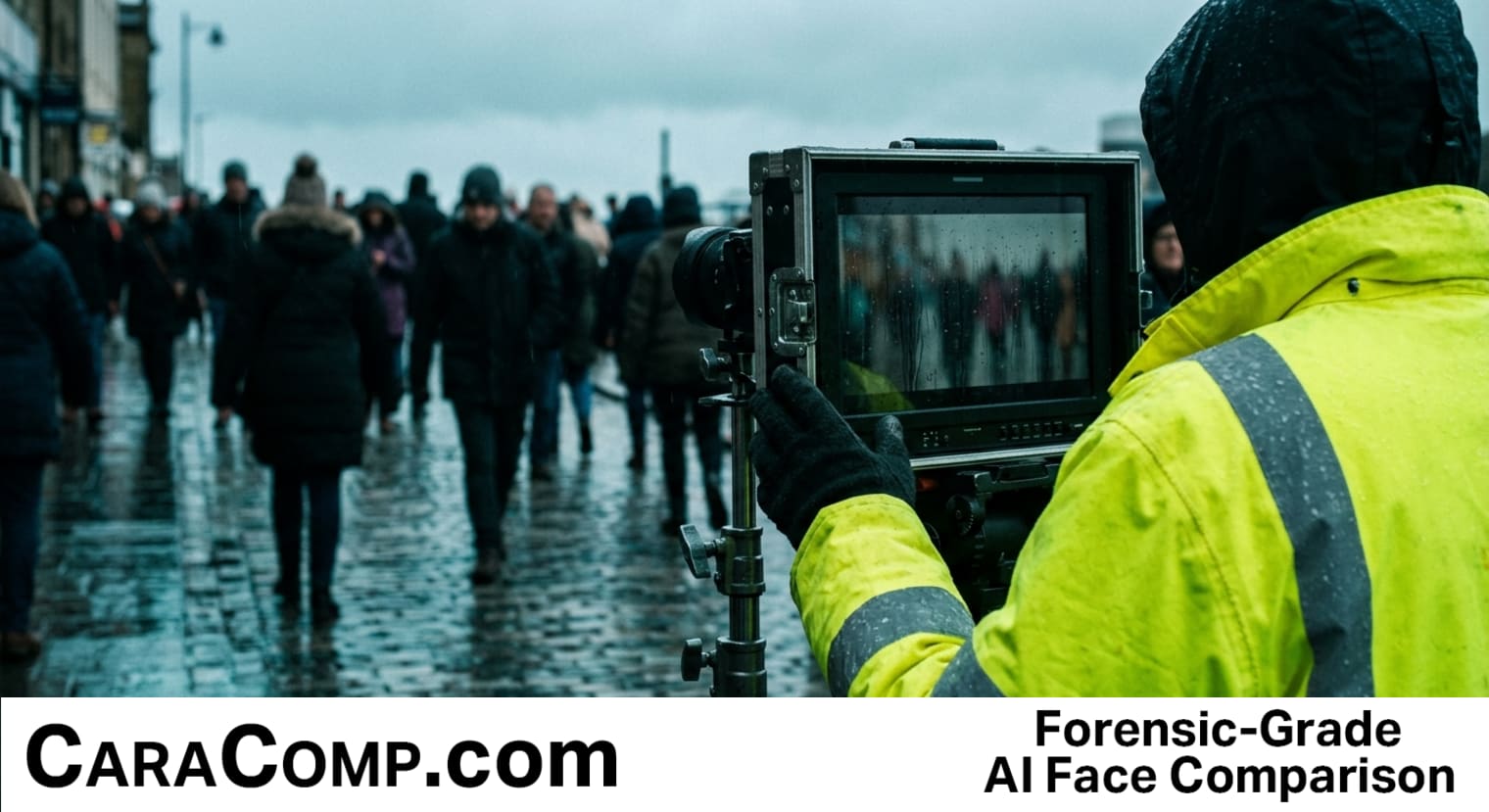
Cheshire Police just proved that the "test phase" for facial recognition is officially dead. By sweeping crowds at the Chester Races with live scanning technology, law enforcement has moved biometrics from the laboratory to the sidewalk. While civil liberties groups focus on the privacy debate, professional investigators need to look at the massive capability gap this creates: if the police are now using real-time Euclidean distance analysis as a routine tool, why are solo private investigators still spending three hours manually squinting at grainy photos?
The rollout of Operation Vigilant signals a permanent shift in the investigative landscape. We are moving toward a world where "I think it looks like him" is no longer an acceptable conclusion for a professional report. For the OSINT researcher or the solo PI, this isn't about surveillance—it’s about the professionalization of facial comparison. The public is becoming accustomed to the accuracy of these systems, and clients will soon expect the same level of technical rigor from their private hires that they see from the authorities.
The irony is that while the technology is sprinting forward, the access remains bottlenecked. Most enterprise-grade comparison tools are still locked behind $2,000-a-year contracts, leaving small firms to rely on unreliable consumer search engines that offer zero court-ready documentation. This creates a two-tier system where only the biggest agencies can afford the truth. At CaraComp, we believe the individual investigator deserves the same Euclidean distance analysis used by the big players, but at a price point that doesn't eat the entire case's retainer.
- The "Manual Method" is becoming a liability: As police deployments normalize biometric accuracy, relying on human eyesight for identification will be viewed as outdated and prone to error in a legal setting.
- Comparison vs. Surveillance: The industry must distinguish between scanning crowds (surveillance) and side-by-side case analysis (comparison). One is a policy debate; the other is a mandatory investigative standard.
- The Democratization of OSINT: The tech used in Chester shouldn't be a government monopoly. Solo investigators need affordable tools to provide the same level of certainty to their private clients.
The cameras are already on. The watchlists are already merging. For the modern investigator, the choice is simple: adopt the technology that defines the current landscape, or explain to your client why your manual methods missed a match that a computer would have caught in seconds.
Read the full article on CaraComp: Your Face Just Got Scanned Walking Down the Street — and Nobody Told You


Comments
Post a Comment