Your Face Is Your Ticket Now — And You Can't Reset It Like a Password
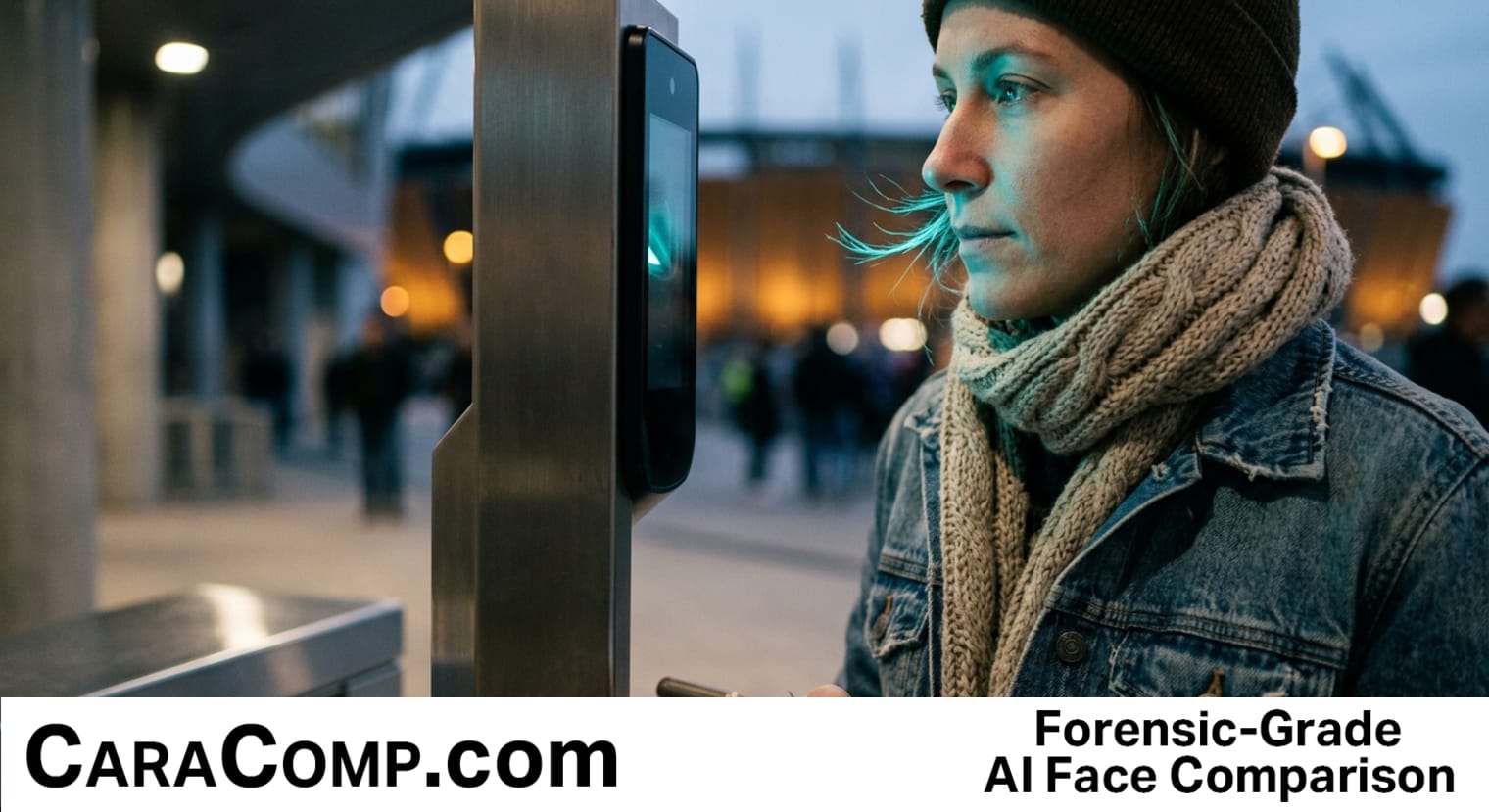
Three out of four fans at the LA Clippers’ new arena didn't just buy a ticket; they traded their biometric identity for a twenty-second shortcut through the gate. This 75% adoption rate isn't just a win for stadium logistics—it’s a massive signal that the public is rapidly normalizing facial comparison technology as a standard part of the consumer experience. While the mainstream media frets over the "creep factor," savvy investigators should be looking at the technical fallout: the data trail just got much more permanent.
As a professional, you need to look past the headlines about $2 million fines in Mexico and focus on the mechanics. These stadiums aren't just taking photos; they are generating mathematical templates based on Euclidean distance analysis. They are turning human features into unchangeable code. For the private investigator or OSINT researcher, this shift is a game-changer. It means the "visual breadcrumbs" subjects leave behind are no longer subjective—they are becoming digitized, standardized, and increasingly accurate.
The real opportunity here isn't in scanning crowds, but in the professional application of the same enterprise-grade math. If a basketball stadium can achieve 99.5% accuracy to verify a ticket holder, there is no longer any excuse for a field investigator to rely on manual "eyeballing" or unreliable consumer-grade search tools. We are entering a phase where facial comparison is expected to be part of any rigorous case analysis. If your evidence doesn't rely on the same Euclidean distance metrics used at the Intuit Dome, you’re bringing a knife to a high-tech gunfight.
- Biometric normalization is lowering the threshold for court-admissible evidence. As facial templates become common legal terminology in consumer disputes, professional reports utilizing side-by-side comparison will be met with far less skepticism by judges and insurance adjusters.
- The "Comparison vs. Recognition" distinction is your primary legal shield. While stadiums face regulatory heat for scanning anonymous crowds, the professional investigator focuses on comparing known subjects. This distinction is the key to maintaining ethical standards while utilizing high-level investigation technology.
- The "un-resetable" nature of biometrics makes visual evidence the ultimate anchor. Passwords can be changed and burner phones can be ditched, but the mathematical distance between a subject's features remains a constant that investigators can now exploit with surgical precision.
The public has already decided that convenience is worth the trade. For those of us in the trenches of case analysis, the message is clear: the technology has matured, the accuracy is settled, and the manual era is over. It’s time to stop squinting at photos and start using the math to close cases.
Read the full article on CaraComp: Your Face Is Your Ticket Now — And You Can't Reset It Like a Password


Comments
Post a Comment