Your Face Is Your Passport Now — and You Never Agreed to It
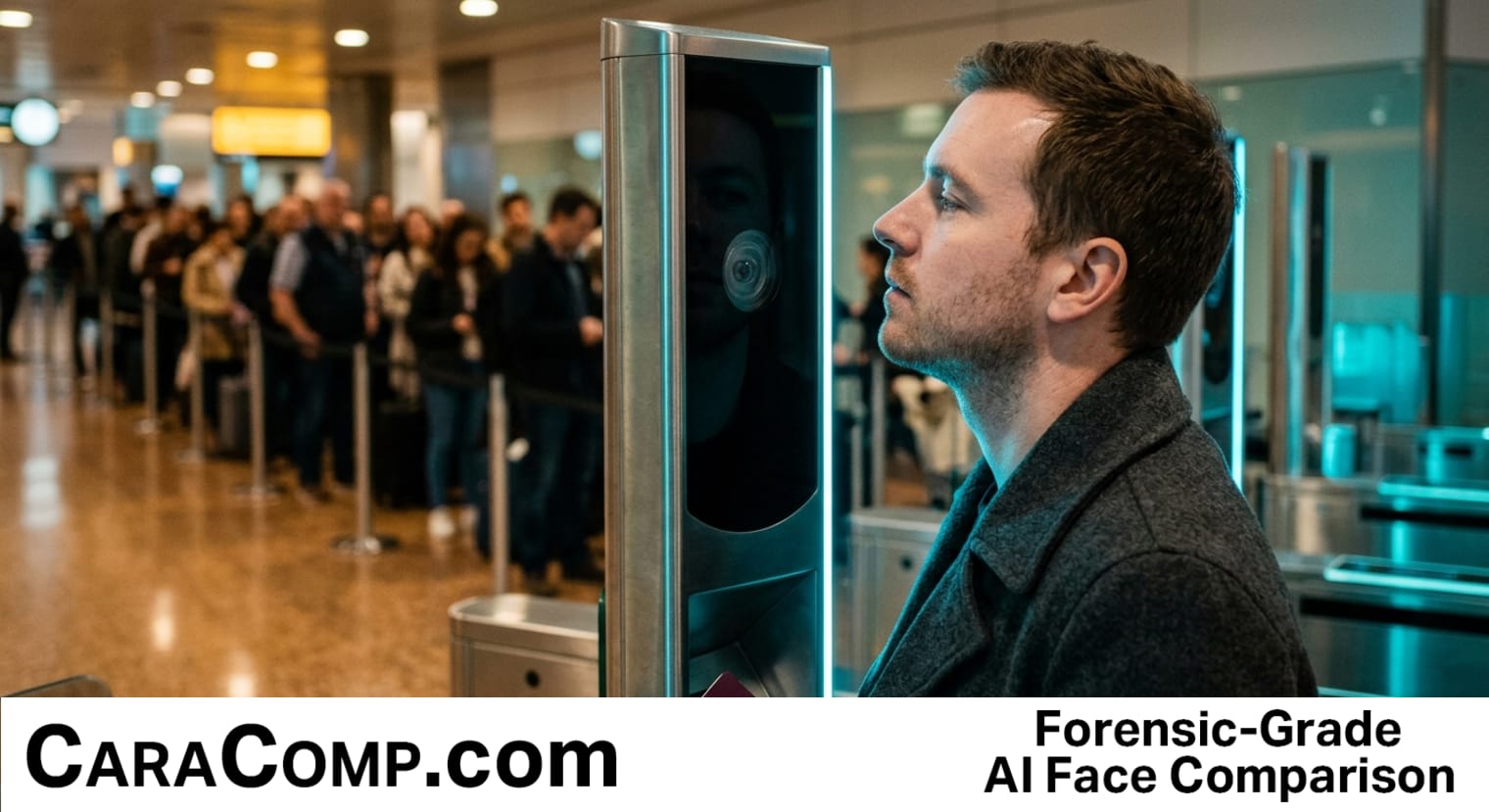
Spain’s airport authority just got slapped with a €10 million fine for biometric privacy blunders, and their response was to immediately drop another million Euros to double down on the hardware. This isn't just a tech refresh; it’s a loud signal that for major institutions, the efficiency of automated identity verification is now more valuable than the regulatory "cost of doing business."
For the professional investigator, this news is a double-edged sword. On one hand, it validates that Euclidean distance analysis—the math behind facial comparison—is the undisputed gold standard for verifying identity. On the other, it highlights the growing divide between enterprise-grade tools and the manual, "squint-and-guess" methods still used by many solo PIs and OSINT researchers. If you are still spending three hours manually comparing ears and jawlines across grainy photos, you aren’t just working hard; you are falling behind an industry that is automating around you.
The transition from "pilot program" to "standard plumbing" in Spanish airports proves that facial comparison technology is no longer a futuristic luxury. It is becoming the bedrock of modern investigative methodology. However, there is a critical distinction that often gets lost: the difference between mass surveillance and targeted facial comparison. While the public is rightly wary of scanning crowds, the investigative power lies in the side-by-side comparison of known subjects. This is where the professional wins or loses a case.
- The Efficiency Mandate: When a government agency treats a eight-figure fine as a mere speed bump, it confirms that manual identity checks are officially obsolete. High-speed, data-backed comparison is the only way to handle volume without sacrificing accuracy.
- Euclidean Standards in Court: As this tech becomes global infrastructure, "it looks like him to me" will no longer hold up in a professional report. Investigators will soon be expected to provide the same mathematical confidence intervals used by border agencies.
- Accessibility vs. Enterprise: You don't need a million-euro government contract to access this caliber of analysis. The "slow lane" of manual comparison is a choice, not a necessity, for the modern tech-savvy investigator.
The "fast lane" at the airport is built on the same logic that wins cases: precision, speed, and mathematical reliability. If you're not using these tools to close cases, you're just the person stuck in the long line while everyone else flies through.
Read the full article on CaraComp: Your Face Is Your Passport Now — and You Never Agreed to It


Comments
Post a Comment