Your Face Is Now Your Train Ticket — and Nobody Asked You First
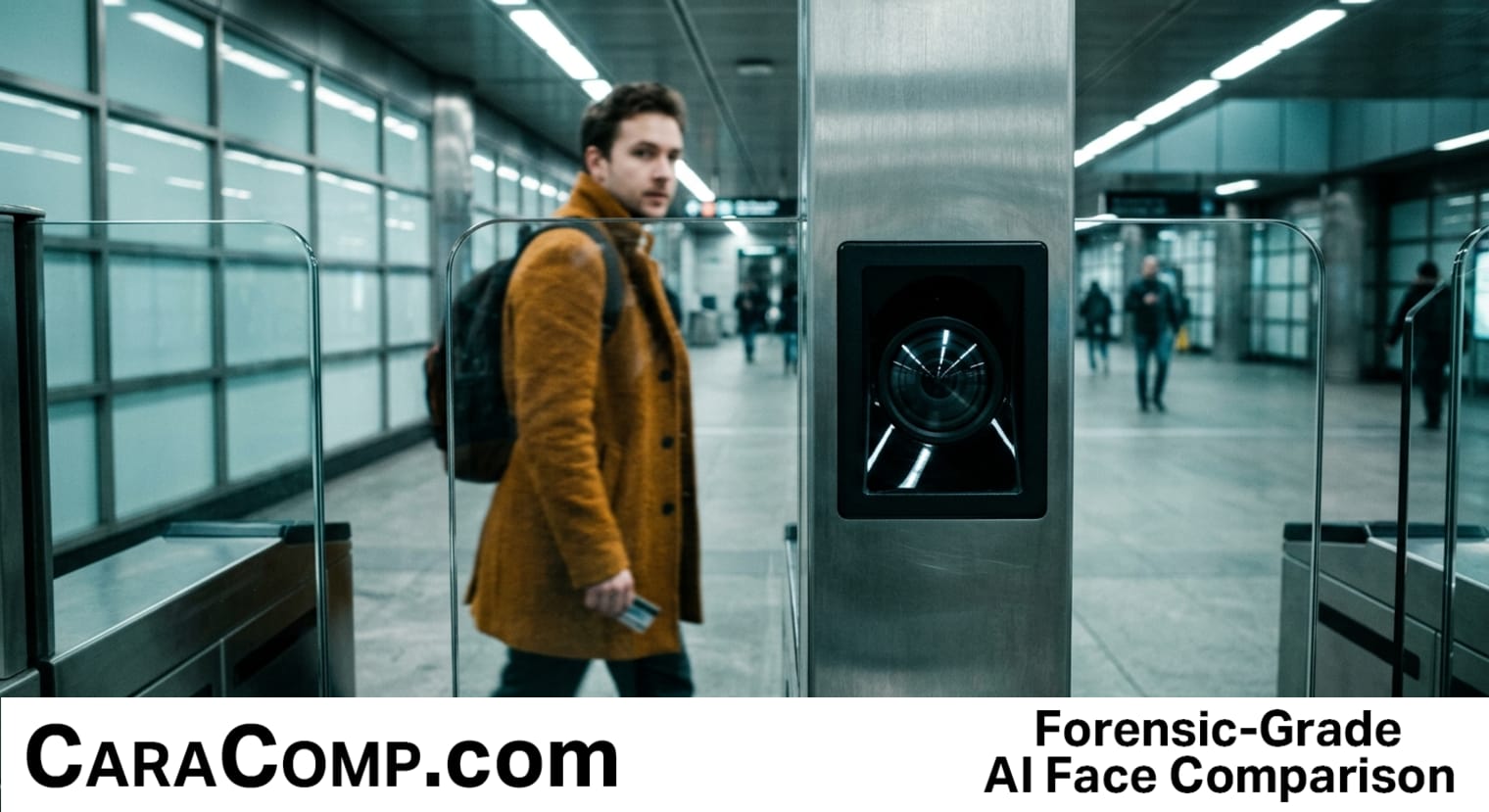
One hundred and thirty stations. That is how many Osaka Metro hubs have already swapped physical tickets for biometric gates, turning your face into a permanent, unchangeable barcode. While privacy advocates were busy debating the ethics of AI in academic journals, the infrastructure of the physical world moved on without them. In Japan, facial recognition isn't a pilot program anymore—it is the standard. For the modern investigator, this isn’t just a "tech story"; it’s a signal that the world is being indexed in real-time.
At CaraComp, we see the divide daily. There is a massive difference between the mass surveillance systems being installed in subway stations and the high-precision facial comparison tools used by private investigators and OSINT professionals. The former is about scanning crowds; the latter is about the meticulous, Euclidean distance analysis required to close a fraud case or identify a subject across multiple pieces of evidence. As biometric data becomes the "boring" background noise of our cities, the ability to analyze that data with professional-grade accuracy becomes the ultimate investigative advantage.
The real tragedy isn't just the loss of anonymity—it’s the gatekeeping of the technology. For too long, enterprise-grade analysis tools have been locked behind $2,000-a-year contracts, leaving solo PIs and small firms to rely on manual photo matching or unreliable consumer-grade search engines. When your reputation is on the line in court, "looks like him" isn't an evidence grade. You need the same Euclidean distance metrics used by federal agencies, but without the federal budget.
- The Normalization of Biometric Infrastructure: As faces become "tickets," the public will grow accustomed to being scanned, but the legal hurdles for investigators to use this data will only get higher. You need professional reporting that stands up to scrutiny.
- The Accuracy Crisis: With the rise of deepfakes and AI-generated personas, 1-to-1 facial comparison is no longer a luxury; it’s a requirement for verifying identity in a world where you can't trust your own eyes.
- The Democratization of Analysis: The tech used at these Japanese train gates shouldn't be limited to government entities. Independent investigators need affordable access to the same caliber of analysis to keep pace with modern digital evidence.
We are entering a phase where the "human eye" is the weakest link in a case. If you are still manually comparing photos, you are already behind. The future of investigation isn't just about finding the face; it’s about proving the match with mathematical certainty. We built CaraComp to give you that power for $29 a month, because enterprise-grade results shouldn't require an enterprise-sized bank account.
Read the full article on CaraComp: Your Face Is Now Your Train Ticket — and Nobody Asked You First


Comments
Post a Comment