Your Face Is Now Your Punch Card. Nobody Asked You.
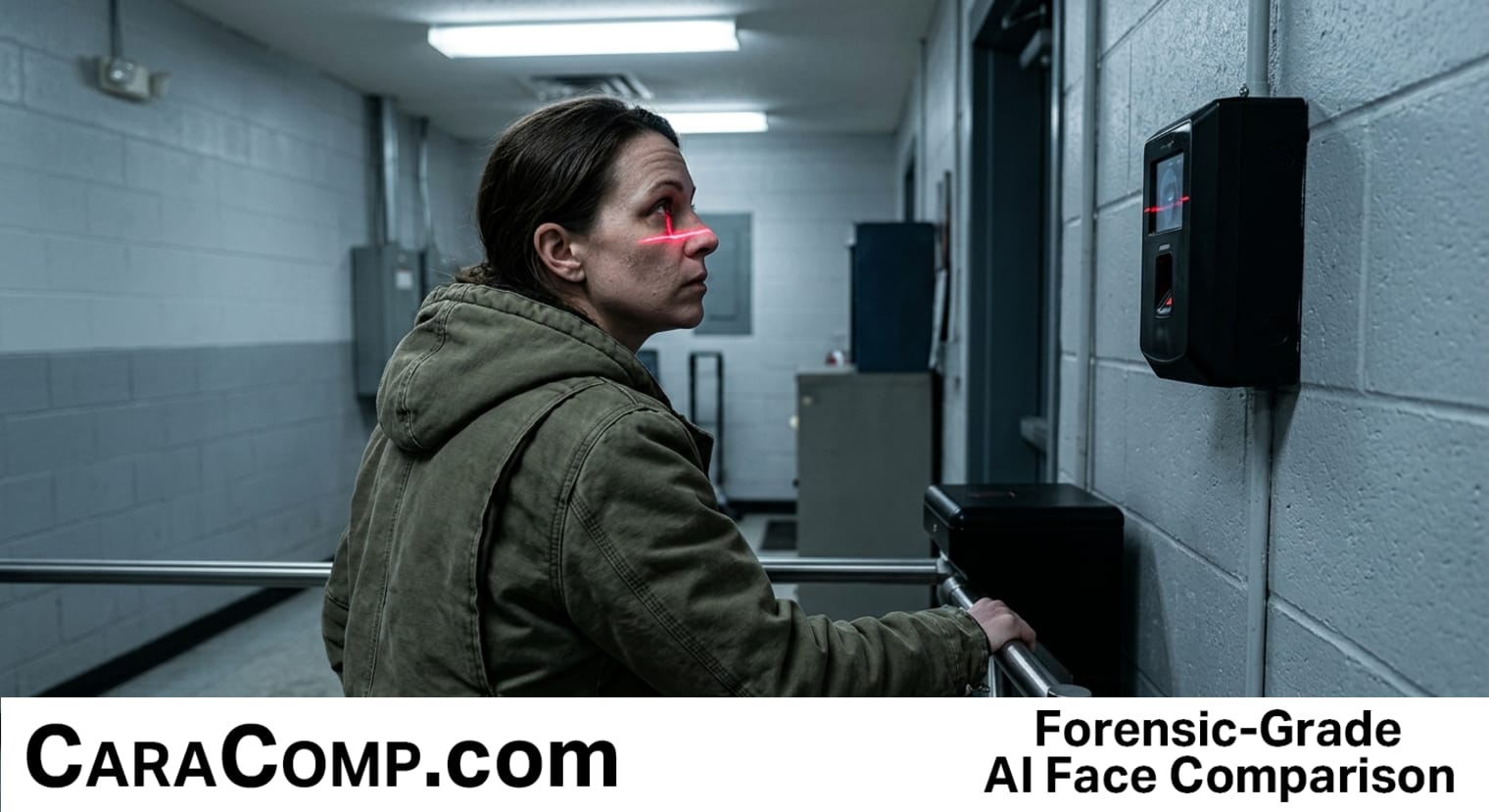
Your employer is likely treating your unique facial geometry with less care than the office toner inventory—and regulators are finally losing their patience. The state of Victoria is moving to implement the first hard legal limits on workplace biometric data collection, forcing companies to justify why they are scanning faces and logging fingerprints just to let someone into a breakroom. For years, the corporate world has treated biometric data as a convenience tool, but this legislative shift signals the end of the "wild west" for unregulated workplace scanning.
From an investigative standpoint, this news is a wake-up call regarding the distinction between bulk automated monitoring and professional facial comparison. While many employers have jumped into the deep end with "mood-reading" AI and attention-tracking software, they often lack the technical infrastructure to defend these choices in a legal setting. At CaraComp, we see this as a pivot point for the industry: the transition from intrusive, wide-net scanning toward precise, case-based analysis.
Investigators and OSINT professionals should take note—when the legal hammer drops on workplace biometrics, the demand for professional-grade, court-admissible reporting will skyrocket. If an employer cannot justify their data collection via a "less intrusive method" test, they face massive liability. This reinforces why we focus on Euclidean distance analysis for specific case photos rather than the broad, crowd-scanning models that are now under fire. True investigative technology isn't about watching everyone; it’s about comparing specific evidence with mathematical certainty.
- The "Justification Burden" is the new industry standard. Companies will soon be required to prove that a PIN or keycard wouldn't suffice before they are allowed to log a worker’s facial geometry.
- The methodology gap is widening. There is a massive difference between "black box" AI that claims to read moods and transparent Euclidean distance analysis used for professional facial comparison. Only the latter belongs in a legal report.
- Privacy compliance is becoming an investigative asset. As more jurisdictions follow Victoria’s lead, having access to tools that provide professional, batch-processed results without the baggage of bulk monitoring will be the only way to stay ahead of the curve.
This isn't just about Australia; it’s a global signal that the era of "scan first, ask later" is closing. For the modern investigator, using the right technology means more than just finding a match—it means using a methodology that stands up when the regulators come knocking.
Read the full article on CaraComp: Your Face Is Now Your Punch Card. Nobody Asked You.


Comments
Post a Comment