Your Face Is Not a Password — And You Can't Reset It
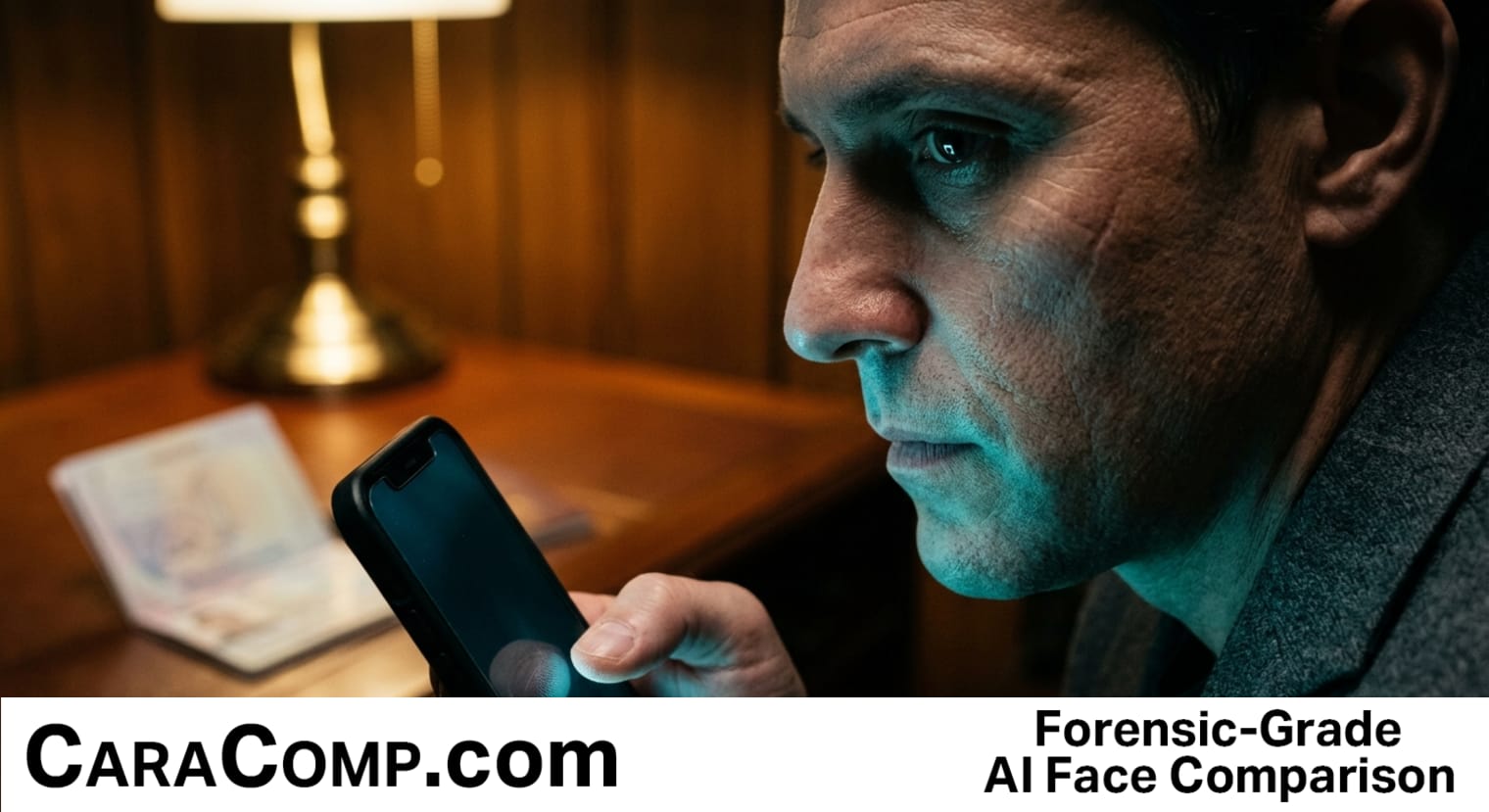
If you lose your password, you spend ten minutes on a reset page; if you lose your face, you’ve handed over your identity for the rest of your life. While the average consumer treats a "face unlock" as a high-tech convenience, criminals are beginning to treat your biometric data as a permanent, high-value asset. The emergence of malware like GoldPickaxe, which tricks users into recording face videos to create deepfakes for banking fraud, proves that the digital frontier has moved beyond simple PIN codes.
For private investigators and OSINT professionals, this isn't just a security warning—it's an operational reality. We are entering a phase where the subjects we track and the evidence we collect are increasingly tied to biometric signatures that cannot be altered. When an investigator is tasked with verifying a subject's identity across years of fragmented digital footprints, the stakes for accuracy have never been higher. Relying on manual "eyeballing" or low-grade consumer search tools is no longer just inefficient; it’s a liability to your professional reputation.
At CaraComp, we understand that professional investigation requires more than just a "match." It requires Euclidean distance analysis—the same enterprise-grade math used by federal agencies—to ensure that the facial comparison you present in a court-ready report is scientifically sound. As criminals use AI to forge identities, investigators must use better AI to confirm them. You shouldn't need a government-sized budget to access this level of precision. Whether you are hunting for insurance fraud or conducting deep-web OSINT, the ability to batch-process photos and generate professional analysis in seconds is what separates the modern investigator from the one who's about to be left behind.
- The weaponization of liveness checks means "standard" verification is no longer a safety net; it is a source of raw material for deepfakes.
- Euclidean distance analysis is the only professional standard for separating legitimate identity from AI-generated forgeries in a courtroom setting.
- The "Identity Gap" is widening; solo investigators who fail to adopt affordable, enterprise-grade comparison tech will struggle to close cases against tech-savvy adversaries.
The days of spending three hours manually comparing grainy photos are over. It’s time to stop guessing and start measuring. If you’re still relying on luck and manual comparison, you’re not just wasting time—you’re risking a critical mismatch on your most important case.
Read the full article on CaraComp: Your Face Is Not a Password — And You Can't Reset It


Comments
Post a Comment