Your Face Is Being Scanned at the Grocery Store — and a Tiny Sign Is All They Owe You
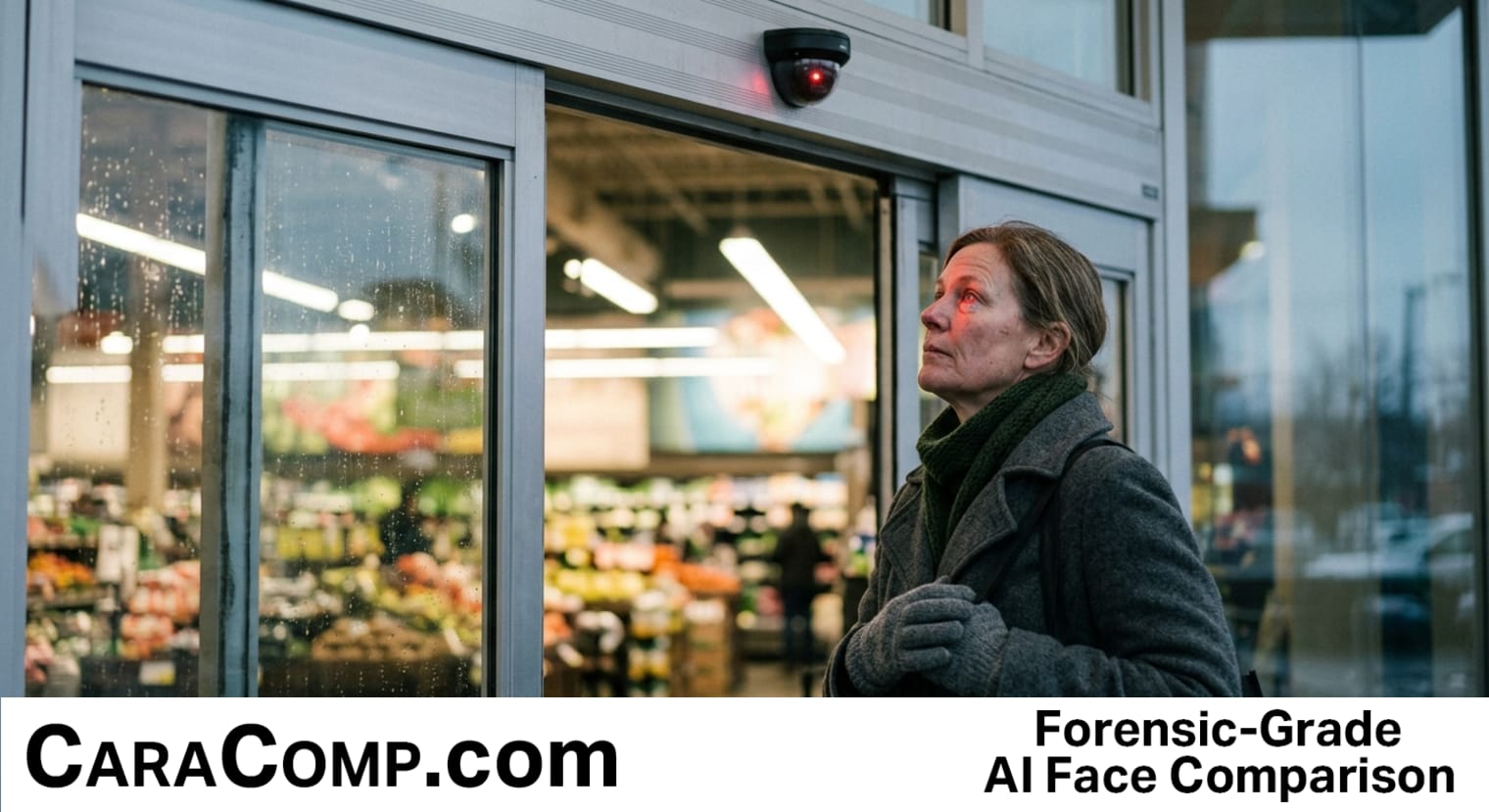
Your face is being converted into a unique mathematical string of numbers just because you walked into a grocery store to buy a gallon of milk. Most shoppers have no idea that a legal "necessity test" is the only thing standing between them and a permanent biometric record in a retail database. The recent Québec privacy ruling regarding a major grocery chain’s facial recognition pilot is a massive wake-up call for the investigative industry, and it highlights a growing divide that every private investigator needs to understand.
The ruling effectively places retail biometric scanning in a legal holding pattern, debating whether a tiny sign at a store entrance constitutes "informed consent." But for the professional investigator, the real story isn't about grocery theft—it’s about the reputation of the technology itself. As regulators tighten the screws on mass surveillance, it becomes critical to distinguish between "scanning the crowd" and "solving the case." At CaraComp, we know that facial comparison is a surgical tool, not a net to be cast over the general public.
The controversy in retail stems from scanning thousands of innocent faces to find one "bad actor." Conversely, professional facial comparison involves taking two specific images—your evidence and your subject—and using Euclidean distance analysis to determine a match. One is a privacy nightmare; the other is a standard, scientifically-backed investigative methodology. Unfortunately, when big retailers use these tools poorly, it makes the public wary of the tech that solo PIs rely on to close cases efficiently.
- Regulatory scrutiny is shifting from "if" to "how" — It is no longer enough to simply have the tech; investigators must be able to prove that their facial comparison was necessary, proportionate, and handled with professional-grade reporting that holds up in a legal environment.
- The "Surveillance vs. Comparison" divide is the new frontline — Public backlash against retail scanning makes it vital for OSINT professionals and PIs to use tools that focus on side-by-side analysis of known subjects rather than broad, automated public monitoring.
- Affordability is no longer a barrier to ethics — High-level Euclidean distance analysis is now accessible to solo firms for a fraction of the cost of enterprise systems, meaning there is no excuse to rely on unreliable "free" tools that risk your professional reputation.
The irony is that while giant retail chains spend millions on controversial mass-scanning systems, the solo investigator has often been priced out of the market. We are changing that by putting enterprise-grade comparison tools into the hands of the individuals who actually know how to use them responsibly. In an industry where a false positive can ruin a career, having a reliable, affordable, and court-ready tool isn't just a luxury—it’s a necessity for the modern investigator.
Read the full article on CaraComp: Your Face Is Being Scanned at the Grocery Store — and a Tiny Sign Is All They Owe You


Comments
Post a Comment