Your Face Is About to Replace Your Credit Card at the Grocery Store. Read This First.
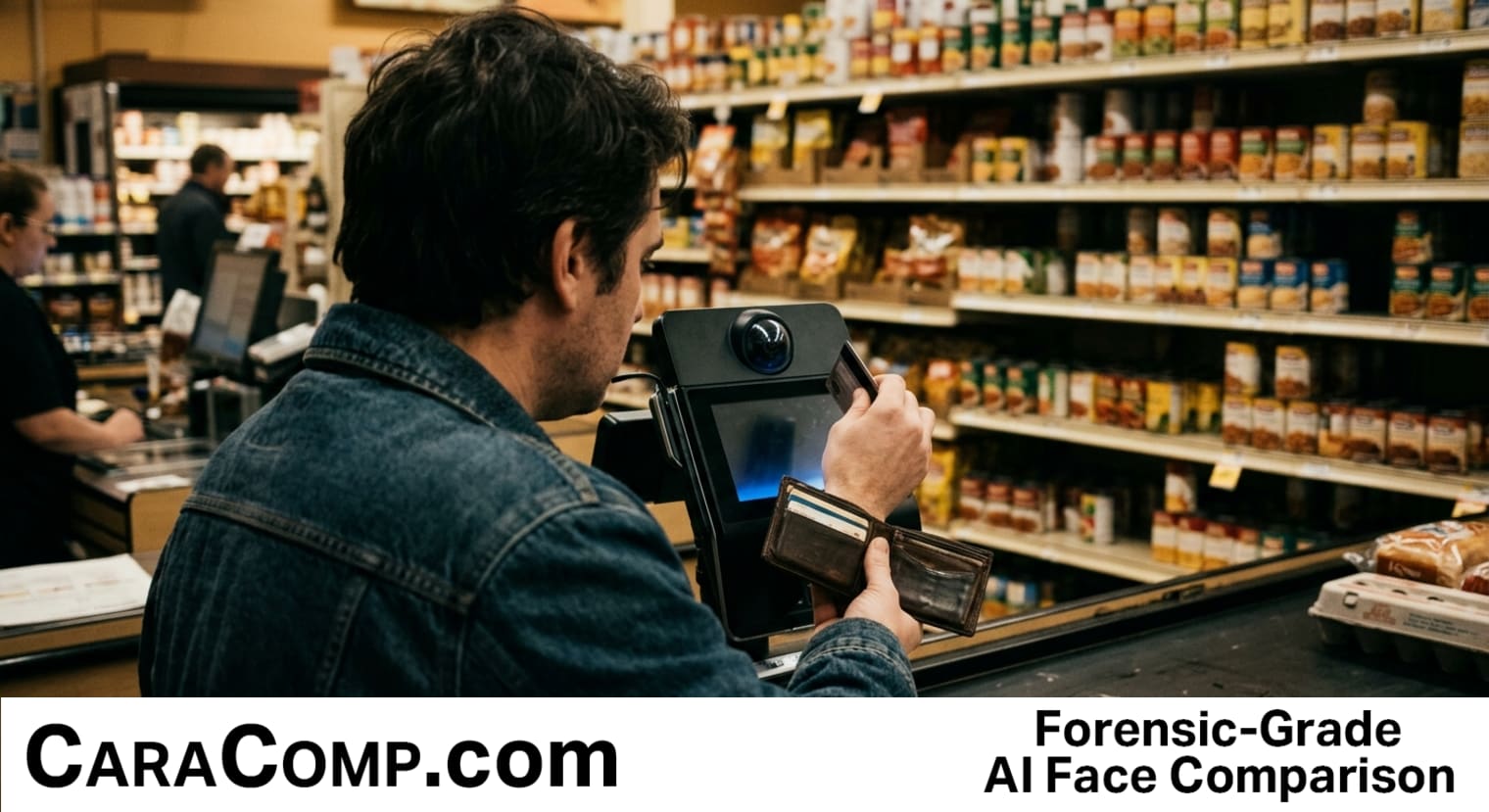
The next time you’re at the checkout, the cashier might not ask for your card—they’ll just ask for your face. While grocery stores are pitching "invisible commerce" as the ultimate convenience, they are quietly building the most vulnerable biometric databases in history. As investigators, we know exactly what happens when high-stakes identity data is treated like a low-stakes loyalty card.
Retailers are rushing to capture your facial signatures to facilitate a slice of a $5.8 trillion transaction market. But there’s a fundamental disconnect between consumer convenience and investigative integrity. For years, professional investigators have used facial comparison—specifically Euclidean distance analysis—as a precise, targeted tool to close insurance fraud and OSINT cases. Now, the retail sector is turning that tech into a mass-surveillance dragnet for milk and bread.
The problem isn't the technology; it's the application. When a supermarket stores a digital map of your face, they aren't just facilitating a payment—they are creating a permanent biometric "key" that can never be reset. If a credit card is breached, you cancel it. If your biometric signature is leaked because a mid-sized grocery chain used a cut-rate tech vendor, your identity is compromised indefinitely. For those of us in the field, this means we are about to see a tidal wave of identity cases where the "evidence" is a compromised retail scan.
From an OSINT and private investigation perspective, this shift brings several critical implications:
- Biometric Ubiquity Breeds Forensic Risk: As face-based payment becomes the norm, the security surrounding that data is often secondary to retail profit margins. Investigators must be wary of "junk" matches from unvetted consumer-grade databases that lack professional reliability.
- The Distinction Between Recognition and Comparison: Retailers are practicing mass recognition (scanning crowds), which carries heavy privacy baggage. Professional investigation relies on facial comparison (analyzing specific photos for a case), a distinction we must defend to maintain court admissibility.
- The Death of Biometric Privacy: As retail databases become targets, solo PIs and small firms should prepare for a surge in cases involving biometric identity theft and "deepfake" impersonation rooted in stolen retail scans.
We don’t need more surveillance; we need better comparison tools. While the world tries to scan your face at the checkout, savvy investigators are busy using enterprise-grade analysis to turn photos into proof—without the enterprise price tag. The future of investigation isn't about scanning everyone; it's about accurately comparing the evidence you already have.
Read the full article on CaraComp: Your Face Is About to Replace Your Credit Card at the Grocery Store. Read This First.


Comments
Post a Comment