Your Bank's Back Door Is a Selfie and a Sticky Note
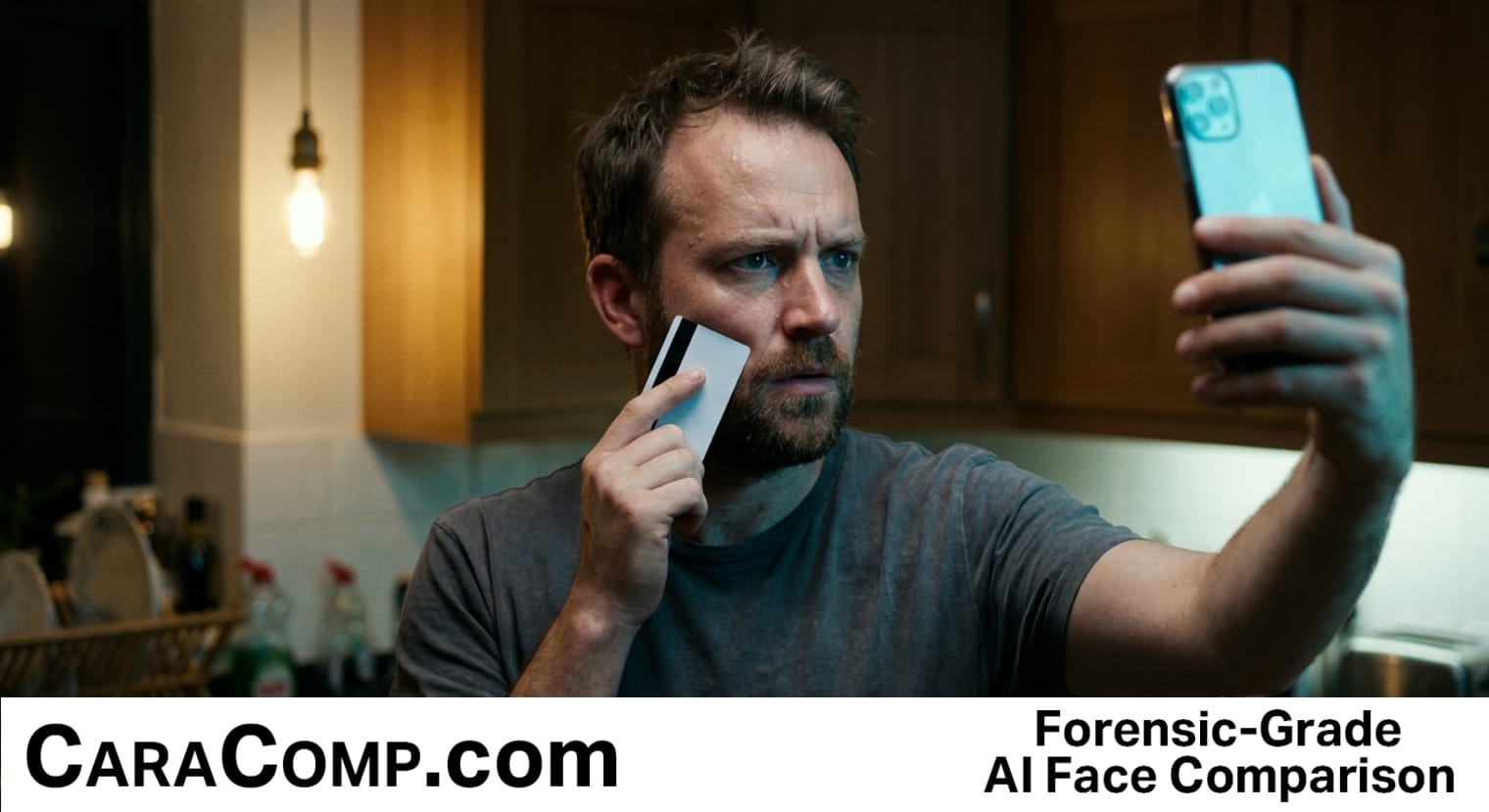
Your bank’s multi-million dollar security infrastructure has a screen door, and all a fraudster needs to kick it in is a Sharpie and a smartphone. While financial institutions brag about enterprise-grade biometrics during onboarding, the industry’s "dirty secret" is the fallback process. When a user gets locked out, the high-tech scanners are swapped for a tired customer service rep squinting at a selfie and a handwritten note. For investigators and OSINT professionals, this isn't just a security flaw—it’s a massive wake-up call regarding the reliability of human-led facial comparison.
The recent exposure of vulnerabilities at digital banks proves that "eyeballing it" is no longer a viable investigative methodology. When humans are tasked with manual facial comparison, especially under the pressure of high case volumes or support tickets, they fail. Fraudsters are now leveraging "close enough" matches and sophisticated social engineering to bypass the very systems meant to protect us. If a major bank can be fooled by a static image and a sticky note, imagine the liability a private investigator faces when relying on gut instinct or unreliable consumer-grade search tools to identify a subject.
The gap between enterprise security and manual fallback is exactly where cases are lost. Real investigation technology requires objective, mathematical proof. This is why Euclidean distance analysis—the same math used by federal agencies—is becoming the non-negotiable standard for professional investigators. We are moving toward a world where a "lookalike" isn't enough; you need court-ready reporting that proves a match through data, not just a visual hunch.
- Manual verification is the ultimate security loophole: As long as recovery processes rely on human reviewers rather than automated facial comparison, account takeover fraud will continue to skyrocket.
- The "close enough" standard is dead: Investigators can no longer stake their reputations on manual photo reviews. Professional Euclidean distance analysis is the only way to provide objective, court-admissible results.
- Affordability is the new barrier to entry: The technology to spot these fraud attempts exists, but it has historically been priced for governments. The shift toward affordable, enterprise-grade tools is leveling the playing field for solo PIs.
The Qonto case is a mirror held up to the entire investigative industry. Whether you are hunting for insurance fraud or conducting OSINT research, the tools you use to compare faces must be more sophisticated than the people trying to fool them. It’s time to move past the "selfie and a sticky note" era of identification.
Read the full article on CaraComp: Your Bank's Back Door Is a Selfie and a Sticky Note


Comments
Post a Comment