Your Bank Is About to Start Watching How Your Thumb Moves
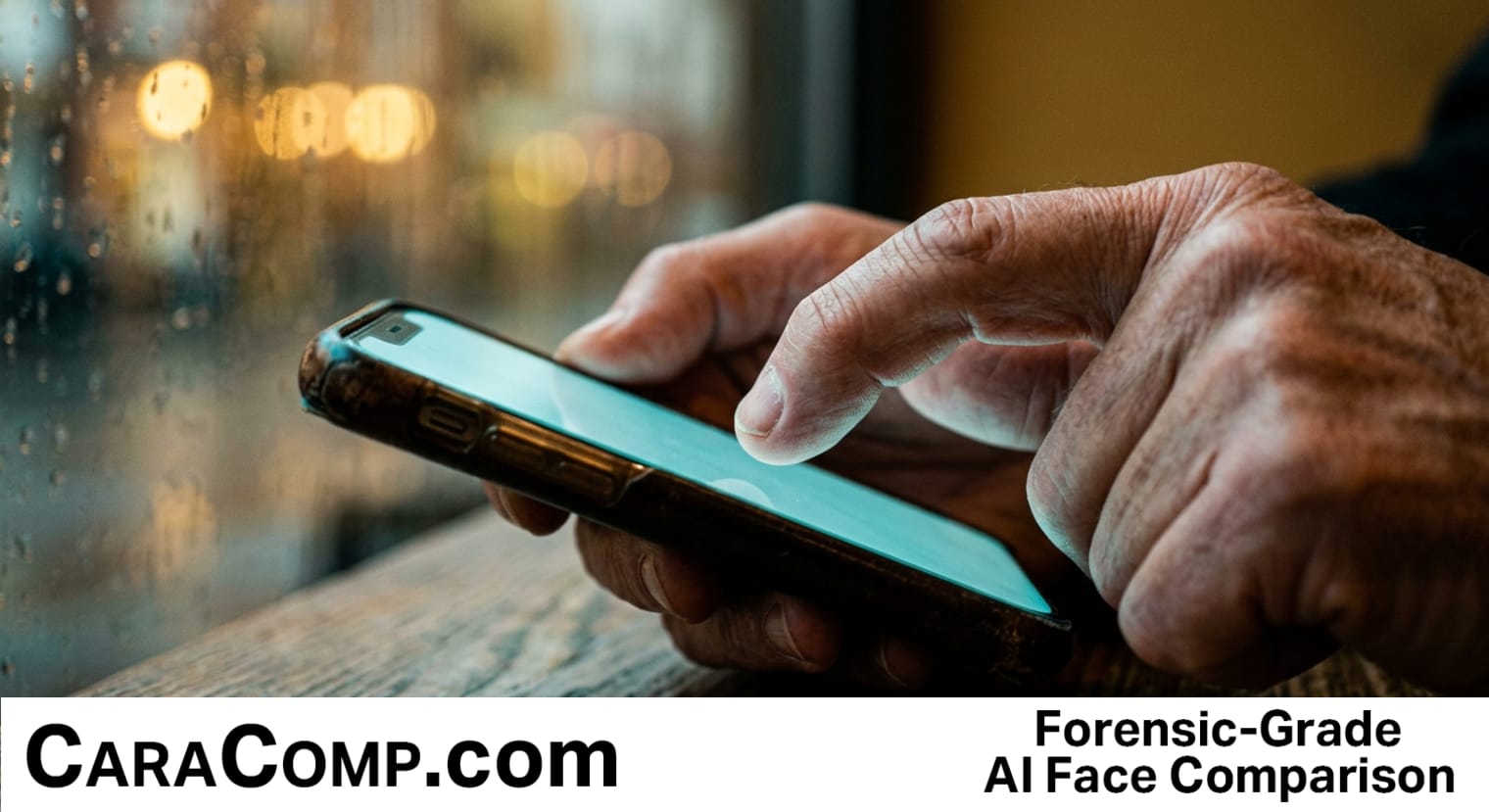
Your password is officially the weakest link in your security chain, and the banking industry has finally decided to stop pretending otherwise. Instead of asking what you know, the next generation of financial security is obsessed with how you move—specifically, the micro-rhythms of your thumb as it hovers over a "send" button. This shift toward behavioral biometrics in Singaporean banks marks a pivotal moment for anyone in the investigation technology space: we are moving from a world of static gates to a world of continuous biometric verification.
For the modern investigator, this isn't just about banking; it is a validation of the methodology we use every day. While consumer-grade tools focus on simple searches, enterprise-level security relies on the deep math of identity. At CaraComp, we see this evolution as a direct parallel to how solo investigators are now utilizing Euclidean distance analysis. Just as a bank analyzes the "behavioral distance" of a user’s interaction to detect fraud, professional investigators use facial comparison to bridge the gap between a blurry CCTV frame and a clear social media profile.
The implications for OSINT professionals and private investigators are immediate. If the world’s most secure institutions are abandoning passwords in favor of biometric interaction analysis, the days of "eyeballing" a photo and calling it a match are over. You cannot stake a professional reputation—or a court case—on manual comparison when the technical standard has moved toward automated, high-precision analysis.
- Biometrics are replacing the "Gatekeeper" model: Traditional security focused on the login. Modern investigation technology focuses on the identity itself, throughout the entire lifecycle of a case, ensuring that the person in the photo is the person in the file with mathematical certainty.
- The democratization of high-end analysis: The same logic banks use to analyze thumb movements is now available to solo investigators for facial comparison. You no longer need a multi-million dollar budget to access Euclidean distance analysis; you just need the right investigation technology.
- Professionalism requires court-ready data: As banks move toward these invisible verification layers, clients and courts will increasingly expect investigators to provide standardized, professional reporting that moves beyond "it looks like him."
The invisible shift happening in your banking app is the same shift happening in your field. The pros are moving away from manual guesswork and toward software that handles the heavy lifting of biometric comparison. If you are still spending three hours manually comparing faces, you aren't just behind the curve—you're working in a world that no longer exists.
Read the full article on CaraComp: Your Bank Is About to Start Watching How Your Thumb Moves


Comments
Post a Comment