Your AI Just Bought $340 of Vitamins. Your Fingerprint Said Yes.
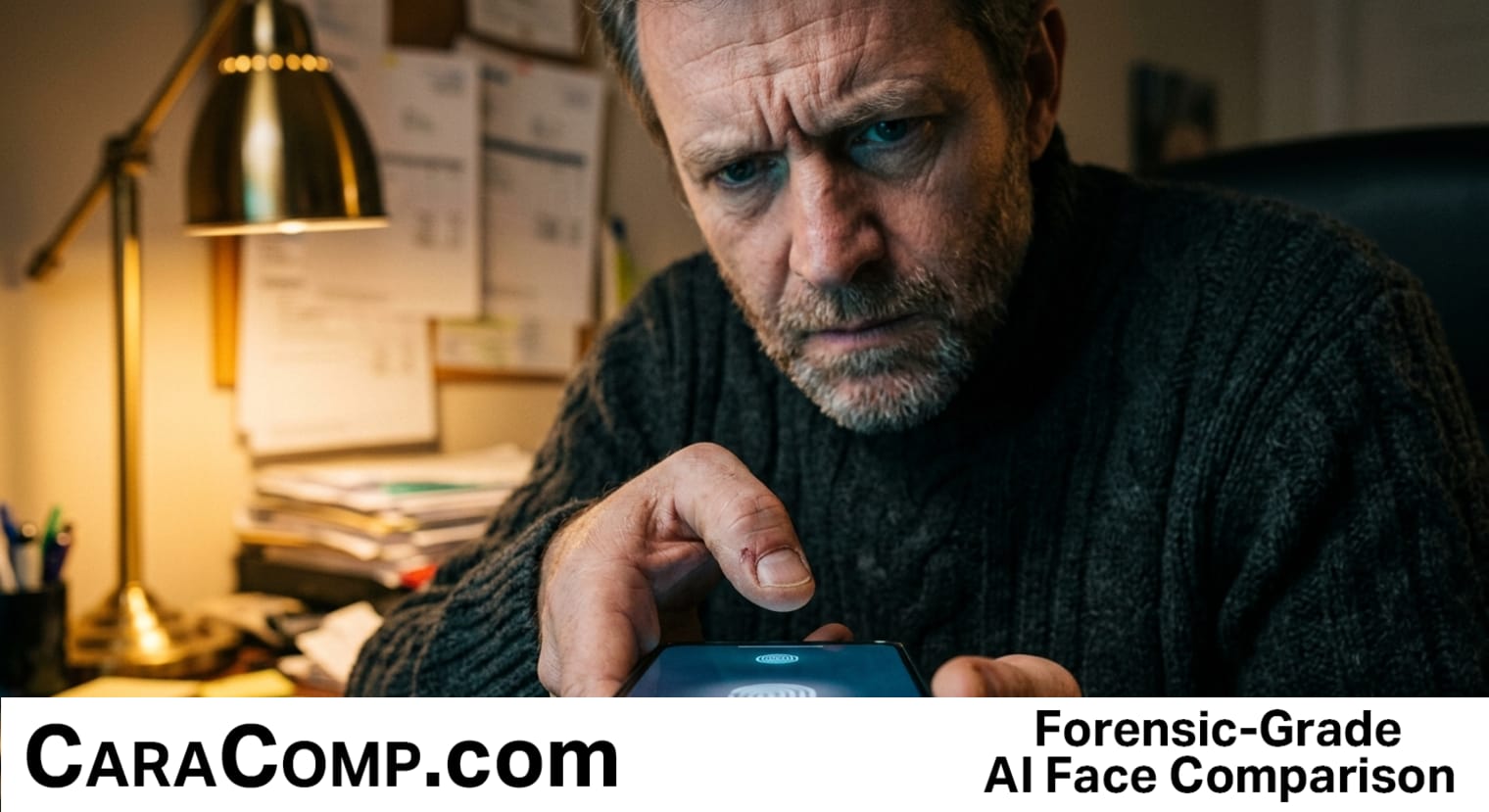
Your face just signed a contract you never read for a product you didn’t actually want. As Visa scales its "payment passkeys," we are witnessing the final death of the password and the birth of a massive liability vacuum. The industry is moving toward a reality where AI agents shop for you and your facial biometrics serve as the ultimate rubber stamp—even if you're asleep when the transaction happens.
For those of us in the investigation technology space, this is a double-edged sword. We’ve spent years perfecting facial comparison and Euclidean distance analysis to bring forensic certainty to cases. Now, that same high-level biometric certainty is being used to authorize autonomous "agentic commerce." When your phone uses a face scan to verify a purchase initiated by an AI assistant, the "who" is settled, but the "intent" is completely lost. This creates a nightmare scenario for fraud investigators and OSINT professionals: how do you prove a client didn't authorize a charge when their own biometric signature says they did?
The gap between identity and intent is where the next decade of legal battles will be fought. If an AI agent malfunctions and spends $400 on supplements because of a misinterpreted browser history, the biometric handshake makes that transaction look ironclad. We are moving toward a world where investigators won't just be asked to identify a person, but to forensically deconstruct the "intent" behind a biometric trigger.
Key implications for investigators and the biometric industry:
- The "Biometric Alibi" is dying: When facial comparison is used to pre-authorize autonomous agents, the physical presence of the user at the time of purchase is no longer a requirement for a "verified" transaction.
- Evidence standards must evolve: Standard investigation technology must move beyond simple identification. We need court-ready reporting that can distinguish between active authorization and passive biometric "unlocks" used by background processes.
- The Liability Shift: As enterprise tools become more integrated into daily commerce, solo investigators need affordable, professional-grade analysis to help clients dispute "authorized" fraud that was actually triggered by rogue AI agents.
At CaraComp, we believe that as biometrics become the universal key for commerce, the tools to analyze and compare those faces must be accessible to every investigator, not just those with enterprise-level budgets. The future of fraud investigation isn't just about finding the face—it's about verifying the truth behind the scan.
Read the full article on CaraComp: Your AI Just Bought $340 of Vitamins. Your Fingerprint Said Yes.


Comments
Post a Comment