The Coworker With Full Access to Your Data May Not Be a Real Person
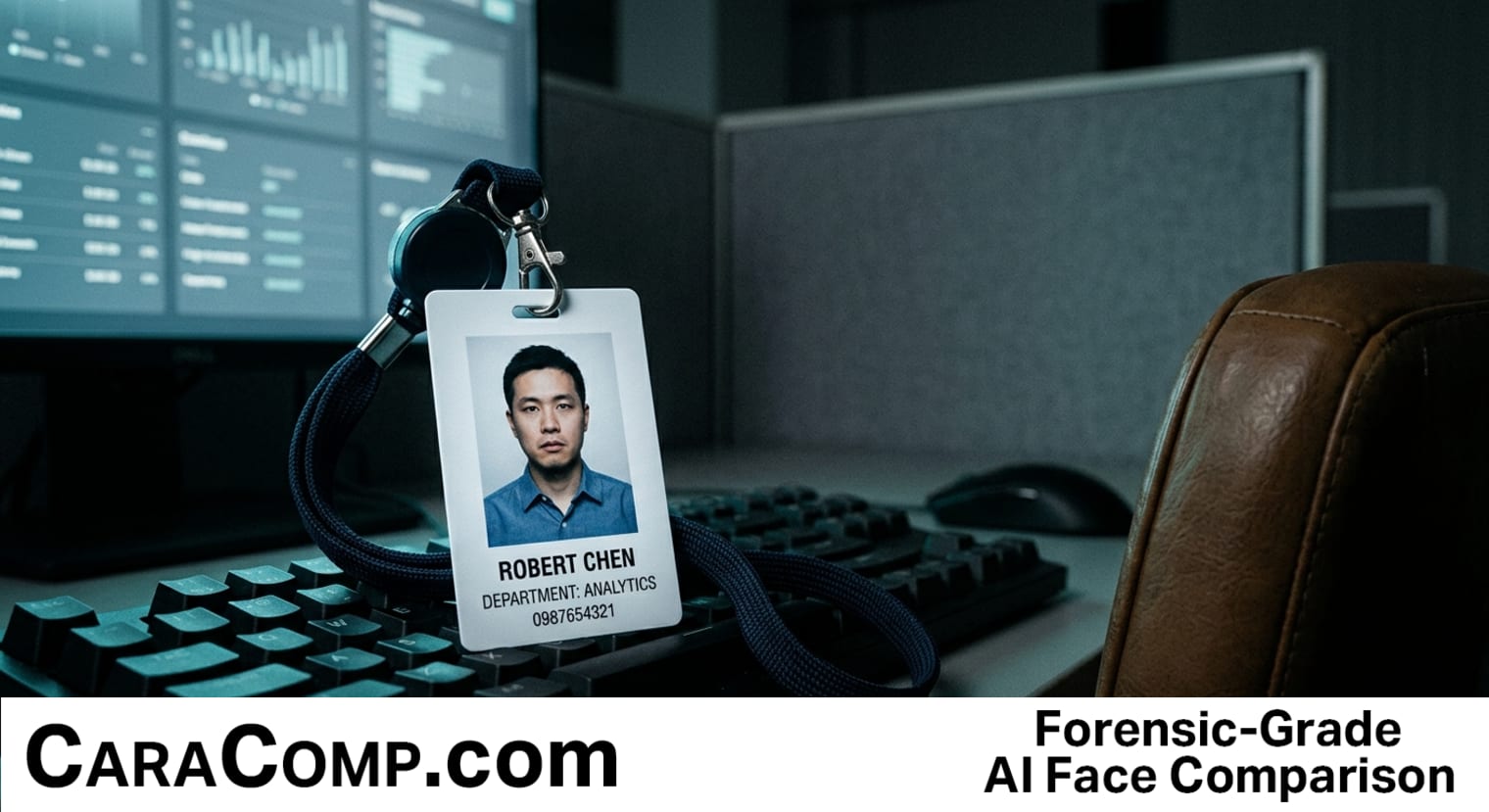
That "new hire" in your client’s IT department who has perfect credentials and a friendly Zoom presence might not actually exist. We aren’t talking about a simple case of resume padding; we are facing the rise of the synthetic coworker—an AI-generated identity designed to sail through remote onboarding and maintain long-term access to sensitive data without ever having been born.
For investigators and OSINT professionals, this is a massive shift in the threat landscape. A recent paper from the Intelligence and National Security Alliance highlights a terrifying gap: most organizations verify identity once at hiring and then never again. This "one-and-done" philosophy is a gift to bad actors using injection attacks to feed synthetic faces directly into verification pipelines, bypassing cameras entirely. If the system never "sees" a real person, it can’t tell it’s being fed a digital ghost.
This is where the distinction between "facial recognition" and "facial comparison" becomes the investigator's most important weapon. While the public frets over crowd surveillance, the real work for private investigators and fraud specialists is in side-by-side comparison. You aren't scanning a stadium; you are comparing a known subject against case photos to prove—mathematically—if they are who they claim to be. When you’re hunting a synthetic identity, manual "eye-balling" is a liability. You need Euclidean distance analysis to provide the court-ready proof that a suspect is a match or a fabrication.
- The Death of the Static Background Check: Identity is no longer a fixed state. Investigators must treat identity as a continuous variable, utilizing recurring facial comparison to ensure the person accessing a system today is the same one verified six months ago.
- Euclidean Precision is Non-Negotiable: As deepfakes become more sophisticated, solo PIs can no longer rely on low-reliability consumer tools. Professional-grade Euclidean distance analysis is the only way to generate reports that hold up under the scrutiny of a fraud investigation.
- Remote Onboarding is the New Crime Scene: The move to remote work has turned the hiring process into a primary vector for corporate espionage, making digital facial analysis a mandatory skill for modern private firms.
At CaraComp, we believe that enterprise-grade analysis shouldn't be locked behind a $2,400-a-year gate. Solo investigators need the same mathematical tools used by federal agencies to unmask these digital phantoms, without the enterprise price tag. The "fake coworker" isn't a future problem—it's a current case file waiting for a sharp investigator to close it.
Read the full article on CaraComp: The Coworker With Full Access to Your Data May Not Be a Real Person


Comments
Post a Comment