That Voice on the Phone Sounds Exactly Like Your Boss. It Takes 5 Minutes to Fake.
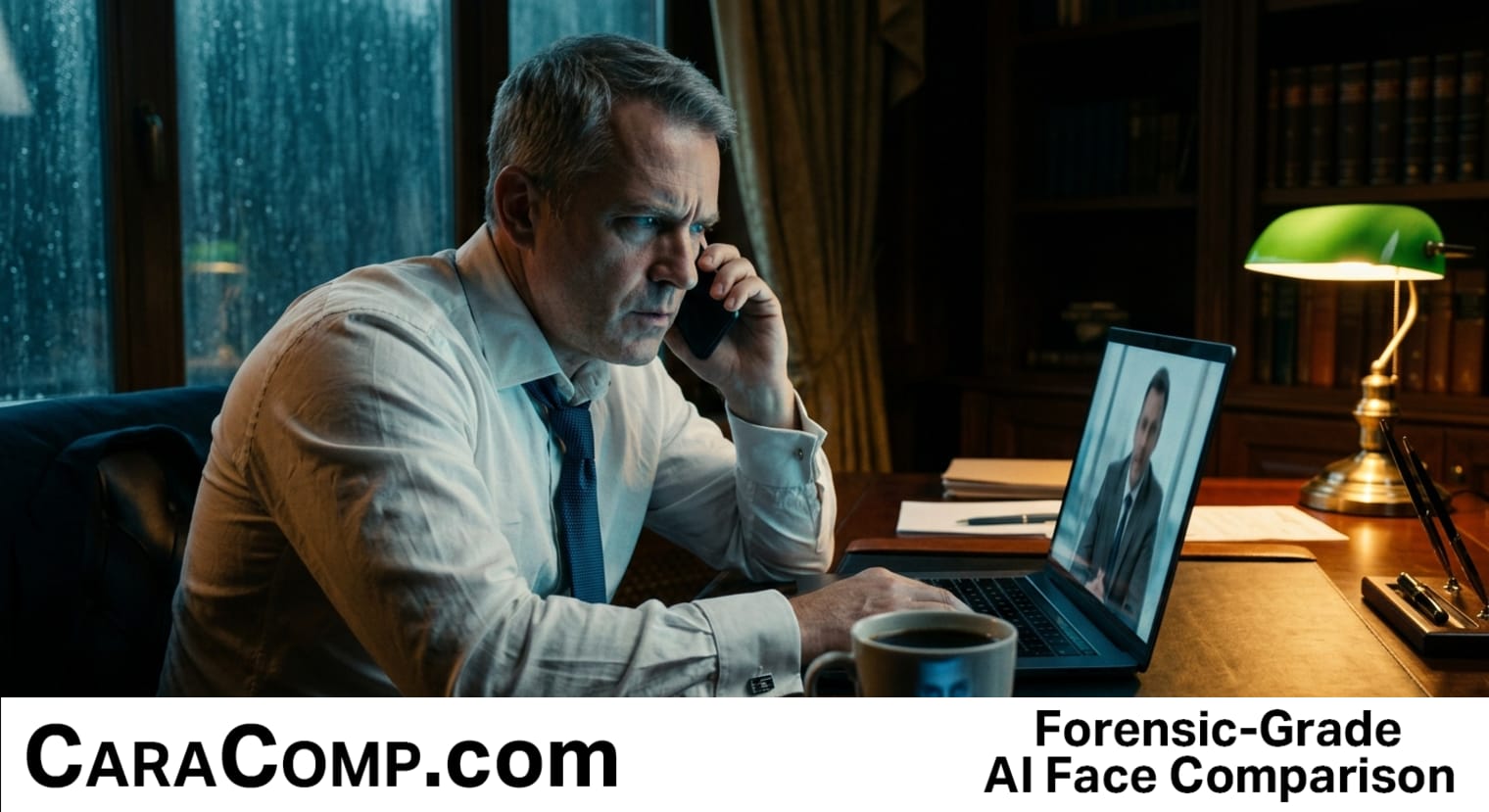
Your brain is currently operating with a 200,000-year-old security flaw: it is hardwired to trust what it sees and hears. But when a lifelike digital avatar and a cloned voice can be manufactured in under five minutes using basic business tools, your intuition isn't a safety net—it’s a liability. We have officially entered a period where "visual recognition" is no longer a reliable investigative standard; it is merely the first layer of a potential deception.
The news that Fortune 500 companies are standardizing AI avatars for internal communication should be a massive red flag for every private investigator, OSINT researcher, and fraud detective. We aren't just looking at a trend in corporate efficiency; we are witnessing the total normalization of synthetic identity. When employees and clients are conditioned to take orders from a screen-rendered spokesperson, the psychological barrier for social engineering vanishes. For a solo investigator, this means the "eyeball test" is dead. If you are still relying on manual side-by-side comparisons to verify a subject's identity, you are bringing a knife to a drone fight.
The technical reality is even more unsettling. Detection systems designed to catch these fakes are already falling behind. Research shows that standard MFCC-based voice analysis—the fingerprinting of audio—fails whenever it encounters a cloning algorithm it hasn't been specifically trained on. This creates a "vulnerability gap" where high-quality fakes walk through the front door while security is still checking the locks on the back. For professionals, the only defense is to move away from "gut feelings" and toward mathematical certainty.
- The Death of Witness Reliability: As synthetic faces become standard in business, the legal weight of "I recognize that person" is plummeting. Investigators must pivot to Euclidean distance analysis to provide court-ready proof that transcends visual "vibes."
- The Professional Tech Gap: Enterprise-grade facial comparison used to be locked behind $2,400/year contracts, leaving solo PIs to rely on manual methods or unreliable consumer tools. In a world of five-minute fakes, having affordable, high-caliber analysis isn't a luxury—it's a requirement for survival.
At CaraComp, we see this shift clearly. We don't do "crowd scanning" or surveillance; we provide the forensic comparison tools needed to verify identity in an age of digital noise. If your investigation relies on a face, you need more than a pair of eyes; you need a data-driven result that holds up under scrutiny when the human senses fail.
Read the full article on CaraComp: That Voice on the Phone Sounds Exactly Like Your Boss. It Takes 5 Minutes to Fake.


Comments
Post a Comment