That Urgent Video From Your Boss? Watch How the Face Moves — Not How It Looks
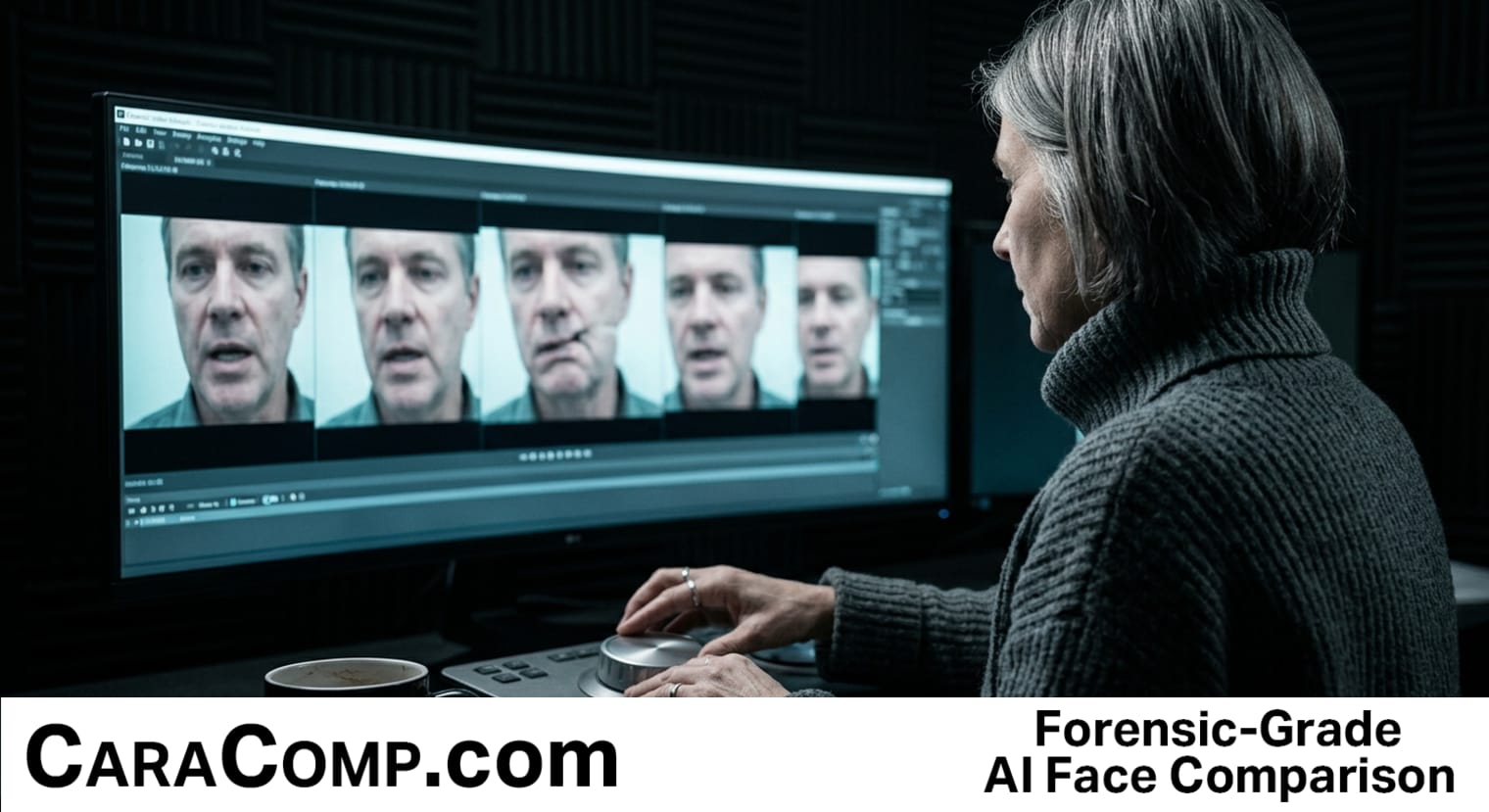
Stop squinting at skin texture and lighting to spot a deepfake. If you’re trying to catch a forgery by looking for "uncanny" eyes, you’ve already lost the tech race. The most sophisticated deceptive videos are now visually flawless to the human eye, but they fail at something much deeper: the millisecond-to-millisecond choreography of human muscles. While your brain struggles to find a digital seam, the math behind facial movement tells a different story.
Recent breakthroughs from the University of Tokyo prove that facial movement is significantly harder to fake than facial appearance. By analyzing 53 specific parameters of facial behavior, researchers achieved 95%+ accuracy in spotting fakes. This isn't just a win for academic labs; it’s a wake-up call for every private investigator and OSINT researcher still relying on "gut feeling" or manual frame-by-frame comparison. If you aren't using investigation technology that leverages Euclidean distance analysis to compare faces, you’re essentially bringing a knife to a high-tech gunfight.
The industry is shifting from static visual checks to behavioral biometric analysis. For the solo PI or small firm, this usually sounds like "enterprise-only" tech with a $2,400 price tag. But the reality is that a face isn't just a collection of pixels—it's a biological map. When a deepfake generates a face frame-by-frame, it often ignores the physical momentum of a smile or the subtle muscle shifts that precede speech. It lacks biological continuity. For an investigator, being able to mathematically prove these inconsistencies is what turns a "hunch" into a court-ready report.
- Movement is the ultimate "proof of life." Visual artifacts can be smoothed out with AI, but the biological relationship between audio and facial muscle response is nearly impossible to replicate perfectly across a full video, providing a massive advantage for case analysis.
- The "60-second rule" changes the OSINT landscape. Having just one minute of authentic reference footage allows for a personalized movement signature, giving investigators a definitive baseline to expose even the most high-end forgeries.
- Affordability is no longer a barrier to precision. The same Euclidean distance analysis used in high-level detection is now accessible for field work, allowing solo firms to produce professional results without government-sized budgets.
We’ve reached the point where your eyes can be fooled, but the geometry of a face cannot. For the investigator juggling multiple cases, the lesson is clear: stop wasting hours on manual observation. The future of the field isn't in looking closer; it's in calculating better. If you aren't integrating automated facial comparison into your workflow, you're leaving your reputation up to chance.
Read the full article on CaraComp: That Urgent Video From Your Boss? Watch How the Face Moves — Not How It Looks


Comments
Post a Comment