That "Urgent" Call From Your Boss? The Face and Voice Are Fake — and It Just Stole $1.1 Billion
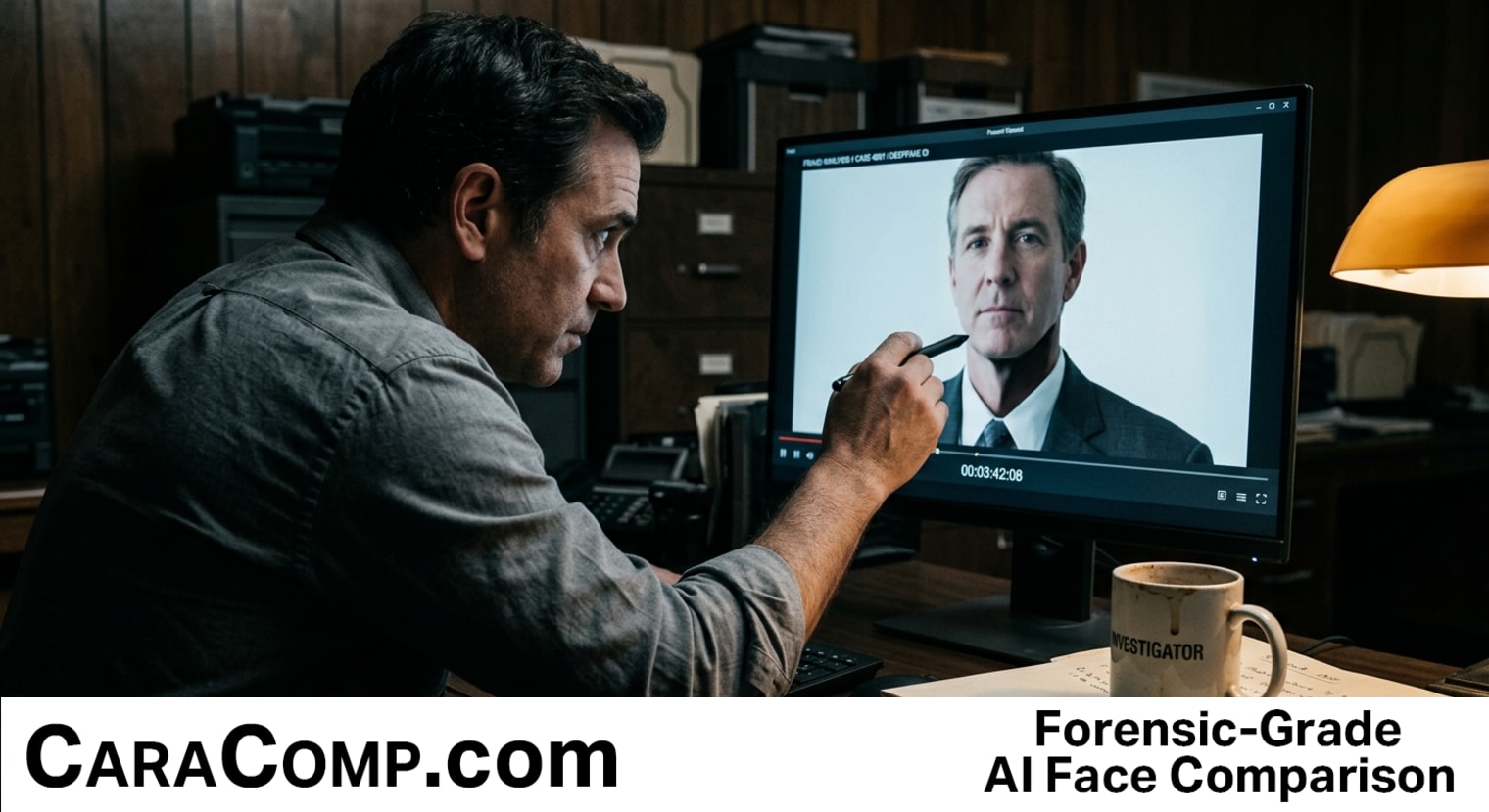
Your eyes are officially lying to you. If you are still relying on a "gut feeling" or a manual side-by-side glance to verify a subject’s identity, you aren’t just outdated—you are a professional liability. The news that AI-powered deepfakes siphoned $1.1 billion from U.S. corporate accounts in a single year isn't just a corporate tragedy; it is a total collapse of visual trust in the investigative field.
The NatWest CEO incident proves that "authority bias" is being weaponized at scale. When a fabricated video call can convince a smart employee to move $25 million in one afternoon, the traditional PI toolkit is officially broken. For the solo investigator or the OSINT researcher, this represents a terrifying shift in the landscape. We are no longer just looking for people; we are looking for the truth behind a digital mask. If a criminal can clone a CEO’s voice and face in minutes, how can a solo investigator sitting in a surveillance van expect to maintain a 100% true-positive rate using nothing but their own intuition?
At CaraComp, we view this as the ultimate wake-up call for the industry. The gap between enterprise-grade criminals and solo investigators is widening because of these AI-driven tactics. To close that gap, investigators must stop "eye-balling" photos and start using the same Euclidean distance analysis used by the world's most advanced agencies. This isn't about scanning crowds in a mall; it’s about forensic-grade facial comparison. When the "evidence" can be synthesized by a laptop, your counter-analysis must be rooted in math, not a guess.
- The End of Subjective Verification: Visual trust is dead. Investigators must pivot from "it looks like him" to "the biometric data confirms a match." Subjective reports will no longer hold up in court when deepfakes are part of the common narrative.
- Affordable Counter-Tech is Mandatory: If criminals are using free software to fake identities, investigators cannot afford to spend $2,000 a year on enterprise tools just to stay competitive. Access to reliable comparison data is now a baseline requirement for survival.
- Professional Credibility Risk: One missed match or one false positive on a deepfake case can destroy a PI firm’s reputation. Objective, batch-processed comparison is the only way to safeguard your case results.
We are entering an age where a "familiar face" is a weapon of choice. The question is no longer whether you can spot a fake, but whether you have the technology to prove it. For the investigator who refuses to evolve, the $1.1 billion loss isn't just a headline—it's a warning shot.
Read the full article on CaraComp: That "Urgent" Call From Your Boss? The Face and Voice Are Fake — and It Just Stole $1.1 Billion


Comments
Post a Comment