That Rage-Bait Modi Video? It Was Built to Make You Share Before You Think
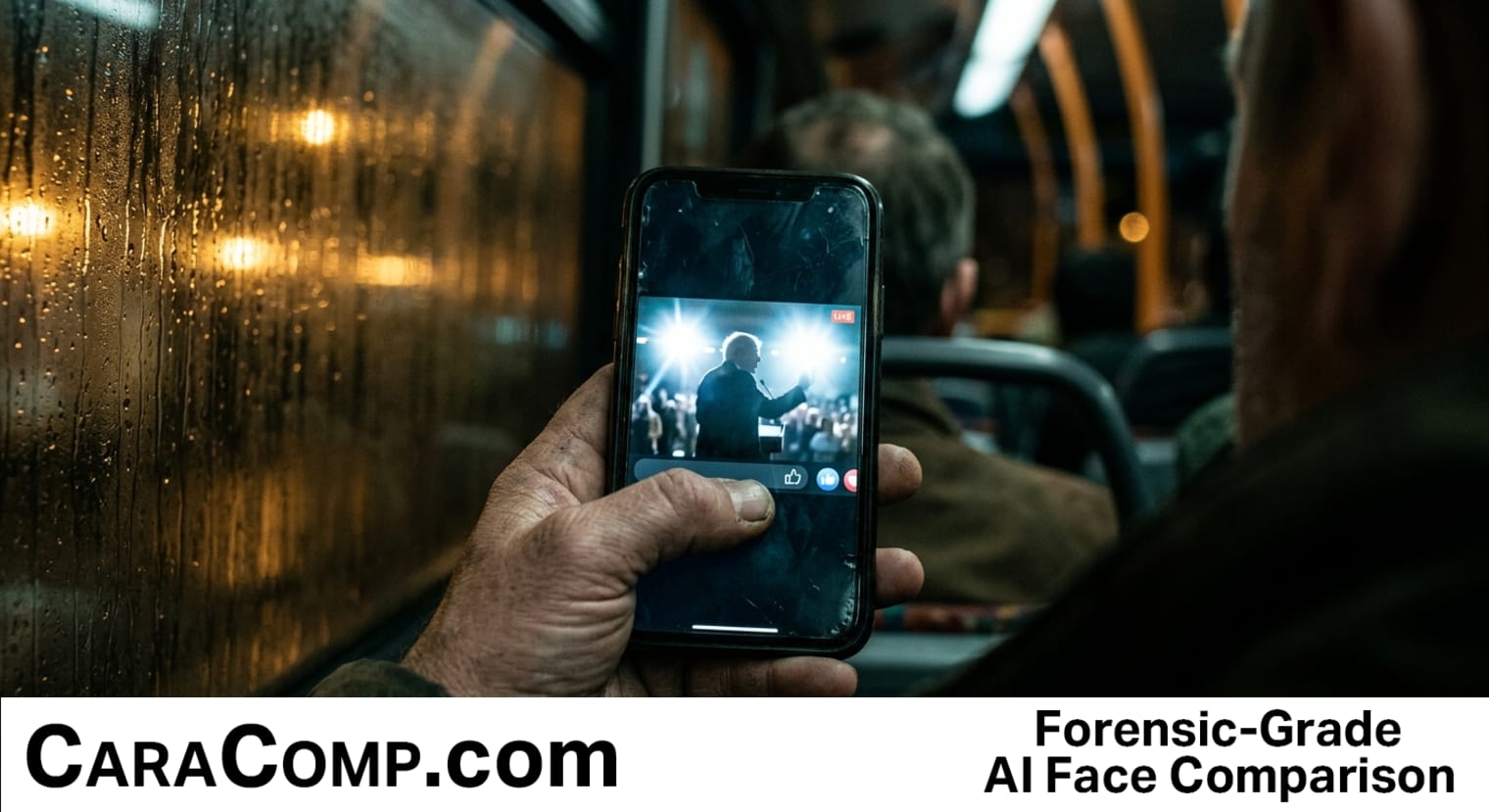
The most dangerous deepfakes aren't the ones trying to steal your bank password—they’re the ones designed to hijack your thumb for exactly three seconds. The recent surge in AI-generated videos of world leaders like Narendra Modi proves a chilling point for the investigative community: deepfakes don’t need to be perfect to be effective. They just need to be fast enough to trigger a reaction before your skeptical brain can even process the frame rate.
For private investigators and OSINT researchers, this isn't just a social media trend; it’s the total collapse of the "eye test." When half a million people follow pages fueled entirely by AI-manipulated engagement bait, the baseline for digital evidence shifts permanently. We are moving into a reality where manual visual verification is a professional liability. If you are still squinting at a screen to decide if a subject in a grainy surveillance clip matches a social media profile, you are bringing a knife to a drone fight.
The real threat to modern investigations isn't just "fake news"—it’s the sheer volume of noise. Investigators are being buried under a mountain of algorithmically generated content that makes finding the truth a needle-in-a-haystack operation. This is why Euclidean distance analysis is no longer a luxury reserved for federal agencies; it is a survival tool for the solo PI. You need mathematical certainty and objective similarity scores, not a "hunch," especially when your reputation and court-ready reporting are on the line.
- The "Verification Gap" is the new crime scene: As deepfakes become tools for engagement farming, the ability to rapidly run batch comparisons across multiple sources is the only way to maintain a high true-positive rate without billing 20 hours for three hours of work.
- Reputation hinges on technology, not just tenure: Clients no longer respect an investigator who relies on manual methods. Professional-grade facial comparison software is now the barrier to entry for high-stakes fraud and identity cases.
- The critical shift from recognition to comparison: While the public argues over crowd surveillance, the real investigative work happens in comparison—side-by-side analysis of known vs. unknown subjects using objective biometric data that stands up to scrutiny.
At CaraComp, we see this as a call to arms for the solo investigator. You shouldn't need a six-figure government budget to see through the AI noise and identify a subject. The technology to debunk a fake or confirm a match exists—it’s just a matter of who has the sense to use it.
Read the full article on CaraComp: That Rage-Bait Modi Video? It Was Built to Make You Share Before You Think


Comments
Post a Comment