That "Made by AI" Label? It's Hiding Something You Can't See
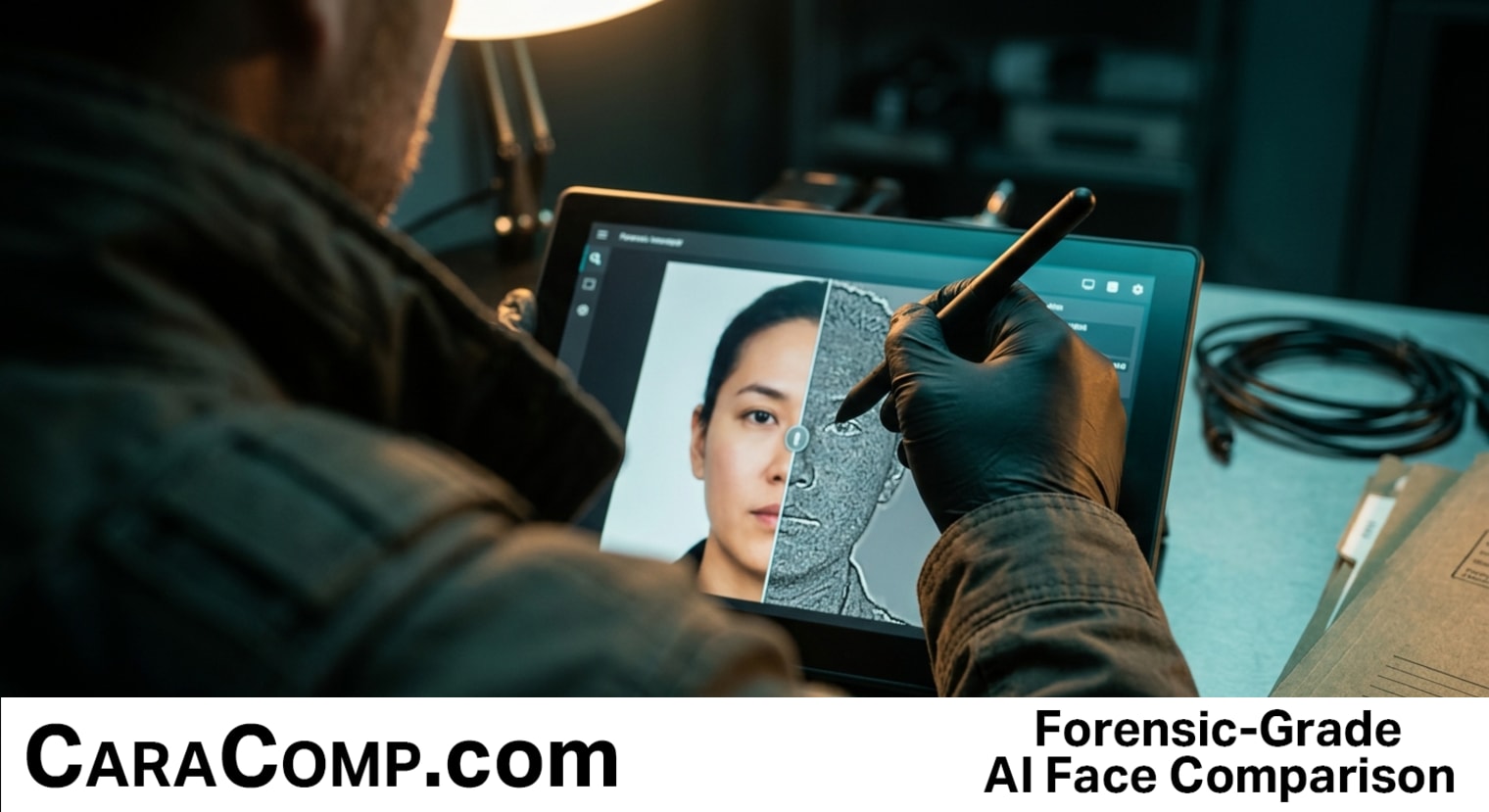
The "eye test" for digital evidence is officially dead. If you are still trying to spot a deepfake by looking for blurred earlobes or strange finger counts, you’re already behind the curve. A staggering 62% of AI image generators currently fail to meet the upcoming EU AI Act standards for watermarking. By August 2026, most of the tools producing synthetic content today will be legally non-compliant, facing fines that could hit €15 million.
For the professional investigator, this isn’t just a regulatory hurdle; it’s a fundamental shift in how we establish the chain of custody for digital imagery. In the world of facial comparison, where we rely on precise Euclidean distance analysis to match a suspect to a scene, the "origin" of a file is just as critical as the pixels themselves. We are moving away from a world of "looking for fakes" toward a world of "verifying signals."
The industry is currently obsessed with visible labels, but those are child's play. They can be cropped, screenshotted, or scrubbed. The real battleground is in imperceptible, machine-readable signals baked into the file's data. For OSINT researchers and private investigators, this creates a new hierarchy of evidence. An image without a cryptographic provenance signal will soon be as useless in court as a witness who can't verify their own identity.
We see this as a win for high-integrity investigation technology. While consumer-grade search tools often ignore these deeper data layers, professional-grade analysis requires knowing exactly what you are looking at. The EU is effectively mandating a "digital birth certificate" for every AI-generated face, making it easier to separate synthetic noise from the real-world subjects that matter to your case.
- Visual verification is obsolete: Investigators must stop relying on manual "glitch hunting" and start using tools that can read hidden machine-readable signals and C2PA metadata.
- Evidence reliability will bifurcate: Files that lack standardized, multi-layer watermarking (metadata, imperceptible signals, and logs) will eventually be dismissed by courts as unverifiable.
- The "Verification Gap" is the new risk: With 62% of AI tools currently failing these standards, the risk of unverified synthetic media entering your case files is at an all-time high.
As the industry races to catch up with these 2026 deadlines, the message to the investigative community is clear: if you aren't using technology that looks deeper than the surface of a photo, you aren't doing your job. The proof isn't just in the pixels anymore—it's in the data hidden behind them.
Read the full article on CaraComp: That "Made by AI" Label? It's Hiding Something You Can't See


Comments
Post a Comment