That "Insurance Rep" on Video Might Be a Deepfake — and Your Medical File Is the Prize
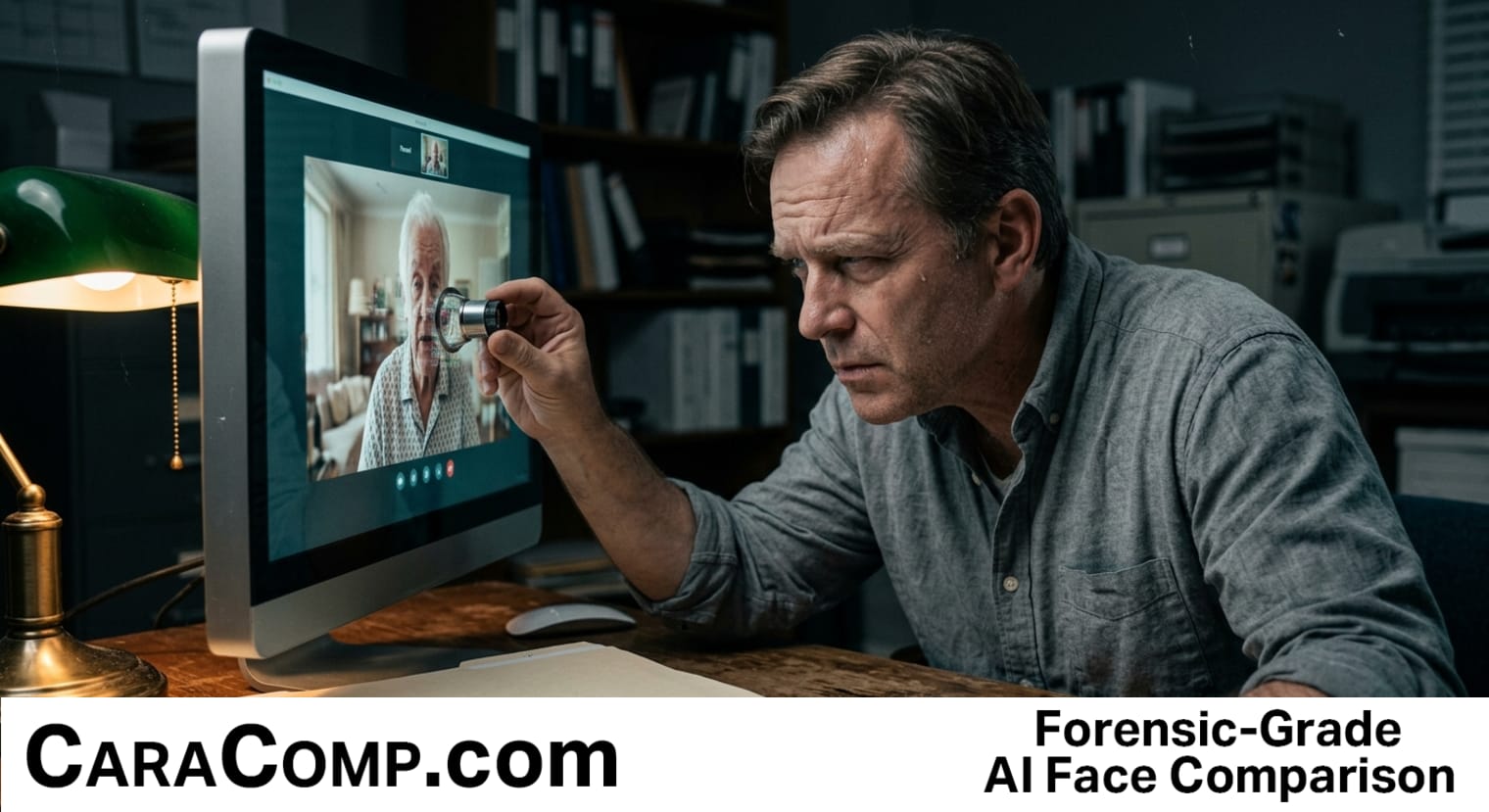
The "physician" on your screen looks perfect—right down to the subtle crinkle in their eyes and the professional stethoscope draped around their neck. But they aren't real. They are a synthetic facade designed to bleed your medical history dry. This isn't a hypothetical threat; it’s the new frontline of insurance fraud, and the manual verification tools we’ve relied on for decades are effectively blind to it.
When $40 billion in projected losses is on the table, the old way of "eyeballing" a claimant or a witness is a recipe for professional negligence. For private investigators and insurance SIU teams, the challenge has shifted from simple identification to a more technical question: does the person in this video actually match the historical evidence on file, or are we looking at a mathematically generated mask? The prize for the fraudster is your medical file—a permanent record that can't be reset like a stolen password.
The barrier to entry for this kind of fraud has collapsed. You don’t need a specialized degree to generate a fake medical history or a synthetic video mask; you just need a laptop and a prompt. Meanwhile, the solo investigator is often left caught between two bad options: spending three hours manually comparing photos—which is prone to human error—or paying thousands of dollars a year for enterprise software that was built for federal agencies, not independent firms.
This is where the industry is moving. We can no longer treat facial comparison as a "nice-to-have" add-on for high-profile cases. It is the core of the modern investigative workflow. By leveraging Euclidean distance analysis, investigators can move past the limitations of human perception. This mathematical approach to comparison doesn't care if a deepfake looks "convincing" to a human eye; it only cares about the geometric reality of the facial structure. For the tech-savvy investigator, this isn't just about efficiency—it's about survival in an era where digital evidence is increasingly untrustworthy.
- The "Trust Gap" is widening: Investigators must now assume that every digital interaction is potentially synthetic until proven otherwise through rigorous facial comparison.
- Data-driven evidence is the only court-ready defense: Subjective opinions on "likeness" are failing. To maintain a professional reputation, investigators need mathematical proof—like Euclidean distance metrics—to back up their case files.
- Affordability dictates the winner: The firms that will thrive are those that adopt enterprise-grade investigation technology without the enterprise price tag, allowing them to close fraud cases faster than manual-reliant competitors.
Read the full article on CaraComp: That "Insurance Rep" on Video Might Be a Deepfake — and Your Medical File Is the Prize


Comments
Post a Comment