That Box Around Your Face? It Didn't Recognize You — It Just Found You
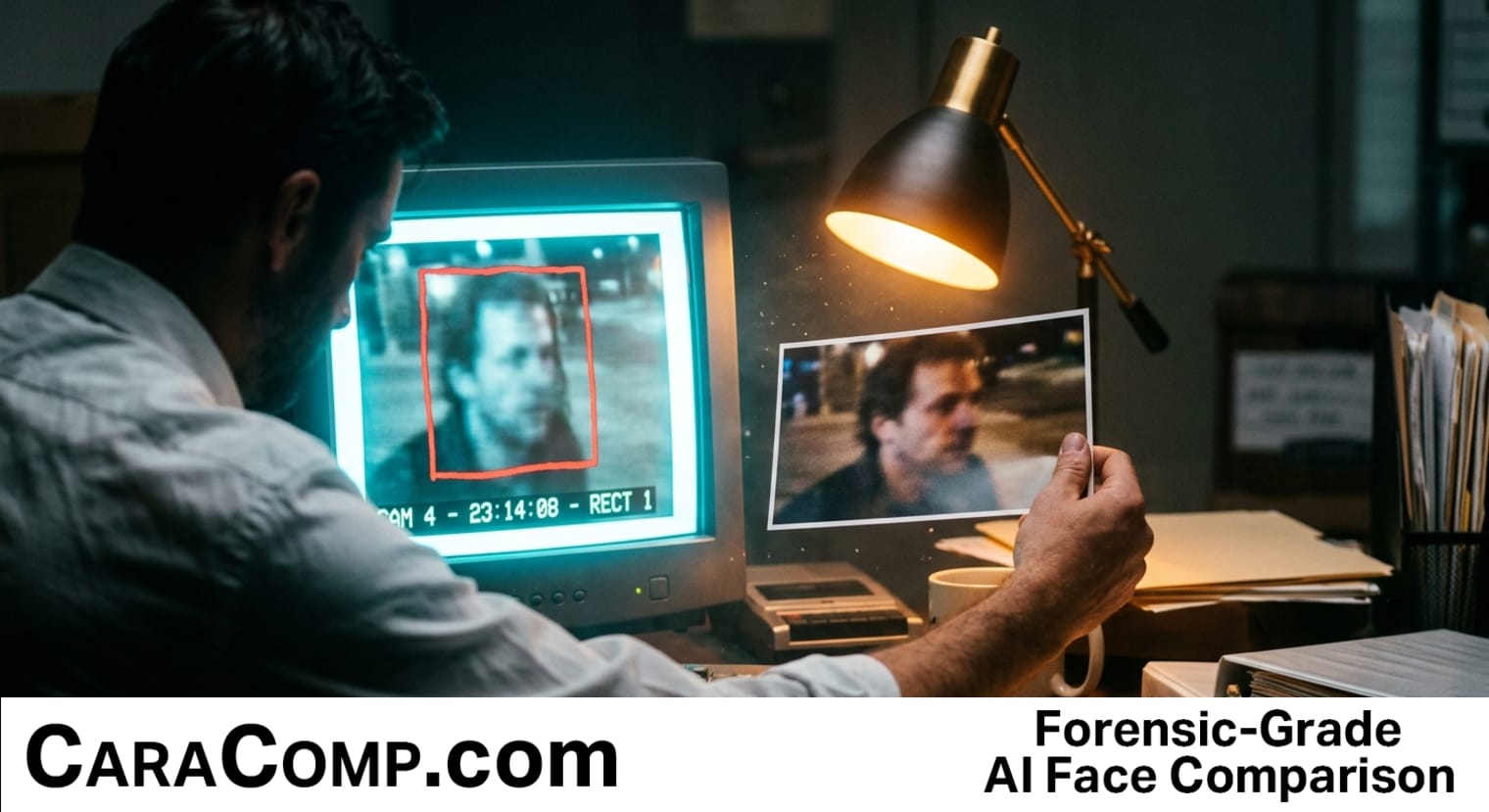
Stop assuming that a green box around a suspect’s face actually means anything. To a layperson or an amateur OSINT hobbyist, that box looks like a "match." To a professional investigator, it is nothing more than a pattern-matching algorithm confirming it found something face-shaped. Detection is merely the "beep" of a metal detector; it doesn't tell you who you’ve found, only that you’ve found someone.
The industry is currently flooded with tools that provide the "beep" but fail at the actual analysis. As this latest commentary highlights, even a $35 hobbyist computer can draw a box around a face. But for the private investigator or police detective working a real case, "detection" is where the work starts, not where it ends. If you are staking your professional reputation on a tool that merely "detects" without performing rigorous facial comparison, you are walking into a liability trap.
At CaraComp, we see the danger in this confusion every day. Investigators often mistake visual feedback for mathematical certainty. The real heavy lifting happens during the comparison stage, where facial landmarks are converted into Euclidean distance measurements. This is the difference between a tool that is "neat" and a tool that is court-ready. High-level investigation requires moving past the "box" and into the data. If you can’t explain the math behind the match, you don’t have evidence; you have a guess.
Key implications for professional investigators:
- Reputational Risk: Conflating detection with comparison in a client report or courtroom testimony can lead to "junk science" accusations that dismantle your credibility.
- Mathematical Necessity: Identification requires Euclidean distance analysis — transforming a face into a numerical fingerprint — which most consumer-grade "search" tools completely skip in favor of simple pattern recognition.
- The Cost of Quality: While detection is cheap and ubiquitous, enterprise-grade comparison has historically been locked behind four-figure annual contracts, leaving solo investigators to rely on manual, error-prone visual checks.
The gap between "I found a face" and "This is the person" is where cases are won or lost. Professional investigators must stop settling for detection tools and start demanding comparison technology that provides the same caliber of analysis used by federal agencies, without the enterprise price tag.
Read the full article on CaraComp: That Box Around Your Face? It Didn't Recognize You — It Just Found You


Comments
Post a Comment