That Annoying 3-Second Selfie? It's Asking If You're Really You.
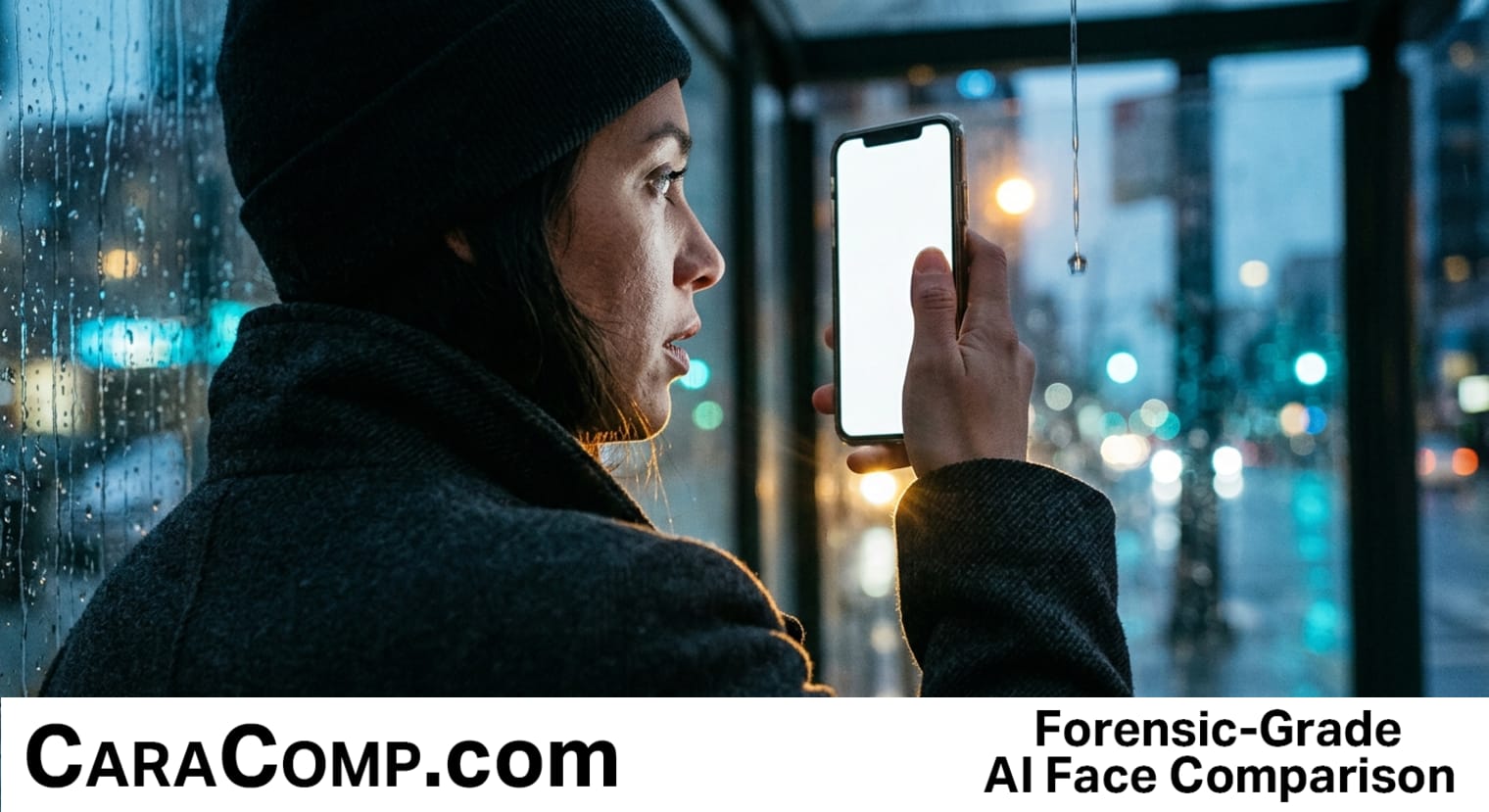
Banks are currently losing billions to "ghosts"—synthetic identities stitched together from stolen data that never actually existed in the real world. Up to 15% of unsecured lending losses are now attributed to these manufactured people who pass traditional document checks with ease. For the private investigator or OSINT professional, this isn't just a banking problem; it’s a warning that the subjects you are tracking might be more digitally sophisticated than your current tools can handle.
The industry is moving toward "proof of personhood," but many investigators are still stuck in a manual past. If a synthetic identity can fool a multi-billion dollar financial institution, "eyeballing" a grainy surveillance photo against a social media profile is no longer a viable investigative strategy. It’s a liability. At CaraComp, we see the shift from simple facial recognition toward deep facial comparison as the only way to stay ahead. The difference is critical: recognition is about scanning crowds (and the privacy baggage that comes with it), while comparison is the scientific side-by-side analysis of specific subjects to prove a match using Euclidean distance analysis.
If you aren't using enterprise-grade comparison tech, you're essentially guessing. Modern fraudsters use liveness-detection-evading techniques that can trick basic consumer tools. For a solo PI or a small firm, the barrier has always been the staggering cost of federal-grade software. However, as "personhood" becomes the new standard for identity, investigators must adopt the same Euclidean distance metrics used by banks—but at a price point that doesn't eat the entire case budget.
- Synthetic identities are the new "invisible" subjects: Traditional document verification is failing because it asks if an ID is real, not if the human is. Investigators must pivot to analyzing behavioral digital history alongside facial metrics.
- The "vibe check" is dead in court: You cannot walk into a deposition and say two people "look the same." Professional-grade reporting backed by mathematical distance analysis is now the minimum requirement for admissible evidence.
- Liveness and comparison are two sides of the same coin: As systems get better at detecting "live" humans, investigators need better tools to compare those verified images against historical records to close cases faster.
The gap between the "high-tech" fraudster and the "manual" investigator is widening. Staying ahead means trading in unreliable consumer search engines for high-precision comparison tools that provide the same caliber of analysis as federal agencies without the enterprise contract.
Read the full article on CaraComp: That Annoying 3-Second Selfie? It's Asking If You're Really You.


Comments
Post a Comment