That "99% Accurate" Face Match? Here's the Question That Blows It Apart
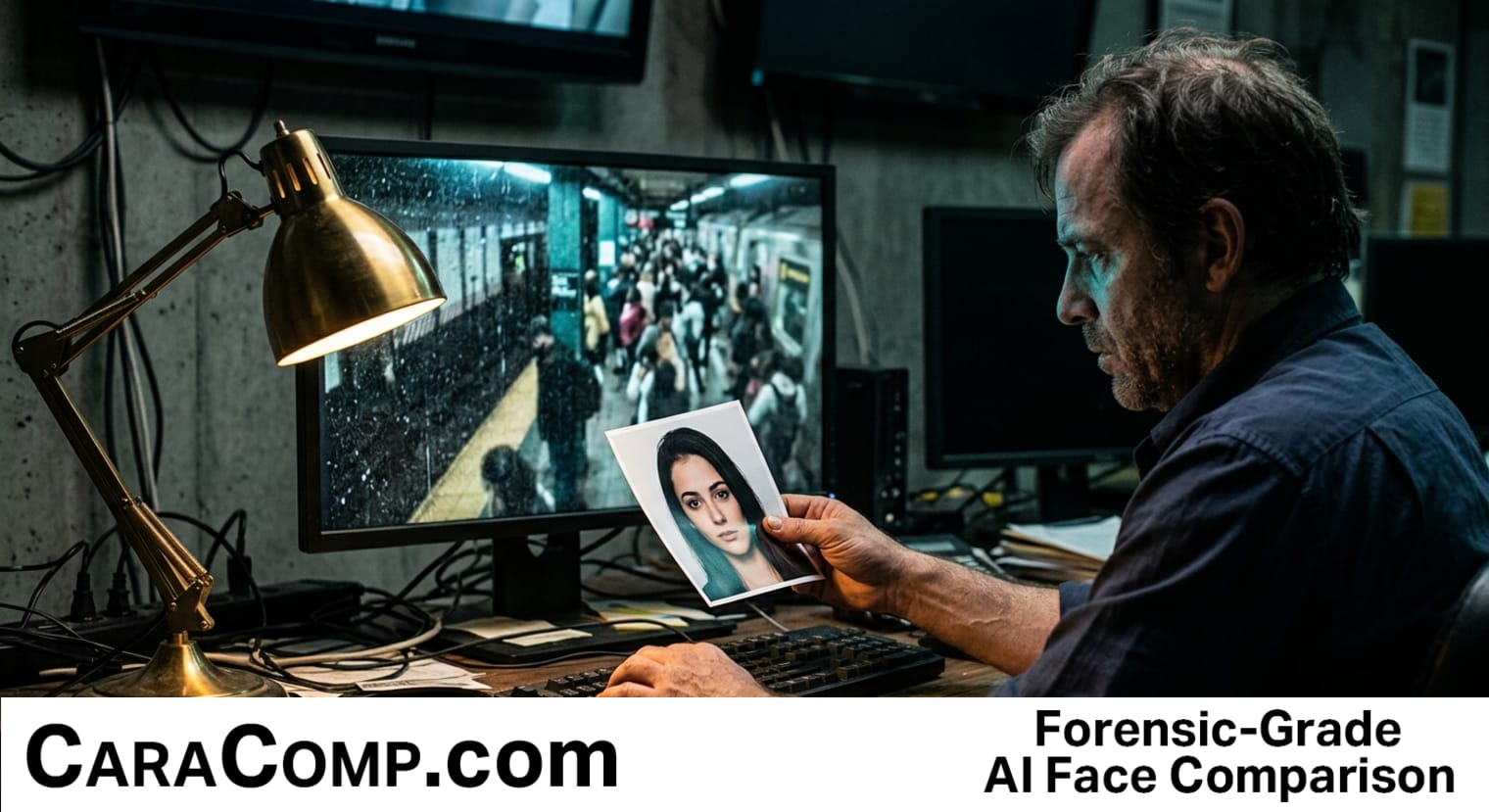
The "99% accuracy" claim you keep seeing in facial recognition headlines is effectively a marketing lie when applied to real-world investigations. If you are an investigator relying on that number to justify a match to a client or a court, you are standing on a technical trapdoor. The industry treats "facial recognition" as a monolithic term, but for the professional investigator, there is a canyon-sized gap between unlocking a smartphone and identifying a suspect in a grainy surveillance frame.
The truth is that most of those high-performance statistics come from 1-to-1 verification—the simple task of comparing a high-res photo to a single authorized user in perfect lighting. That isn't what private investigators or OSINT researchers do. We deal with the messy reality of 1-to-many searches and low-quality captures. When you move from a controlled environment to an investigative one, that 99% accuracy often dissolves into a mess of demographic bias and false positives that can reach up to 100 times the expected error rate.
At CaraComp, we view this distinction as the line between professional investigation technology and reckless surveillance. True investigative power isn't about scanning millions of faces in a crowd; it is about facial comparison. This is the scientific application of Euclidean distance analysis to compare specific photos within your case file. It is the difference between a "lucky guess" from a mass-search algorithm and a verifiable, side-by-side analysis that measures the mathematical distance between facial landmarks.
As the market for biometrics balloons toward $25 billion, investigators must stop buying into the hype and start looking at the methodology. If your tool doesn't distinguish between a verification task and an identification task, it isn't a professional tool—it’s a liability.
- Context is the only metric that matters: An accuracy rating is worthless unless it specifies whether it was achieved through 1-to-1 comparison or 1-to-many identification; the two are not interchangeable.
- Methodology beats mass-data: For a match to hold up in a professional report, investigators need tools that focus on Euclidean distance analysis rather than "black box" search results.
- The surveillance trap: One-to-many searches carry massive legal and ethical baggage that 1-to-1 facial comparison avoids, making comparison the safer, more professional standard for private firms.
If you aren't asking "99% accurate at what?" before you present your findings, you aren't just risking your case—you’re risking your reputation. It’s time to move past the marketing fluff and adopt enterprise-grade comparison standards that actually hold water.
Read the full article on CaraComp: That "99% Accurate" Face Match? Here's the Question That Blows It Apart


Comments
Post a Comment