That 95% Face Match? Fake Faces Decided If You Can Trust It
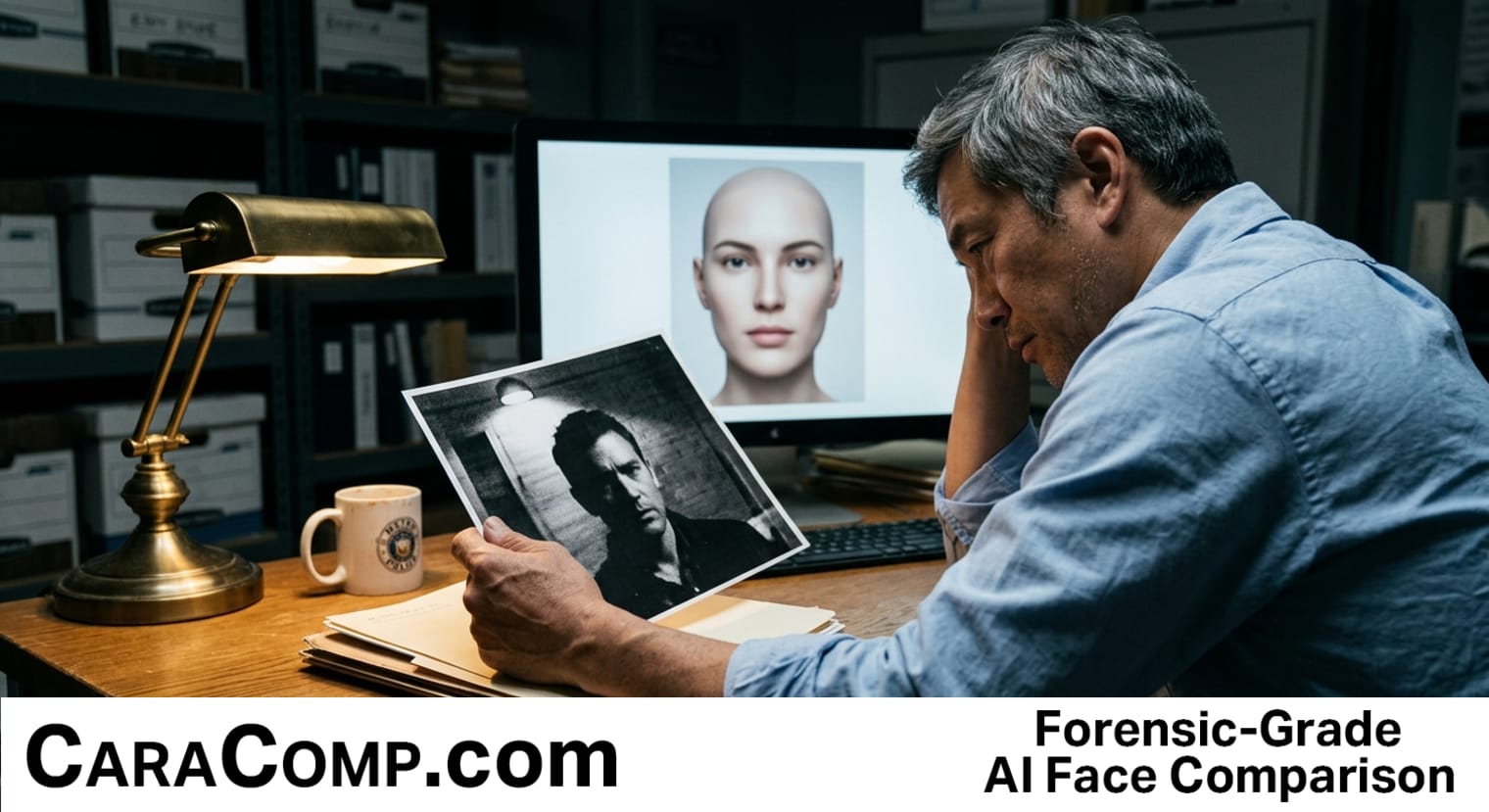
The "98% match" score on your latest case might be a total fantasy. It turns out that the confidence levels investigators bet their reputations on are often calibrated using people who don’t actually exist. This isn't a glitch; it’s a necessary pivot in the world of biometrics as privacy laws make real-world data harder to access. But for the solo private investigator or OSINT researcher, it creates a dangerous "trust gap" between lab results and street-level reality.
Recent research from the University of Luxembourg has pulled back the curtain on benchmarking—the process where facial comparison algorithms are tested against standardized datasets. Because of strict privacy regulations like GDPR, researchers are increasingly using synthetic, AI-generated faces to "grade" how well an algorithm works. The problem? The same software can look like a world-class performer on one set of fake faces and a total failure on another. If the benchmark doesn't reflect the grainy, angled, poorly lit reality of a real-world investigation, that confidence score is essentially useless.
For those of us in the field, this is a wake-up call. Many low-cost consumer tools provide high confidence scores to make their results look impressive, but they lack the professional-grade Euclidean distance analysis required to back them up. An investigator presenting a "match" in a fraud case or a missing person search needs to know that the software wasn't just tested on "clean" synthetic portraits, but on the messy variables of real-world captures. Relying on an algorithm that has only seen "perfect" fake people is a fast track to a false positive that could ruin a career.
- Accuracy is relative to the test, not the tool. A high confidence score from a tool tested on "easy" synthetic data is meaningless when applied to a difficult, low-resolution surveillance frame.
- Synthetic data is the new privacy firewall. While synthetic datasets solve the legal headache of using real biometric data, they can create an "echo chamber" where algorithms get better at identifying fake people but lose their edge on real-world subjects.
- Methodology beats percentages. Investigators must move away from "black box" scores and toward tools that offer court-ready reporting based on established investigative methodology rather than just a proprietary AI guess.
At CaraComp, we know that solo investigators don't have the budget of a federal agency, but they still face the same high-stakes pressure. Understanding that the benchmark is part of the result is what separates a tech-savvy pro from someone just clicking buttons. Don't let a score derived from a "person who never was" dictate the outcome of your real-world case.
Read the full article on CaraComp: That 95% Face Match? Fake Faces Decided If You Can Trust It


Comments
Post a Comment