Someone Is Building a Fake You — And Your Bank Has 30 Seconds to Stop It
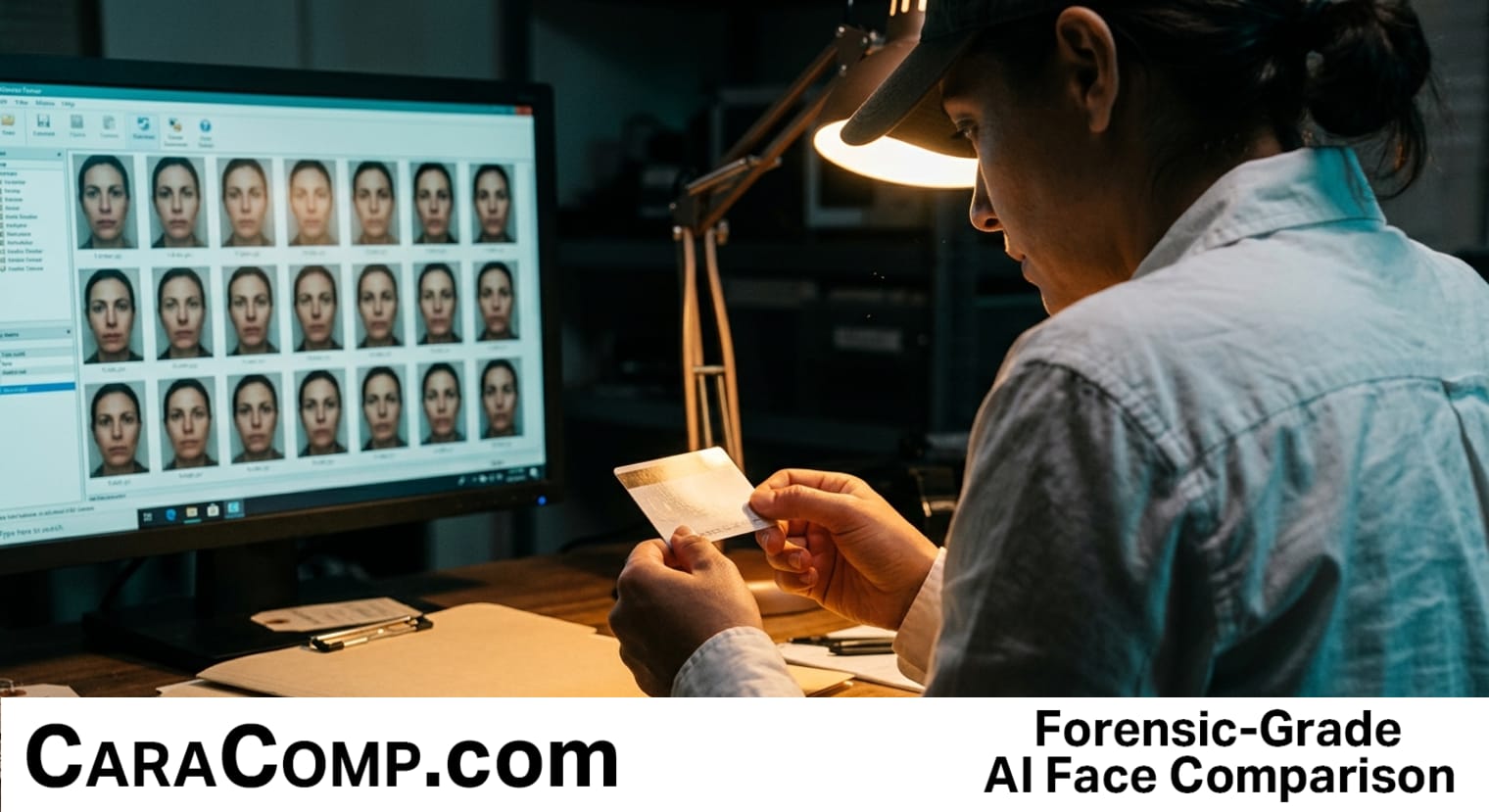
Right now, a criminal is renting a $20 deepfake to bypass a multi-billion-dollar bank’s security and steal your client’s future. We aren’t talking about simple credit card theft anymore; we are seeing the rise of "Frankenstein" identities where AI-generated faces are stitched onto real data. For the solo private investigator or OSINT professional, this isn't just a news headline—it is the new frontline of insurance fraud and identity theft cases.
The scary part isn't that the fraud is happening; it’s that it is becoming impossible to detect with the naked eye. When a "live" selfie check is bypassed by a deepfake, the resulting trail of breadcrumbs looks entirely legitimate to the untrained observer. If you are still relying on manual side-by-side photo comparisons to catch these discrepancies, you are bringing a knife to a drone fight. The "patient" criminal builds credit for eighteen months before a "bust-out" fraud occurs, leaving PIs to piece together a case where the primary suspect might not even exist in the physical world.
As investigators, our role is shifting from simple surveillance to high-tech verification. When a client claims they never opened that account, but the bank shows a "verified" facial match from the signup process, your reputation rests on your ability to prove the machine was wrong. You need more than a "gut feeling"—you need Euclidean distance analysis that can quantify facial similarities and differences with mathematical precision. This isn't just about catching a thief; it’s about providing court-ready evidence that can stand up against sophisticated AI manufacturing.
- The Burden of Proof has Shifted: As banks lean on automated facial checks, investigators must be equipped to challenge those results with professional-grade comparison metrics when those systems are fooled by synthetic identities.
- OSINT must evolve: Identifying a subject now requires analyzing patterns across multiple digital footprints, as single-point facial verification is no longer a "smoking gun" in an era of $10 deepfakes.
- Enterprise Tech is Mandatory: Fighting AI-generated fraud requires the same level of analysis used by federal agencies, but it must be accessible to solo firms who don't have five-figure software budgets.
The arms race is here. If you aren't using professional comparison tools to verify identities in your cases, you’re essentially guessing. In a world where the suspect might be a digital ghost, your analysis needs to be the most solid thing in the room.
Read the full article on CaraComp: Someone Is Building a Fake You — And Your Bank Has 30 Seconds to Stop It


Comments
Post a Comment