Only 1 in 1,000 People Can Spot a Deepfake — Here's the 30-Second Habit That Actually Protects You
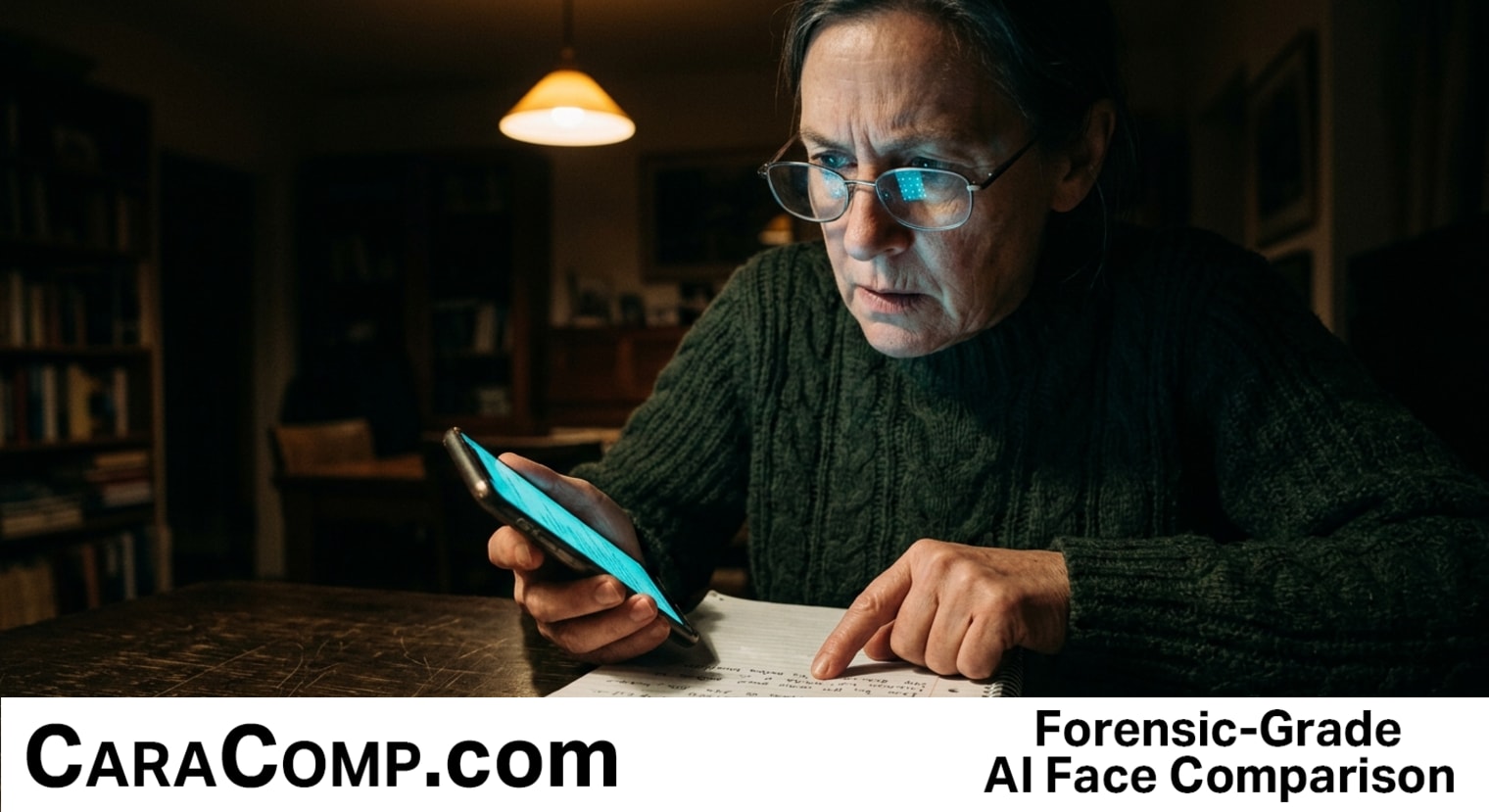
Your "gut feeling" is officially a liability. If you still believe that a sharp eye and years of investigative experience allow you to spot a deepfake, you are part of the 99.9% currently failing the test. Recent data shows that even when specifically primed to look for synthetic media, only one in a thousand people can accurately identify every fake. For solo private investigators and OSINT researchers, this isn't just a tech trend—it’s a threat to your professional credibility.
The era of "looking for glitches" is over. Modern generative AI has cleared the hurdle of visual artifacts; there are no more "tells" like weird blinking or blurry jawlines to find in high-end synthetic content. When human accuracy at detecting fakes hovers around 55%, you are essentially flipping a coin with your client’s case. In a courtroom or a corporate boardroom, "it looked real to me" is no longer an acceptable standard of evidence.
At CaraComp, we see this as a pivot point for the industry. Investigators can no longer rely on subjective observation. The only way to combat high-speed digital manipulation is with objective, math-based analysis. While bad actors use AI to create fake identities for fraud, professionals must use Euclidean distance analysis to verify the real ones. This isn't about scanning crowds or mass surveillance; it’s about taking two photos—the evidence and the subject—and letting the geometry of the face provide a definitive, court-ready answer that your eyes simply cannot see.
- Subjective visual verification is a professional risk: Relying on manual facial comparison is no longer a viable investigative methodology when human error rates match a coin toss.
- Euclidean distance analysis is the new gold standard: To maintain credibility, investigators must move toward biometric math that remains indifferent to lighting, "glitches," or professional-grade synthetic manipulation.
- The price of verification has plummeted: Sophisticated facial comparison tools are no longer restricted to federal agencies with six-figure budgets; the technology has been democratized for the solo PI.
The scam of the future won't look fake. It will look exactly like your subject, your client, or your boss. The question for modern investigators isn't whether you can spot the lie—it’s whether you have the tools to prove the truth.
Read the full article on CaraComp: Only 1 in 1,000 People Can Spot a Deepfake — Here's the 30-Second Habit That Actually Protects You


Comments
Post a Comment