One Photo. One Grudge. One App: The 10-Minute Nightmare Every Parent Should Fear
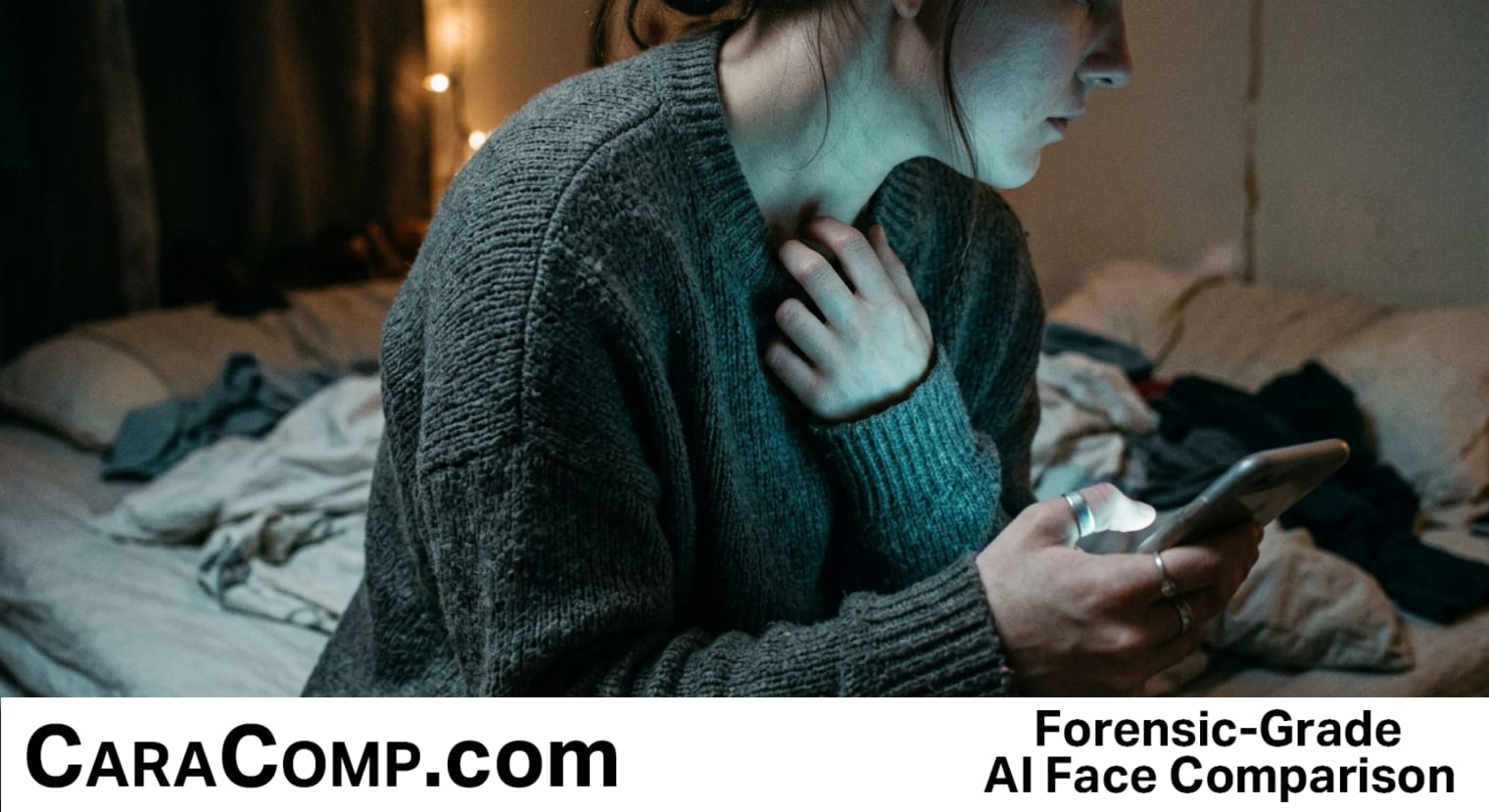
A single private photo is no longer just a memory; it is a digital hostage. The recent case in Bengaluru, where a student faced AI-driven extortion after a private photo leak, proves that the barrier between a trusted image and a weaponized deepfake has completely dissolved. For those of us in the investigative sector, this isn't just another headline about cybercrime. It’s a loud signal that the demand for professional-grade facial comparison and digital verification is about to explode for solo private investigators and OSINT professionals.
Perpetrators are now using the mere suggestion of AI to terrorize victims. They don’t even need a finished deepfake to destroy a reputation; they just need one real source image. This shifts the burden of proof onto the investigator. When a client walks into a small PI firm today, they aren’t just looking for someone to follow a car—they are looking for someone who can perform side-by-side Euclidean distance analysis to prove whether a leaked image is a manipulated asset or a genuine file.
The tragedy here is that while the criminals are using the latest tech, many investigators are still stuck in the manual era. If you’re a solo investigator spending hours squinting at pixels to compare facial features across a case file, you’re not just wasting time; you’re falling behind the curve of digital extortion. The enterprise tools that analyze these biometric markers used to be locked behind $2,000-a-year contracts, leaving the individual investigator to rely on unreliable consumer search engines. That technological gap is exactly where perpetrators hide.
- The "Deepfake Threat" is the New Extortion: Digital asset verification is now the primary front in domestic and corporate investigations, requiring PIs to pivot from physical observation to high-stakes image analysis.
- Reputational Stakes for Investigators: Solo firms can no longer rely on "gut feelings" or low-tier consumer tools with poor reliability; professional case analysis requires enterprise-grade Euclidean distance metrics to hold up in a professional setting.
- The Reporting Mandate: As more cases move to cyber police divisions, the ability to generate a court-ready facial comparison report will be the differentiator between a closed case and a professional liability.
We are seeing a shift where investigation technology must be as agile as the threats it seeks to combat. The same Euclidean distance analysis used by federal-level agencies is now the standard requirement for any investigator handling digital evidence. If you aren't using professional comparison tools to verify these images, you aren't just behind the times—you’re leaving your clients vulnerable to the next ten-minute nightmare.
Read the full article on CaraComp: One Photo. One Grudge. One App: The 10-Minute Nightmare Every Parent Should Fear


Comments
Post a Comment