Instagram Turned On a Setting That Lets Strangers Make AI Photos of You
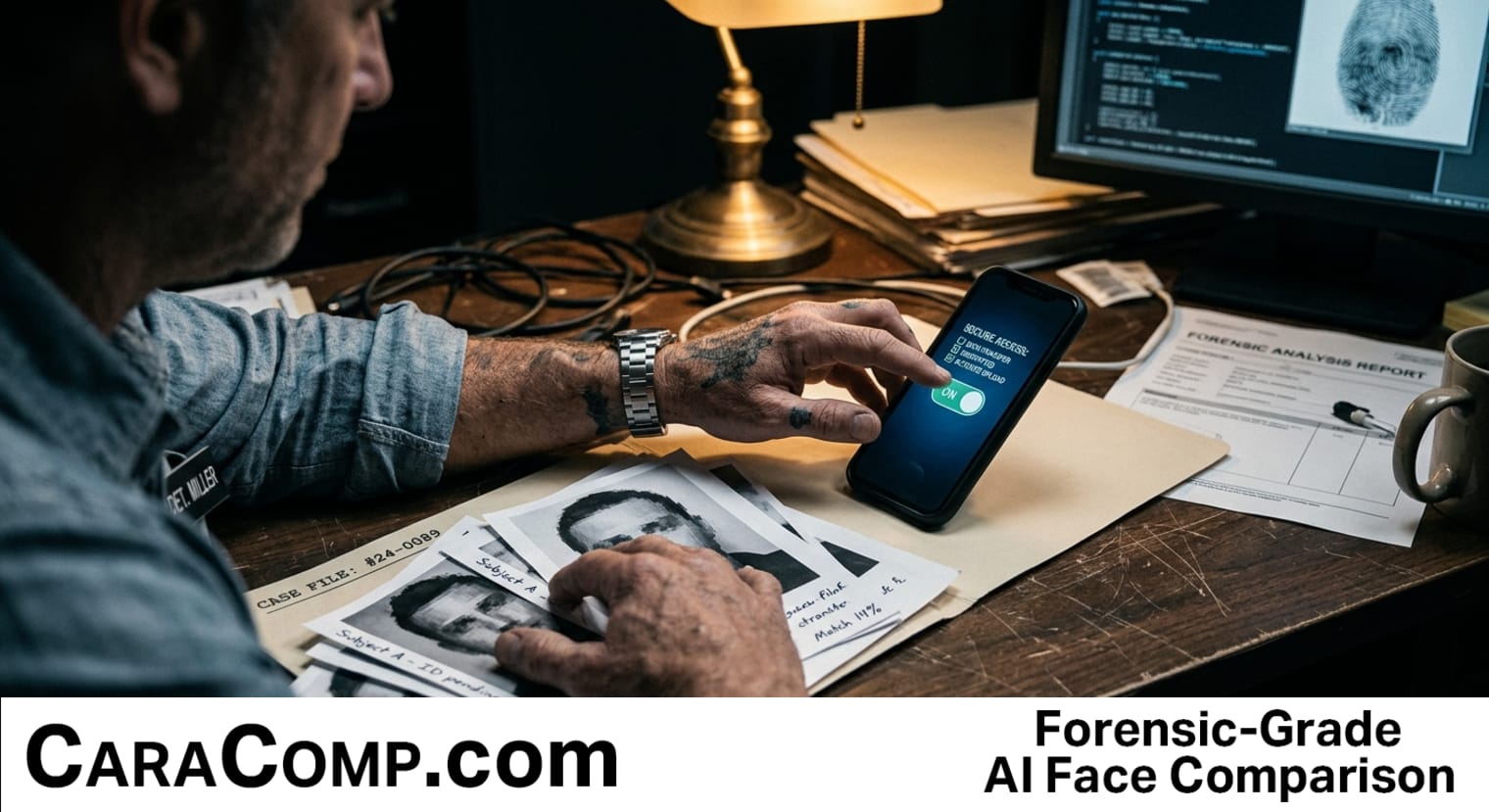
Your face is no longer your private property; it’s just free raw material for a stranger’s AI prompt. While most users were busy scrolling, Instagram quietly turned every public profile into a stock library for synthetic image generation, and they didn’t even bother to send a push notification. By the time you finish reading this, a stranger could have used your public photos to generate a deepfake video or a misleading image, and you would have zero way of knowing it happened.
For private investigators and OSINT professionals, this isn't just a "privacy concern"—it’s a massive shift in the reliability of visual evidence. When the barrier to creating a convincing synthetic likeness drops from "machine learning expert" to "anyone with an @handle," the investigative landscape changes overnight. We are entering an age where visual confirmation requires more than just a quick glance; it requires professional-grade facial comparison and Euclidean distance analysis to separate a real subject from an AI-generated ghost.
The "retroactivity gap" mentioned in the news is particularly chilling for those of us in the field. Even if you find the buried setting and opt-out today, the images already scraped and processed by Meta’s models remain in the wild. As investigators, we can no longer stake our reputations on unverified social media photos. We need tools that provide court-ready reporting and scientific side-by-side analysis to prove identity in an environment flooded with synthetic noise.
- The technical barrier to deepfakes has completely collapsed. What used to require GPU clusters and GAN training now only requires a public Instagram handle and a single prompt.
- Verification is the new gold standard for OSINT. As platforms commoditize facial data, investigators must move away from manual "eyeballing" and adopt enterprise-grade comparison tech to validate subject identity.
- Platform "opt-outs" are a false safety net. Because these settings are not retroactive, the pool of usable facial data for AI models is already vast and permanent, making professional identification tools more essential than ever.
At CaraComp, we believe solo investigators shouldn't be left behind by these tech shifts just because they don't have a federal agency's budget. While enterprise tools cost $1,800 a year, you need a way to perform the same high-level Euclidean distance analysis for a fraction of that price. In a world where strangers can manufacture your subject's face with a click, having the right technology to verify the truth isn't just an advantage—it's a requirement for the job.
Read the full article on CaraComp: Instagram Turned On a Setting That Lets Strangers Make AI Photos of You


Comments
Post a Comment