Google Insider's Quiet Warning: The Deepfake of Your Face Is Already Legal to Make
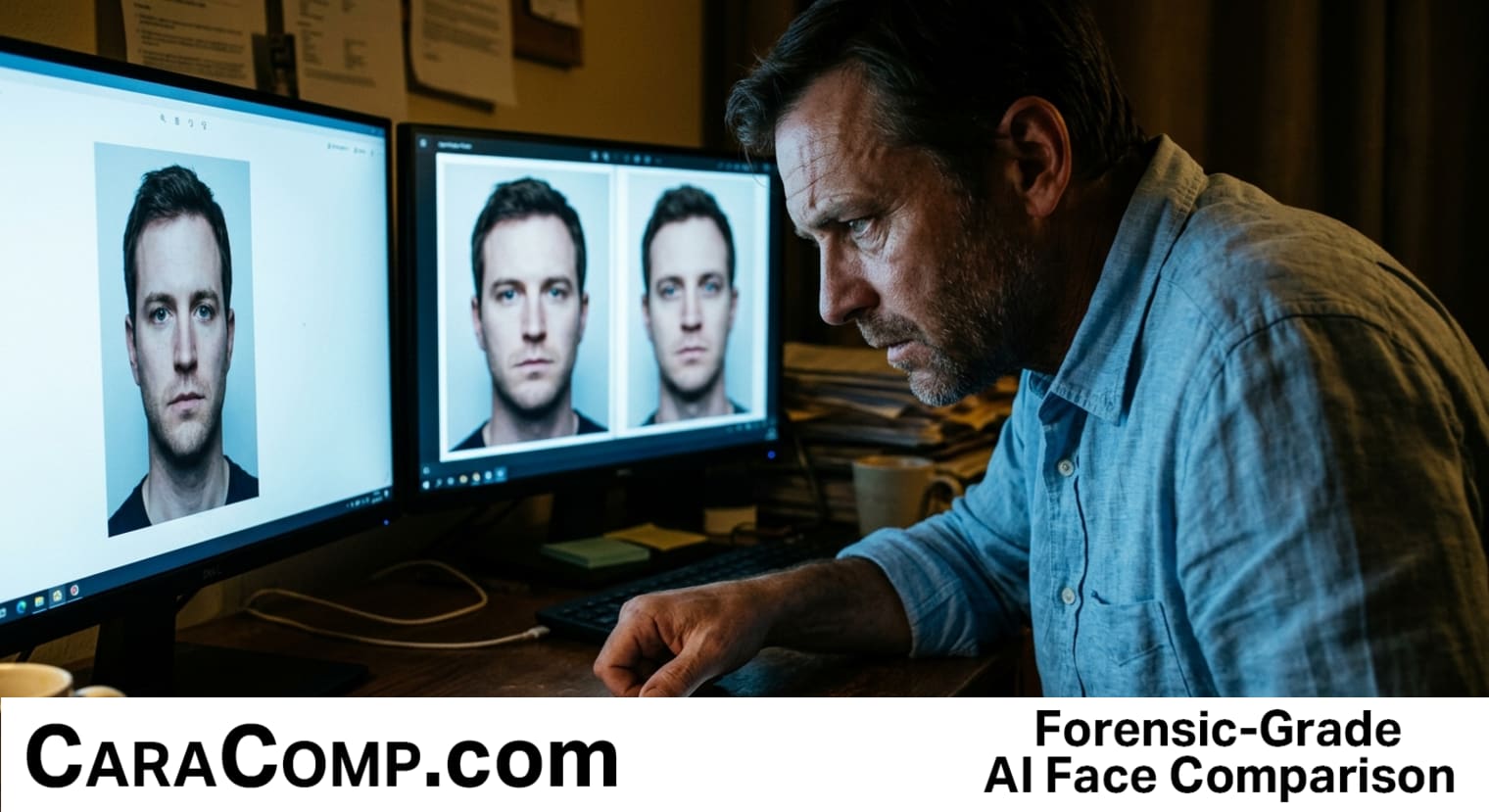
When a member of Alphabet’s own board admits that AI regulation is "problematic" and "reactive," they aren't just critiquing policy—they are admitting that the legal system has effectively surrendered to the deepfake. While regulators in the EU and the US debate frameworks that won't fully take effect until 2026, the technology to weaponize your face is already industrialized, legal, and available to anyone with an internet connection. For the private investigator or OSINT professional, this isn't just a news cycle; it’s a fundamental shift in the nature of evidence.
The "reactive" nature of law means that by the time a statute is written to protect a client’s likeness, the fraud has already been committed, the insurance claim has been paid, and the digital trail has gone cold. We are currently living in a "verification gap" where the human eye—and the law—can no longer keep up with AI-generated deception. If you are still relying on manual side-by-side visual checks to verify identity, you are betting your professional reputation on an instinct that deepfakes were specifically designed to bypass.
At CaraComp, we see this regulatory vacuum as a call to action for the private sector. If the law won't protect the truth, the technology must. We don't believe in the controversial scanning of crowds or public surveillance. Instead, we focus on facial comparison: giving investigators the mathematical tools—specifically Euclidean distance analysis—to verify identities across the photos they already have. In an age of synthetic identities, precision is the only defense.
- The "Verification Gap" is the new crime scene: With regulation lagging years behind tech, the burden of proof has shifted entirely to the investigator. You can no longer trust a "familiar face" without a mathematical baseline to back it up.
- Euclidean distance is the gold standard: While deepfakes can fool a human observer by mimicking authority or emotion, they struggle to maintain the exact biometric proportions that professional-grade facial comparison tools measure.
- Court-ready reporting is mandatory: As deepfakes become common knowledge, "it looks like him" will no longer hold up in front of a judge. Investigators need analytical reports that quantify the similarity between images to maintain professional credibility.
The Alphabet board warning is a wake-up call for every solo PI and small firm. You cannot wait for a bill to pass in Washington or Brussels to secure your cases. You need enterprise-grade analysis now, at a price point that doesn't eat your entire margin, to stay ahead of the "reactive" curve.
Read the full article on CaraComp: Google Insider's Quiet Warning: The Deepfake of Your Face Is Already Legal to Make


Comments
Post a Comment