Fake You Can Ruin Your Life in an Hour. Courts Take Days.
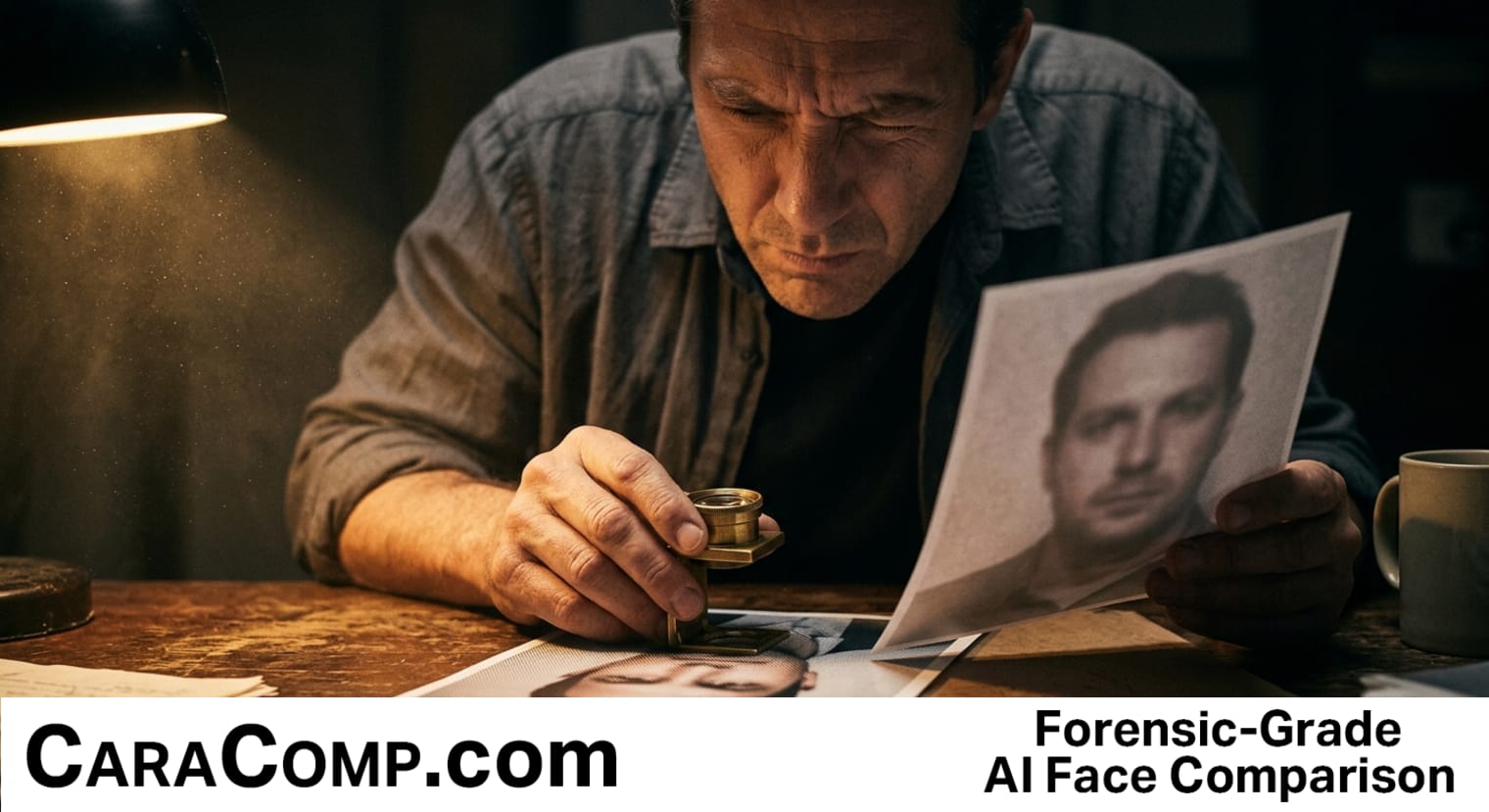
A court order to scrub 275 websites sounds like a victory until you realize the digital wildfire was already out of control before the judge even picked up the gavel. The Bombay High Court’s recent ruling to take down deepfakes of actress Preity Zinta highlights a terrifying reality for modern investigators: legal frameworks are reactive, but investigative technology must be proactive. For the solo private investigator or OSINT researcher, the challenge isn’t just finding these 275 sites—it’s proving the fraud with mathematical certainty before a client's reputation is permanently incinerated.
We need to stop pretending that "content moderation" by social media giants is a substitute for forensic investigation. This ruling proves that digital likeness is now being treated as a fundamental right, but the burden of proof still falls on the investigator. When a deepfake or a morphed image hits, a solo PI doesn’t have three hours to manually pore over facial features or grain patterns. They need Euclidean distance analysis that holds up in a report. Most enterprise tools lock this high-caliber tech behind a $2,000-a-year gate, leaving small firms to rely on unreliable consumer search engines. But as this court case shows, when hundreds of domains are hosting a lie, "good enough" is a professional liability.
This is about the shift from broad surveillance to precision facial comparison. The future of the industry isn't scanning crowds; it's the side-by-side verification of YOUR case photos. Investigators who can't distinguish between a synthetic likeness and a real person in seconds are going to find themselves on the wrong side of a defamation suit or a botched fraud case.
- The "Detection Gap" is the new investigative frontier — Courts can order removals, but investigators must provide the forensic proof that a likeness has been hijacked within hours, not weeks.
- Manual comparison is an obsolete risk — Relying on the human eye to verify synthetic media in a high-stakes case is a recipe for a missed match or a reputation-ending false positive.
- Professionalism requires court-ready reporting — High-court rulings prove that digital likeness is a legal battlefield; investigators need tools that generate analysis sophisticated enough for a judge’s chambers.
The law is building an ambulance at the bottom of the cliff. Sharp investigators are building the fence at the top. If you’re still manually comparing photos while a "fake" spreads across the web, you’re already behind the clock.
Read the full article on CaraComp: Fake You Can Ruin Your Life in an Hour. Courts Take Days.


Comments
Post a Comment