Before Facial Recognition Names You, It Has to Find You — And That's Where It Quietly Fails
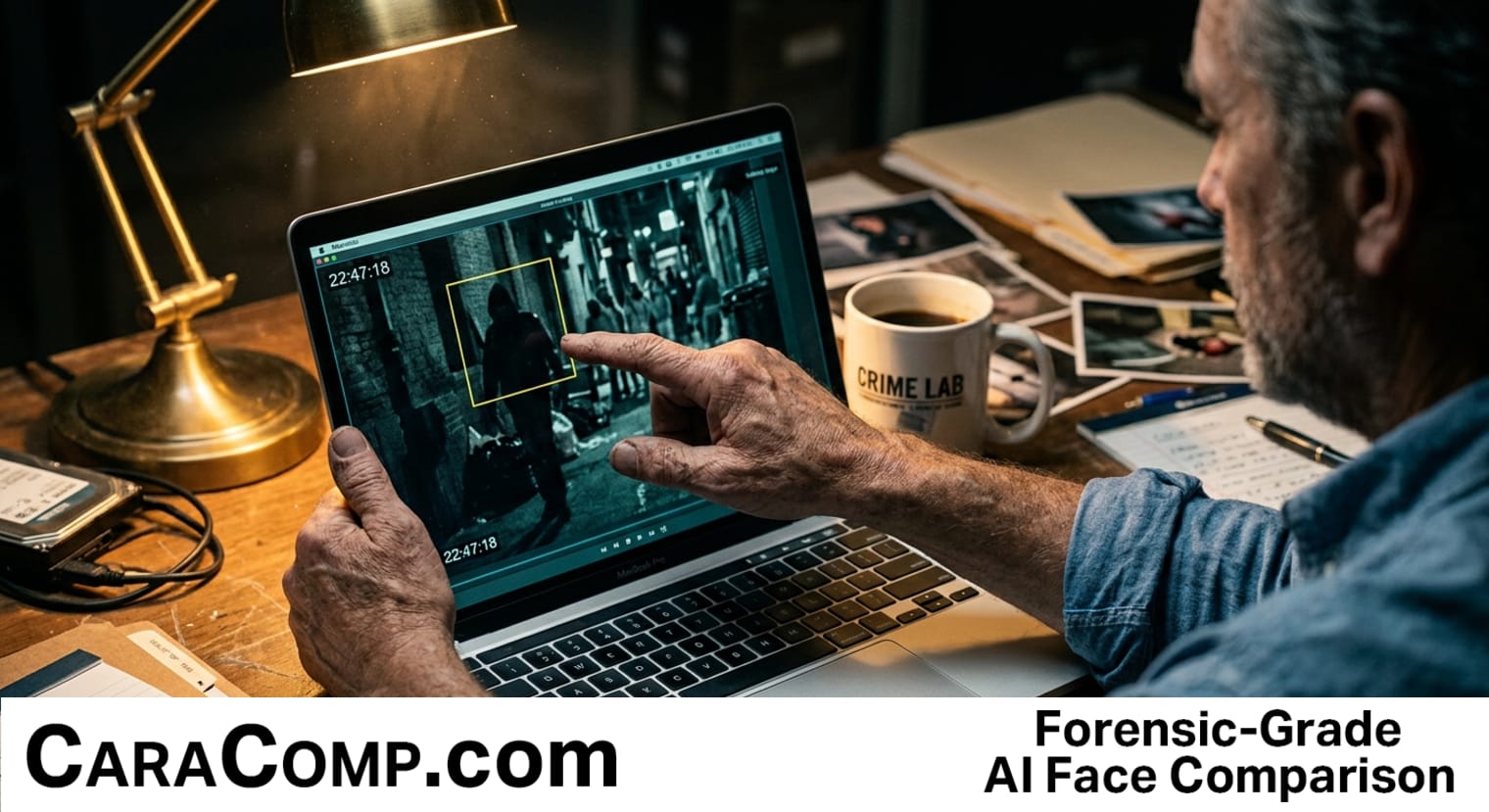
The biggest lie in investigative technology is that facial recognition starts with identity. It doesn't. Before an algorithm can tell you who is in a photo, it has to perform an invisible "Step Zero": face detection. If your software fails to locate the specific pixels that constitute a face because of a stray shadow or a sharp camera angle, your investigation ends before it even begins—and the worst part is, the software rarely tells you it failed.
For solo private investigators and OSINT researchers, this is the difference between closing a high-stakes fraud case and looking amateur in front of a client. You might be staring at a grainy security feed knowing your subject is there, but if your tools aren't built to handle the messy reality of low-light parking lots or partially obscured faces, you are essentially flying blind. We see investigators wasting hours on manual comparisons every day simply because they have been burned by unreliable consumer tools that fail the basic detection phase.
The industry is rapidly moving toward decentralized AI that doesn't require a government-sized server room or a $2,400 annual contract. This shift is a game-changer for the modern investigator who needs enterprise-grade Euclidean distance analysis without the enterprise gatekeeping. When you strip away the hype, the goal is simple: you need a tool that can "find" the face in a stack of case photos and compare it with mathematical precision.
What this means for the modern investigator:
- Detection is your silent bottleneck: A "no match" result is often actually a "no detection" failure. If your software can't box the face due to poor environmental lighting, the comparison never happens, causing you to miss critical leads.
- The "Math" matters more than the "Search": Relying on crowd-scanning tools is a liability. Professional investigators are shifting toward side-by-side facial comparison to ensure court-admissible evidence and higher true-positive rates.
- Infrastructure is no longer an excuse: You no longer need expensive GPUs or complex APIs to run high-level analysis. Modern Euclidean distance tools provide the same caliber of tech as federal agencies at a fraction of the cost.
Stop letting manual photo reviews eat your billable hours. Your reputation depends on results that hold up under scrutiny—not on tools that fail before they even find the target.
Read the full article on CaraComp: Before Facial Recognition Names You, It Has to Find You — And That's Where It Quietly Fails


Comments
Post a Comment