200 People Just Marched on OpenAI. Here's Why Your Face Is the Next Battleground.
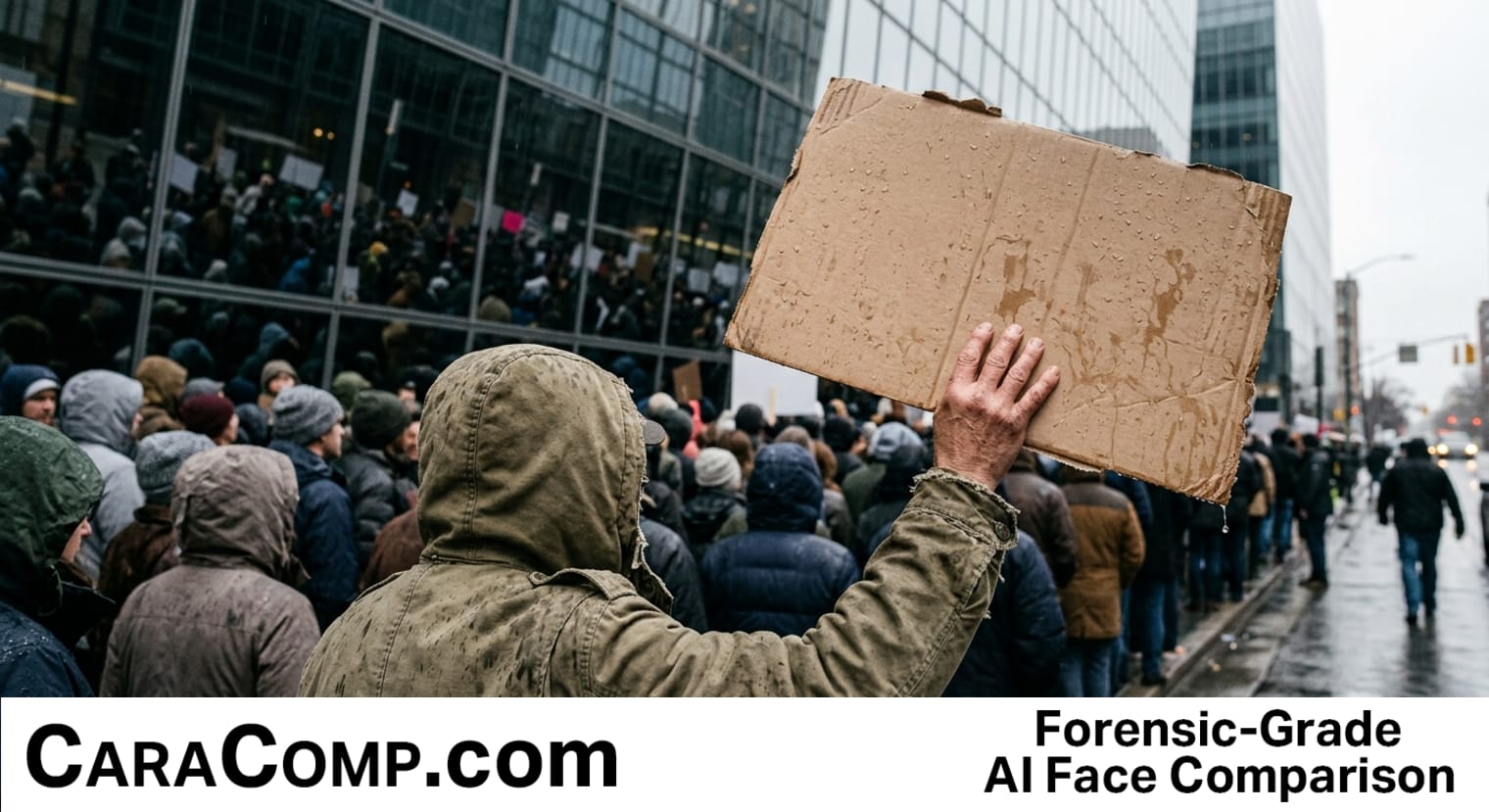
When 200 protesters march on the doorsteps of OpenAI and Google DeepMind, they aren’t just fighting against code; they are fighting the death of certainty. For the average person, these protests are about a "slowdown" in AI development. But for the professional investigator, this is a loud, clear signal that the era of "trusting your eyes" is officially over. We are entering a phase where identity is the ultimate battleground, and the tools you use to verify it will determine whether you stay relevant or get left behind in the noise.
The surge in deepfake "face swap" attacks—jumping 704% in a single year—proves that the technology to deceive has outpaced the general public’s ability to detect. While the crowd demands that big tech "slow down," the reality is that the tools of deception are already in the wild. For private investigators, OSINT researchers, and law enforcement, the solution isn't waiting for regulation that may never come. It is about adopting professional-grade facial comparison technology that moves beyond simple visual "vibes" and into the realm of Euclidean distance analysis.
The industry is shifting. We are seeing a hard line being drawn between "surveillance" (scanning crowds without consent) and "facial comparison" (validating known subjects within a case). The latter is the standard investigative methodology of the future. As protestors push for more guardrails, the demand for court-ready reporting and batch processing of images will skyrocket. Investigators who are still manually comparing faces across photos for three hours are not just being inefficient; they are risking their reputation on a methodology that is increasingly prone to human error.
- The "is this real?" question is now an investigative standard — As deepfakes become cheaper and more convincing, the default assumption in any case involving digital evidence must shift from trust to systematic verification.
- Public pressure will drive more friction in identity checks — Expect a massive influx of "prove you're human" steps and content labels, making professional-grade comparison tools essential for cutting through the digital fog.
- Methodology matters more than ever — In an environment where AI-generated faces are rampant, investigators must use tools that provide objective, professional-looking results that can stand up to scrutiny in a court of law.
The protesters at OpenAI are right about one thing: the default is broken. But while they wait for the "stop" button, the sharpest investigators are already arming themselves with the technology to verify the truth. The battle for the face has begun; make sure you have the right analysis tools on your side.
Read the full article on CaraComp: 200 People Just Marched on OpenAI. Here's Why Your Face Is the Next Battleground.


Comments
Post a Comment