Your Thumbprint Just Became Your Time Card. You Can't Reset a Thumb.
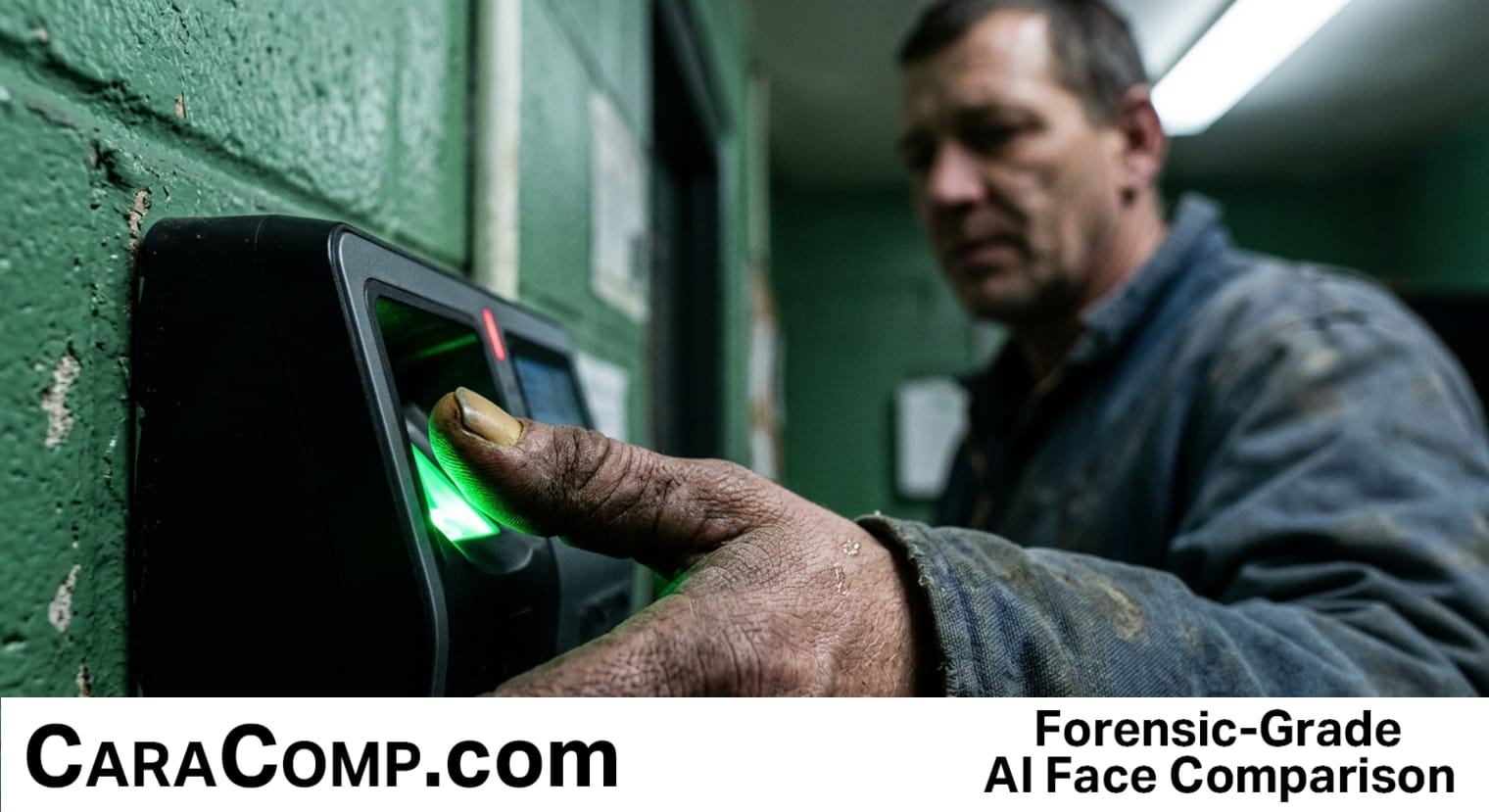
When a rural county government with a mere 55 employees drops $11,000 to replace paper timesheets with fingerprint scanners, the message to the investigative community is loud and clear: biometric technology is no longer a "big agency" luxury. It is now a local standard. Stoddard County, Missouri, just proved that the barrier to entry for high-level biometric data has officially collapsed, and if you are a private investigator or OSINT researcher still relying on manual methods, you are working in the past.
For years, the industry narrative suggested that advanced tools—whether for timekeeping or complex facial comparison—were reserved for federal agencies with six-figure budgets. This Missouri rollout destroys that myth. The tech has become affordable and accessible. However, as biometrics move into the mainstream, the gap between "consumer-grade" gadgets and "professional-grade" analysis is widening. For the modern investigator, this trend is a double-edged sword. On one hand, the public is becoming desensitized to biometric collection; on the other, the legal and professional stakes for handling this data have never been higher.
At CaraComp, we see this shift as a validation of our core mission. If a small county office can implement biometric verification for payroll, there is zero excuse for a professional investigator to spend three hours manually side-eyeing photos. The same Euclidean distance analysis used in these enterprise systems is now available to solo PIs for the price of a few cups of coffee. The real story in Stoddard County isn't just about "tracking time"—it’s about the democratization of data that was once locked behind an enterprise paywall.
- The "Enterprise-Only" Wall Has Crumbled: When small-scale local governments adopt biometric tech, it signals that the cost of high-level analysis has reached a tipping point. Investigators no longer need to pay $2,000 a year to access the same caliber of tech used by the "big guys."
- Normalization Leads to Admissibility: As fingerprint and facial comparison become common in the workplace, the friction of presenting biometric-supported evidence to clients and courts will decrease. The "tech-savvy" investigator will be the one providing professional, court-ready reports, not just "gut feelings."
- Comparison vs. Surveillance: This news highlights the vital distinction between scanning crowds (surveillance) and comparing specific data points (comparison). As the former faces legislative pushback, the latter—standard investigative methodology—is becoming the essential tool for fraud and OSINT cases.
If you're still shuffling through photos manually while a 55-person county office is using biometrics to clock in for lunch, it’s time to rethink your toolkit. The tech is here, it’s affordable, and your clients expect you to use it.
Read the full article on CaraComp: Your Thumbprint Just Became Your Time Card. You Can't Reset a Thumb.


Comments
Post a Comment