Your Passport Is About to Live on Your Phone — and Scammers Can't Wait
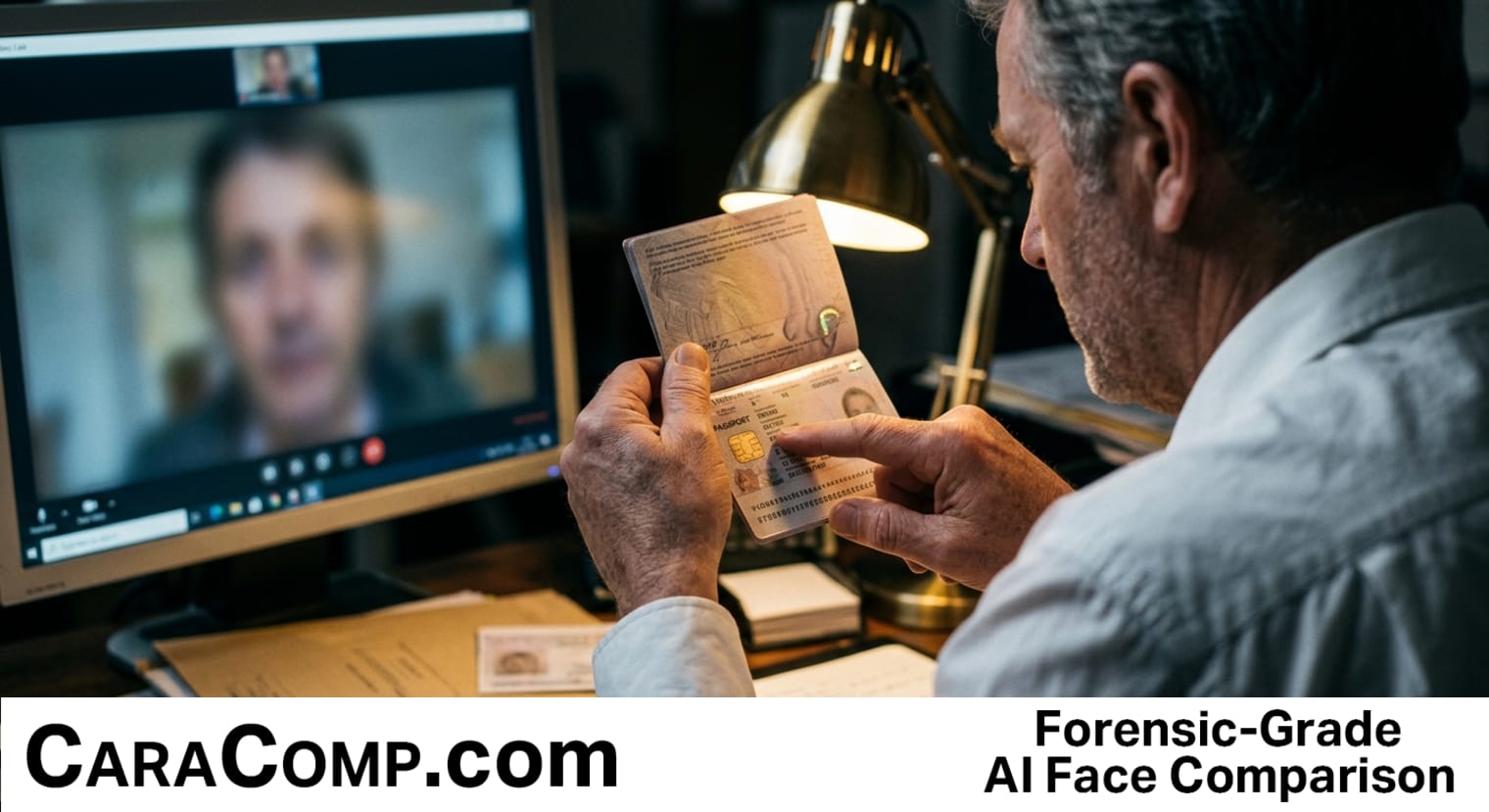
When a national government decides a smartphone video is as legally binding as a face-to-face meeting at a consulate, the investigative landscape shifts forever. Türkiye’s recent move to allow remote identity verification for foreign nationals via NFC passport chips and live video isn't just a bureaucratic update—it’s a signal that the "truth gap" is moving entirely to the digital realm. For the solo investigator, this is both a goldmine and a minefield.
While the financial crimes authority (MASAK) frames this as "convenience," industry insiders see the real story: the normalization of facial comparison as a foundational security layer. This tech relies on the same Euclidean distance analysis that professional investigators use to verify subjects in the field. However, as governments open the door to remote verification, they are also inviting a surge in sophisticated presentation attacks. If you aren't prepared to analyze these digital identities with enterprise-grade precision, you're going to miss the synthetic trail that modern scammers are leaving behind.
For private investigators and OSINT professionals, this news highlights three critical shifts in the field:
- The "Manual Eye" is officially obsolete: As governments adopt automated facial comparison to process millions of residents, investigators can no longer rely on 3-hour manual photo reviews. If a smartphone can verify a passport in seconds, your clients expect you to identify a subject just as fast—and with mathematical certainty.
- Synthetic identities are the new "Fake ID": With 22% of digital fraud attempts now involving deepfakes, the ability to perform side-by-side facial comparison between a "live" capture and a government document is the only way to maintain a professional reputation.
- Evidence standards are rising: When remote verification becomes a legal standard, "it looks like him" won't hold up in court. Investigators need professional, data-backed reporting that mimics the rigor of government ISO-certified systems.
The reality is that enterprise-level facial comparison is no longer a luxury for federal agencies; it is a necessity for the solo PI who wants to stay relevant. You don’t need a government-sized budget to utilize the same Euclidean analysis that MASAK-certified providers are using. You just need to stop manual guessing and start using tools built for the modern digital investigation.
Read the full article on CaraComp: Your Passport Is About to Live on Your Phone — and Scammers Can't Wait


Comments
Post a Comment