Your Next Coworker Might Not Exist — And HR Just Hired Them
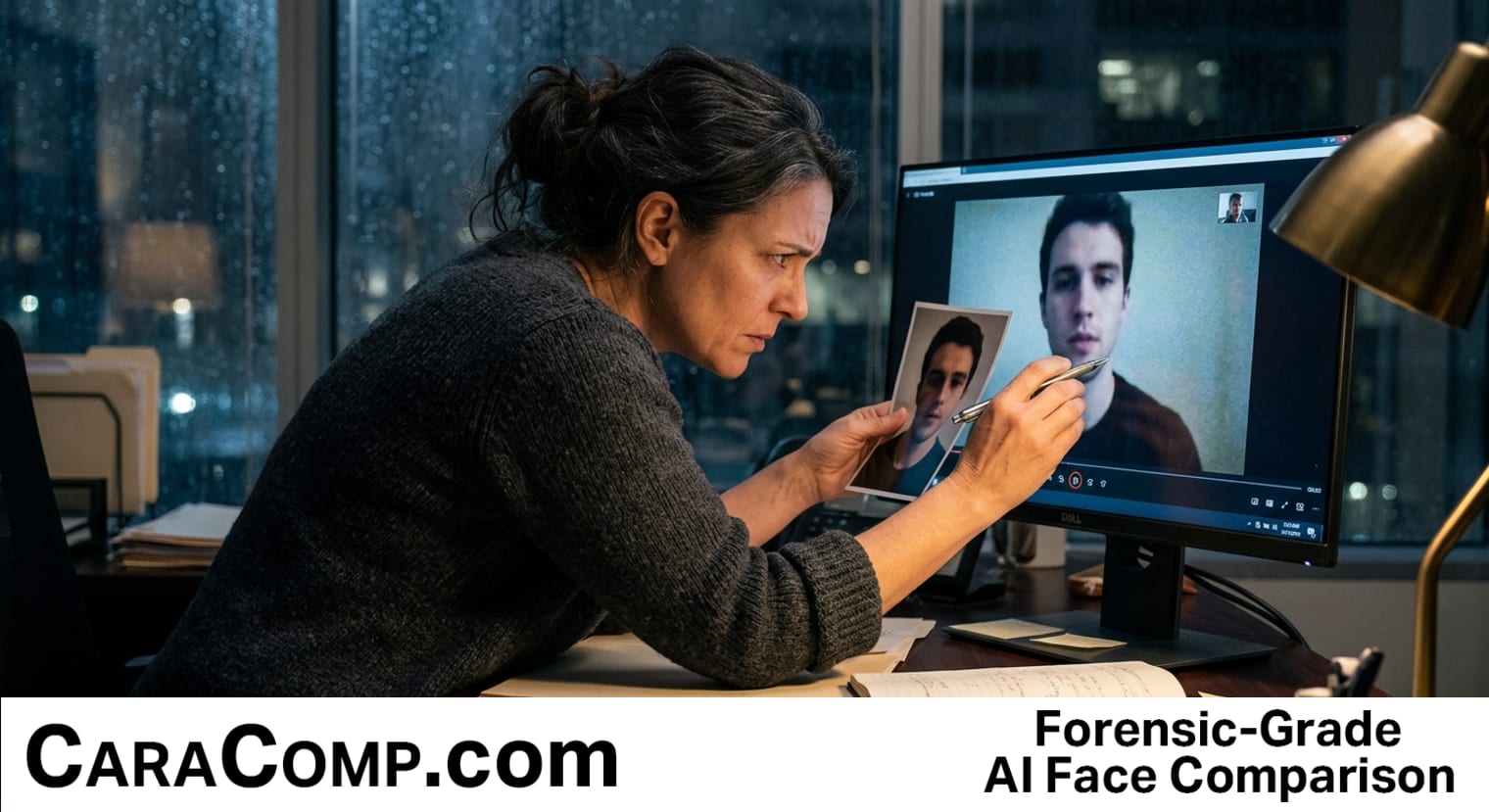
The person you just interviewed for that high-access remote role might not have a pulse. Recent reports indicate that deepfake job candidates are no longer a theoretical threat; they are successfully infiltrating corporate payrolls, passing Zoom screenings with AI-generated faces, and gaining legitimate access to sensitive company data. When one in four candidate profiles is projected to be fake by 2028, the traditional "gut feel" of a hiring manager is officially a liability.
From an investigative perspective, this isn't just an HR glitch—it is a full-scale identity crisis. For years, private investigators and OSINT professionals have relied on facial comparison to verify subjects. Now, that same rigor is required just to ensure the new lead developer isn't a digital mask controlled by a state-sponsored threat actor. The "Ivan X" case, where a candidate’s face visibly improved mid-interview as they adjusted their software, proves that human observation is failing. Humans correctly spot deepfakes only about 55% of the time. That is a coin flip with your company’s security on the line.
This shift moves facial comparison technology from the "nice to have" list for specialized detectives into the "must-have" toolkit for anyone responsible for identity verification. We are moving toward a reality where every remote interaction requires a forensic-grade side-by-side analysis of the person on the screen against their documented identity. For solo investigators and small firms, this means the demand for professional-grade comparison is about to skyrocket as corporate clients realize their internal teams are being catfished by generative AI.
- The End of "Vibes-Based" Verification: Relying on a video call to "meet" a person is dead. Forensic facial comparison using Euclidean distance analysis is the only way to mathematically verify that a face matches a government-issued ID.
- The New Investigative Revenue Stream: As HR departments fail to catch sophisticated deepfakes, PIs and OSINT researchers will increasingly be tapped to perform "identity audits" as part of standard pre-employment screening.
The gap between enterprise-grade forensic tools and what the average investigator can afford has historically been huge. But as deepfakes become the baseline noise of the digital economy, having the ability to run a professional, court-ready facial comparison report isn't just about closing cases—it’s about defending the integrity of the workforce itself.
Read the full article on CaraComp: Your Next Coworker Might Not Exist — And HR Just Hired Them


Comments
Post a Comment