Your Kid's Voice Is Calling for Help. 3 Seconds of Audio Is All a Scammer Needed.
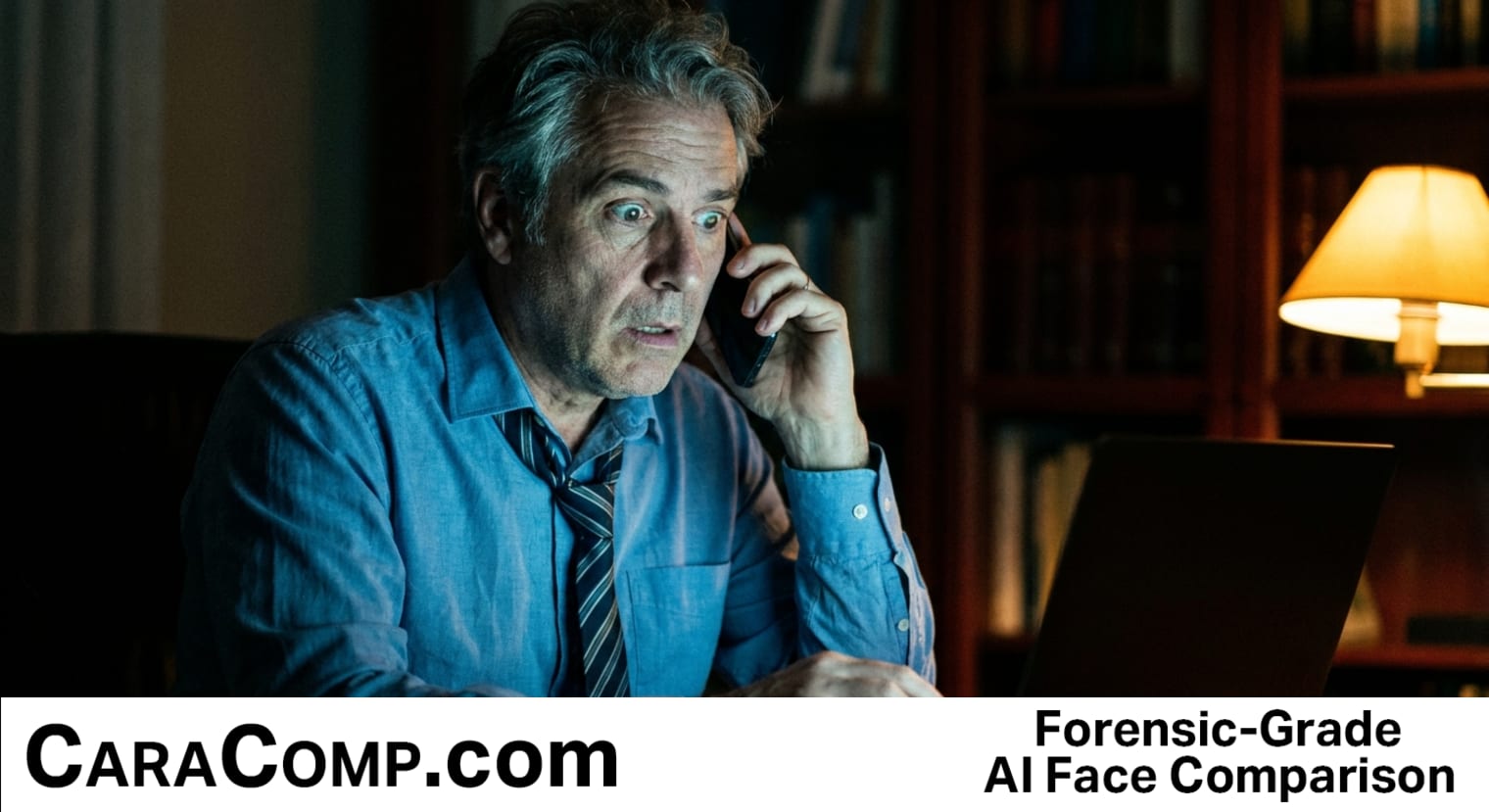
Your biological identity is being harvested in less time than it takes to clear your throat. While most investigators are still debating the ethics of biometric scanning, the criminal underworld has already weaponized it. The news that a mere three seconds of audio is enough to clone a human voice perfectly isn't just a "consumer alert"—it is a sirens-blaring wake-up call for the private investigation and OSINT community.
We are entering a period where "seeing is believing" is a dangerous fallacy. If a scammer can spoof a child’s voice to extort a parent, they can certainly spoof a digital "trail" to mislead an investigator. For the solo PI or the small firm, this means manual methods are no longer just slow; they are a professional liability. If you are still relying on your "gut feeling" or a manual side-by-side eyeball test to verify a subject's identity across case photos, you are bringing a knife to a nuclear firefight.
At CaraComp, we see this shift every day. As synthetic identity and deepfakes become the standard toolkit for fraud, investigators need more than just a sharp eye. They need Euclidean distance analysis—the same math-heavy, enterprise-grade verification used by federal agencies—to prove that the person in "Photo A" is statistically the same as "Photo B." The gap between manual comparison and professional investigation technology is where reputations go to die.
- The "Manual" Era is Dead: Human perception is easily fooled by AI-generated nuances. Relying on manual facial comparison in an age of 3-second voice clones is a fast track to a missed match or a professional malpractice suit.
- The Democratization of Verification: Sophisticated identity analysis cannot remain locked behind $2,400/year enterprise contracts. Solo investigators must adopt high-caliber Euclidean analysis tools to maintain parity with the tech-savvy criminals they are tracking.
- Comparison vs. Surveillance: The future of the industry isn't in scanning crowds, but in high-precision comparison of case photos. Verifying a subject’s identity through data, not just intuition, is the only way to produce court-ready results that survive scrutiny.
The bad actors aren't waiting for the industry to catch up. They are already using three seconds of data to destroy lives. As investigators, our response must be to stop "looking" and start analyzing. If you aren't using professional-grade comparison tools to verify your subjects, you aren't just behind the curve—you're out of the game.
Read the full article on CaraComp: Your Kid's Voice Is Calling for Help. 3 Seconds of Audio Is All a Scammer Needed.


Comments
Post a Comment