Your Kid's Safety Now Costs Your Passport — And Hackers Are Watching
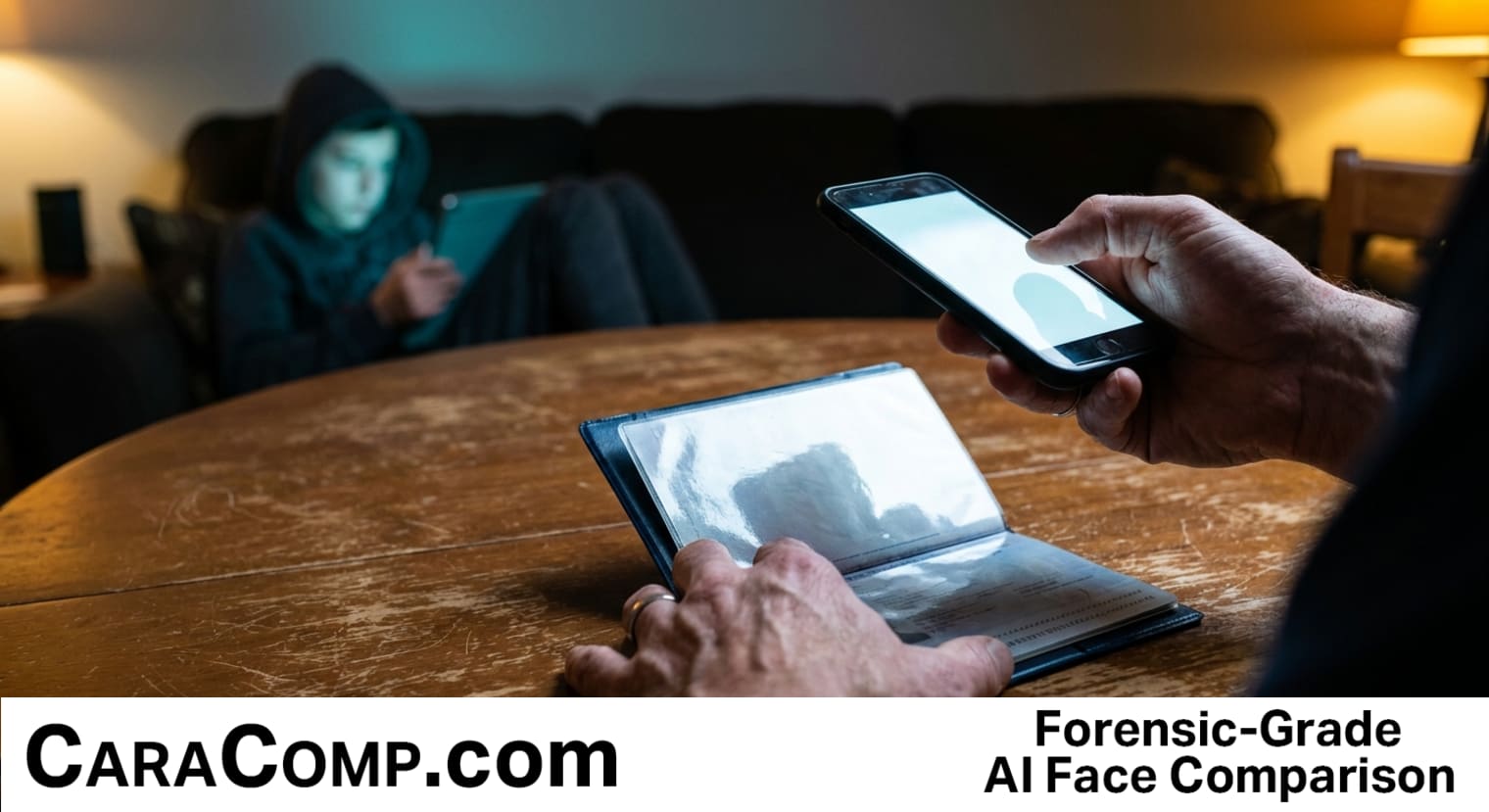
Handing your passport to a social media giant to "protect" your child is like giving a thief the keys to your vault because he promised to check the locks. Malaysia’s latest mandate—requiring government ID for social media users under 16—is a massive gamble that assumes platforms historically known for data leaks can suddenly be trusted with your most sensitive biometric documents. For those of us in the investigative and OSINT world, this isn't just a privacy story; it’s a massive expansion of the attack surface for identity fraud.
The problem isn't the intent; it’s the tech. While governments push for static ID checks, deepfake fraud is evolving at a pace that makes a simple "passport upload" look like a screen door in a hurricane. We are entering an age where "verified" accounts mean absolutely nothing if the verification process relies on outdated image analysis. This is why professional facial comparison is moving away from simple recognition and toward deep Euclidean distance analysis—measuring the mathematical reality of a face rather than just the pixels on a screen. If the tool can't tell the difference between a synthetic persona and a real human, the system is broken before it starts.
As investigators, we see the cracks in these systems daily. When a parent uploads a passport, they aren't just verifying an age; they are creating a high-value target for hackers. If a social media database is breached, that ID isn't just a username—it's a gateway to total identity theft. We should be looking for better ways to verify identity that don't involve hoarding government documents in the cloud. Professional-grade comparison tools should be used to validate evidence, not to create a centralized honey pot of citizen data.
- The "Verified" tag is becoming a liability: Investigators can no longer trust platform verification as proof of identity, as deepfake "persona kits" are now sophisticated enough to bypass standard, low-tier ID checks.
- A surge in synthetic identities: As more countries adopt these mandates, OSINT professionals will face a flood of accounts that appear government-verified but are actually powered by AI-generated faces.
We need to stop confusing crowd surveillance with professional facial comparison. One is a privacy nightmare; the other is a necessary tool for uncovering the truth in an era of deepfakes. Until platforms understand the difference, your family’s data is the collateral damage.
Read the full article on CaraComp: Your Kid's Safety Now Costs Your Passport — And Hackers Are Watching


Comments
Post a Comment