Your Kid's Face, Their Data: The Age-Check Trap Nobody Warned You About
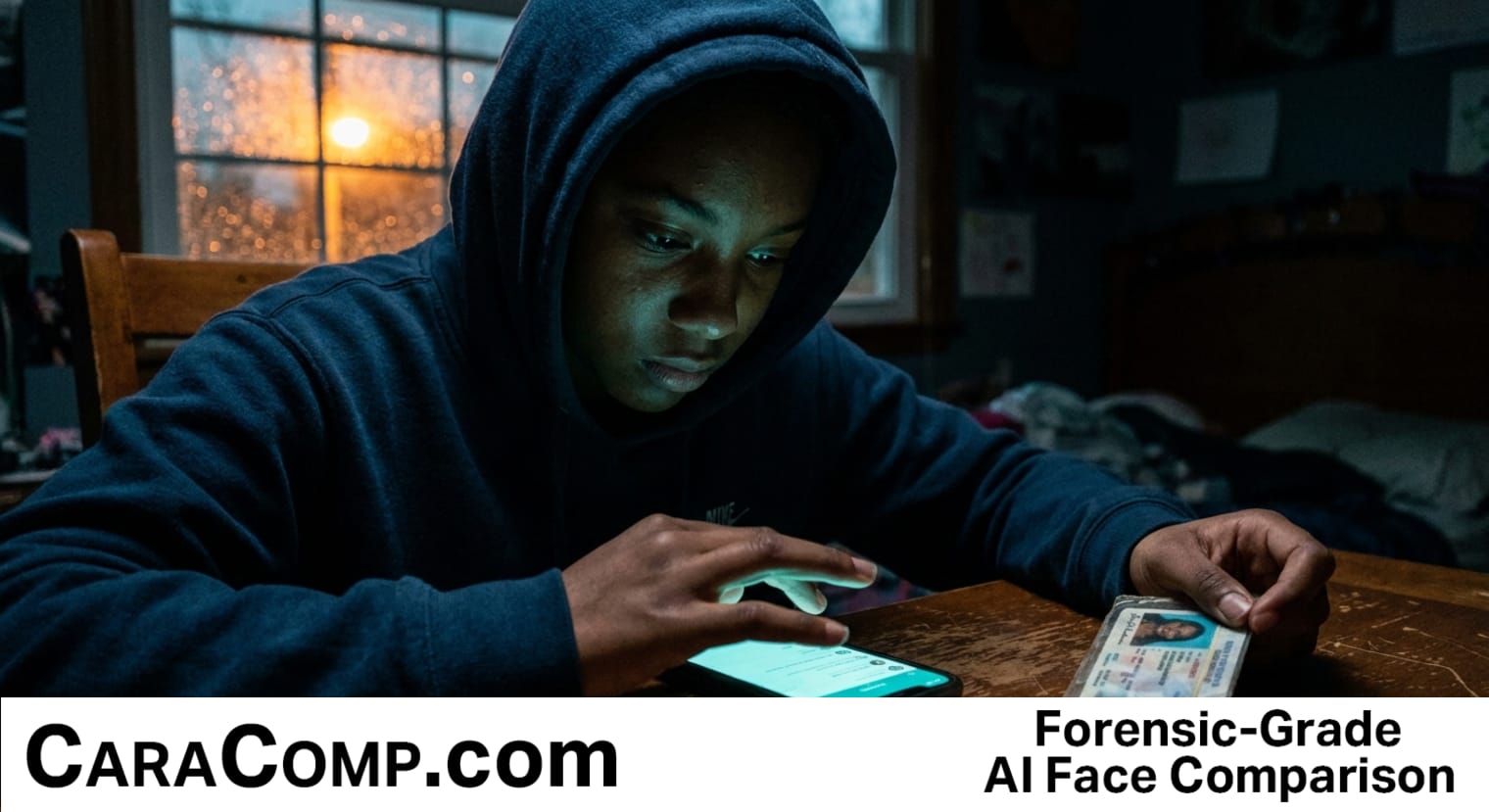
Your face is becoming your digital passport, but the algorithms currently acting as bouncers are failing the most basic math tests. Japan’s recent move to kill the "click-your-birthday" honor system on social media is exposing a massive rift in the biometrics industry: the difference between a high-stakes "guess" and a professional-grade match. While governments push for stricter age gates, they are colliding with the reality that "age estimation" tech has a 1.22-year margin of error. For a child trying to bypass a 13-year-old age gate, that’s not a technical detail—it’s a wide-open door.
From an investigative perspective, this "age assurance" trend is a double-edged sword. Most consumer-grade tools are focused on surveillance-style scanning and estimation, which are notoriously unreliable and prone to demographic bias. They trade privacy for a "best guess" that wouldn't hold up for five seconds in a professional case file. For investigators, OSINT professionals, and law enforcement, the goal isn't to guess how old someone looks; it's to verify who they are through precise facial comparison and Euclidean distance analysis.
The real danger here isn't just a 12-year-old getting onto TikTok; it’s the normalization of low-accuracy biometric tools. When platforms prioritize "frictionless" scans over technical reliability, they train the public to accept results that are frequently wrong. If you are a solo investigator or a small PI firm, relying on these types of "estimation" or consumer-level search tools is a fast track to a ruined reputation. You need the same caliber of analysis used by federal agencies—tools that look at the geometry of a face, not just the "vibe" of a profile photo.
- Estimation is not comparison. Most platforms are using "age assurance" to guess a user's age, which carries a massive margin of error. Professional investigation technology relies on Euclidean distance analysis to compare two specific images with mathematical certainty.
- Reliability is the only currency that matters. Consumer tools and "estimation" AI often produce false positives, especially across different skin tones and lighting. For court-ready reporting, investigators cannot stake their case on a tool that "guesses" correctly only 80% of the time.
- The privacy vs. investigation divide. While the public fears mass surveillance, professional investigators are simply looking for side-by-side comparison. The shift toward stricter age gates will likely flood the market with cheap, unreliable biometrics—making professional-grade tools more essential than ever.
At CaraComp, we see the shift in Japan as a warning shot. As biometrics become a standard part of every sign-up screen, the line between amateur "guessing" and professional investigation will only sharpen. You don't need a six-figure government budget to get enterprise-grade results, but you do need to stop relying on tools built for social media age-gates.
Read the full article on CaraComp: Your Kid's Face, Their Data: The Age-Check Trap Nobody Warned You About


Comments
Post a Comment