Your Kid's Face Is the New Lunch Card — And Nobody's Guarding It
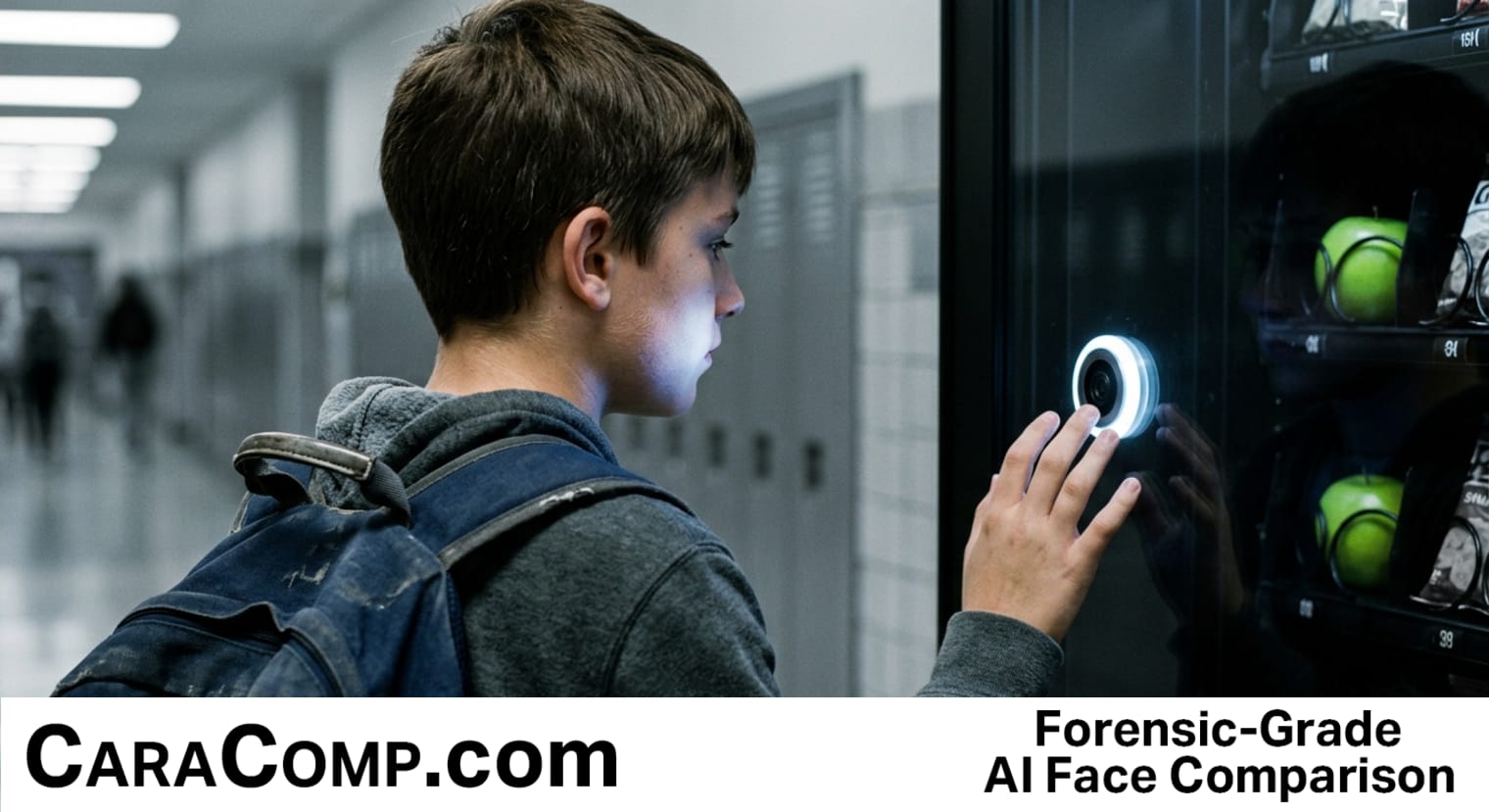
A vending machine in a UAE school is now scanning children’s faces before they can buy a snack. It isn't just checking for a PIN; it's analyzing their identity to "nudge" them toward healthier food choices. While parents might see a wellness initiative, professional investigators see something much more volatile: the mass normalization of biometric tracking in a legal vacuum.
For those of us in the OSINT and private investigation world, this story is a masterclass in how "soft entry" surveillance works. By the time these kids are old enough to open a bank account, their facial geometry will have been logged, stored, and potentially sold a dozen times over by third-party vendors. The line between helpful technology and invasive monitoring isn't just blurring—it's being erased for the sake of a granola bar.
As investigators, we have to distinguish between the "Big Brother" style of mass surveillance seen in these schools and the precision of facial comparison. The former is about scanning crowds and controlling behavior; the latter is a vital tool for solving cases, identifying fraud, and finding missing persons using specific, user-provided evidence. When schools treat biometric data this casually, they jeopardize the public’s trust in legitimate investigative technology.
- The Regulatory Wild West: Most jurisdictions have zero specific laws governing how a vending machine vendor stores a child’s biometric template, creating a massive data liability for the future.
- The Erosion of Consent: When biometrics are tied to basic needs like school lunch, "opting out" isn't a real choice for students, effectively grooming a generation to accept constant scanning as a baseline reality.
- Methodology Confusion: This story reinforces the myth that all facial tech is about surveillance. Professional investigators must lead the conversation in explaining that Euclidean distance analysis for case-solving is a standard, ethical methodology, unlike the indiscriminate scanning of minors.
The University of Waterloo already saw a backlash when students realized their vending machines were scanning them without permission. As these "wellness" tools expand, the investigators who stay ahead of the curve will be those who know how to navigate the ethical and technical gaps these systems leave behind. We don't need more surveillance; we need better analysis.
Read the full article on CaraComp: Your Kid's Face Is the New Lunch Card — And Nobody's Guarding It


Comments
Post a Comment