Your Face, Your Address, Your Last Bar Fight: What That ID Scanner Really Keeps
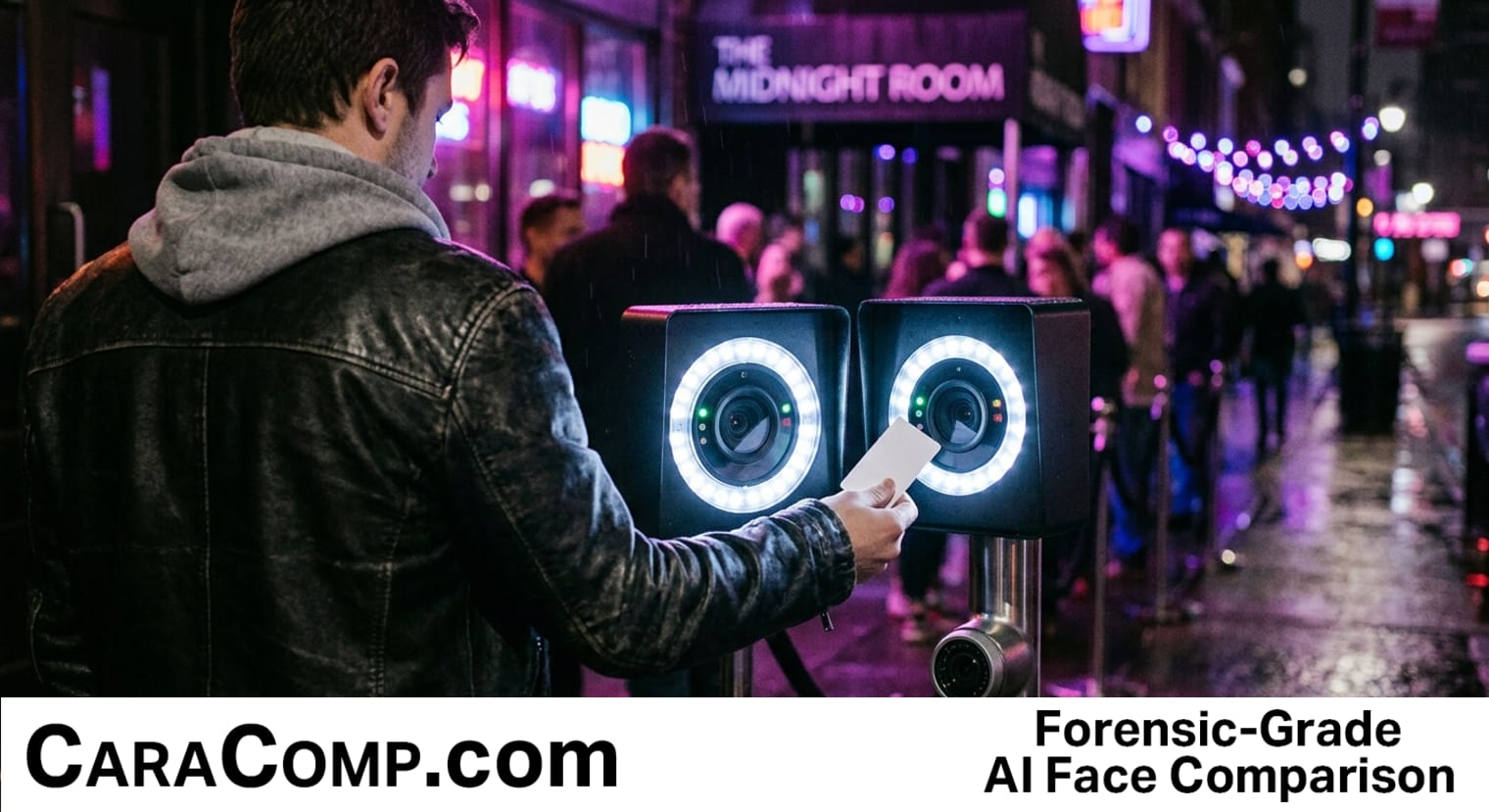
Your favorite local bar isn’t just checking your birth year anymore; it’s quietly indexing your face into a global "behavioral blacklist" before you even reach the tap. While patrons think they are simply proving they are twenty-one, the ID scanners across 700+ cities are actually building a permanent, searchable database of home addresses and "incident flags" that follow you from venue to venue. This isn't just age verification—it is a massive, unregulated experiment in social credit mapping disguised as nightlife security.
From an investigative perspective, this "mission creep" is exactly why the public remains skeptical of biometric technology. There is a fundamental difference between opaque, non-consensual surveillance and the professional application of facial comparison. At CaraComp, we believe the power of Euclidean distance analysis belongs in the hands of the investigator—not buried in the backend of a bar’s iPad without the user's knowledge. The controversy in the Castro District proves that when technology lacks transparency, it loses its legitimacy in the eyes of the court and the public.
For private investigators and OSINT professionals, this story is a wake-up call. The data is already out there, but the tools used to manage it are often either prohibitively expensive or dangerously unreliable. We are seeing a future where "facial comparison" becomes a standard part of every insurance fraud or missing persons case. However, for that evidence to hold up, investigators need professional-grade analysis and court-ready reporting—not the shaky, unreliable results of a consumer-grade app or a bar's shadow database.
- The Death of Anonymity in Public Spaces: The shift from "checking an ID" to "storing a profile" means that a single misunderstanding at one venue can effectively ban a person from an entire city's nightlife network without any due process.
- The Professional Distinction: As "facial comparison" becomes a mainstream term, investigators must lead the charge in defining it as a side-by-side analytical methodology rather than a tool for passive crowd monitoring.
- Evidence Integrity: With "flag networks" operating in the shadows, the demand for verifiable, high-confidence facial analysis tools will skyrocket for law enforcement and SIU teams who need to debunk or confirm these digital records.
The infrastructure for a searchable world is already installed. The only question remains: who has the tools to analyze it accurately and affordably?
Read the full article on CaraComp: Your Face, Your Address, Your Last Bar Fight: What That ID Scanner Really Keeps


Comments
Post a Comment