Your Face, Their Algorithm: Why a 1-in-a-Million ID Check Fails 100x More Often on Some People
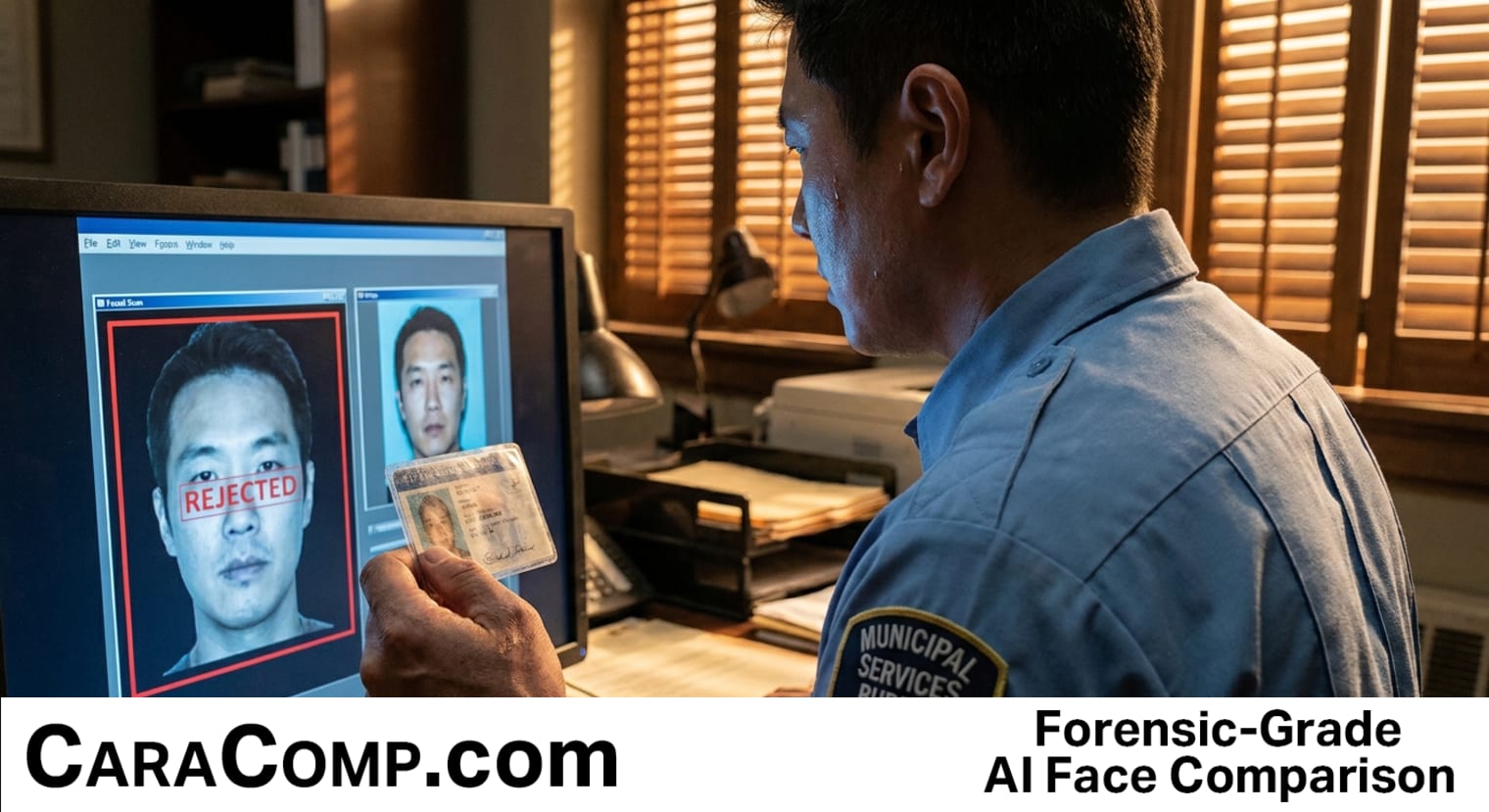
A "one-in-a-million" accuracy claim is a calculated lie if the person in your investigation doesn't look like the training data used by the software developers. For investigators in the field, the latest research into facial recognition bias isn't just an academic concern—it’s a warning that the enterprise tools you’ve been told to trust are failing at a rate 10 to 100 times higher when applied to African faces. If you are staking your professional reputation on a "match" generated by a black-box algorithm, you are playing a dangerous game with your client's trust and your case's admissibility.
The industry is currently obsessed with "copy-pasting" European safety standards across the globe, assuming that a well-written rulebook can fix a fundamentally flawed dataset. It can't. As OSINT professionals and private investigators, we know that the "real world" is far messier than a standardized passport photo from Brussels. When algorithms are trained on Eurocentric features, they struggle to map the vast genetic diversity found in other populations. The result isn't just a technical glitch; it's a "false positive" factory that could lead a detective toward the wrong suspect or an insurance investigator to flag a legitimate claim as fraud.
This is exactly why the focus is shifting away from automated "recognition" and toward disciplined facial comparison. At CaraComp, we believe the investigator must remain the final arbiter of truth. Relying on enterprise-grade tools that cost $2,000 a year doesn't protect you from these biases—in fact, it often hides them behind a "confidence score" that has no grounding in reality for diverse populations. Forward-thinking investigators are moving toward Euclidean distance analysis that allows for side-by-side, manual verification of the math.
- Algorithmic bias creates a massive liability gap for investigators, where a tool's "99% accuracy" claim disappears the moment you cross a geographic or demographic border.
- Regulatory compliance is not a proxy for investigative reliability; following the EU AI Act won't help you in court if your tool’s underlying data failed to account for the subject's features.
- The future of the field belongs to "Human-in-the-Loop" technology, where AI provides the heavy lifting of Euclidean analysis but the professional investigator delivers the final, court-ready comparison.
Stop trusting the black box. If your technology doesn't account for the reality of human diversity, it isn't a tool—it's a risk. As investigators, our job is to close cases with certainty, not with a guess disguised as an algorithm.
Read the full article on CaraComp: Your Face, Their Algorithm: Why a 1-in-a-Million ID Check Fails 100x More Often on Some People


Comments
Post a Comment