Your Face Is Your Passport Now — and You Have Months, Not Years, to Catch Up
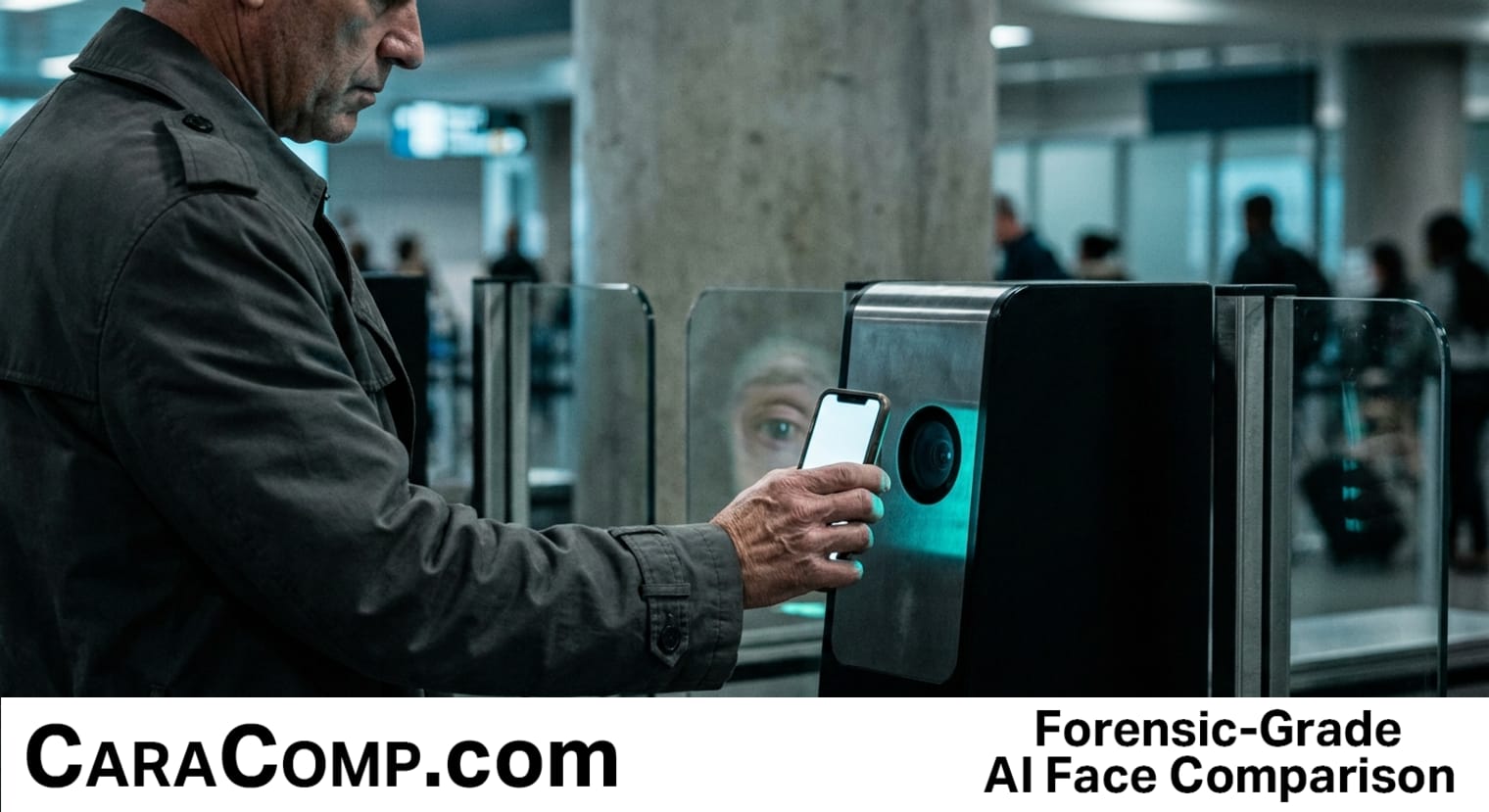
AI-generated deepfakes are currently so convincing that human border agents can no longer reliably distinguish between a real passport and a digital forgery. This isn't a futuristic threat; it’s the catalyst for the total overhaul of airport security by 2026. While the world's travel hubs are scrambling to implement "cryptographically proven" identities, the message for the professional investigator is clear: the era of the manual "eyeball test" is officially over.
For the solo private investigator or OSINT researcher, this news is a wake-up call. We are watching the death of visual verification as a standard. If a federal agent with specialized training cannot trust their own eyes to verify a subject’s identity against a physical document, a PI certainly shouldn't be staking their reputation—or their client's case—on manual photo comparisons. The industry is hitting a tipping point where facial comparison technology is no longer a "nice-to-have" luxury; it is the only way to maintain evidentiary integrity in a world flooded with AI-manipulated imagery.
At CaraComp, we see this shift as a validation of what we’ve told the investigative community for years: humans are remarkably bad at detecting subtle facial discrepancies, especially when fatigue or high-quality digital fraud are in play. The airports are moving toward Euclidean distance analysis to ensure accuracy, and investigators must follow suit to remain relevant. You don’t need a government-sized budget to access this level of precision, but you do need to stop relying on 20th-century methods for 21st-century cases.
- The "Eyeball Test" is a Liability: As AI fraud becomes the norm, manual facial comparison is becoming a professional risk. Investigators who don't use algorithmic verification are opening themselves up to "false positive" errors that could collapse a case in court.
- Enterprise Tech is Being Democratized: The same facial comparison logic used by international border agencies is now available to solo firms. The gap between "federal-grade" and "PI-accessible" tech has finally closed, removing the excuse that professional tools are too expensive.
- Court-Ready Standards are Changing: As digital credentials become the global standard, judges and clients will soon expect more than just a "they look the same to me" testimony. They will want to see the data-backed match probability.
The transition to digital travel credentials proves that the world is moving toward automated, data-driven identity verification. For the smart investigator, this isn't a threat—it's an opportunity to adopt the same high-caliber facial comparison tools used by the elite, ensuring that every match you make is backed by science, not just a hunch.
Read the full article on CaraComp: Your Face Is Your Passport Now — and You Have Months, Not Years, to Catch Up


Comments
Post a Comment