Your Face Is Your New Boarding Pass — And Nobody Told You That You Can Say No
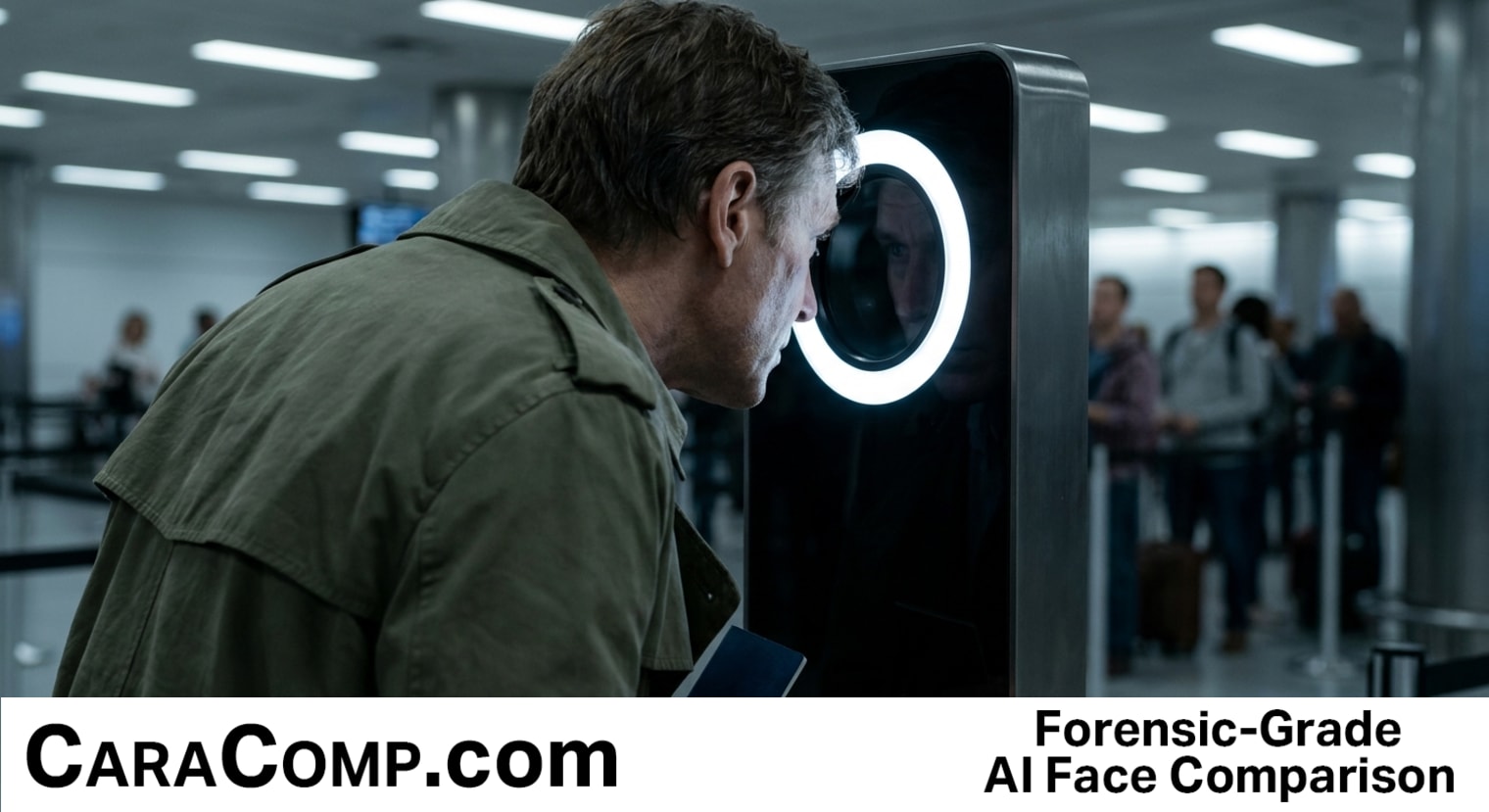
By 2028, your face will be your boarding pass at 83% of airports worldwide, but the "convenience" you’re being sold is actually a massive transfer of biometric sovereignty that most travelers don’t even realize they can refuse. While the TSA and airlines pitch this as a way to "skip the line," they are effectively normalizing the collection of permanent, unchangeable biological data. For the professional investigator, this massive rollout proves one thing: facial technology has officially moved from sci-fi to a standard industry requirement, yet the gap between government-level surveillance and professional case analysis has never been wider.
The industry is currently obsessed with "recognition"—scanning crowds to identify individuals against massive databases. At CaraComp, we view this shift through a different lens. While airports are building a global grid of "opt-out" cameras, the real value for OSINT professionals and private investigators lies in facial comparison. The same Euclidean distance analysis used by border control to verify a passport is the exact technology solo PIs need to close fraud cases or verify subjects in the field. The difference is the application: one is about monitoring the masses; the other is about precise, court-ready evidence for specific cases.
The "frictionless" airport experience is a double-edged sword. It proves that Euclidean distance analysis is reliable enough for national security, but it also creates a world where investigators who aren't using these tools are being left in the dust. If a camera at a gate can verify an identity in 500 milliseconds, why are you still spending three hours manually squinting at grainy photos from a surveillance tail?
- Biometric normalization is making manual photo analysis obsolete: As the public becomes accustomed to face-scanning at every gate, the expectation for investigators to provide high-tech, data-backed identification will become the baseline for "professional" work.
- The distinction between comparison and recognition is the investigator's strongest legal shield: Understanding that side-by-side comparison of known photos is a standard investigative methodology—distinct from mass surveillance—is critical for maintaining ethical standards and client trust.
- Affordable enterprise-grade tech is the only way to compete: As governments spend billions on these systems, solo investigators must adopt affordable versions of the same Euclidean analysis to maintain the same caliber of results without the six-figure contract.
The era of manual comparison is over. As airports turn your face into a digital key, it's time you turned facial comparison into your most powerful investigative asset.
Read the full article on CaraComp: Your Face Is Your New Boarding Pass — And Nobody Told You That You Can Say No


Comments
Post a Comment