Your Face Is the Ticket. What Happens When the Computer Says No?
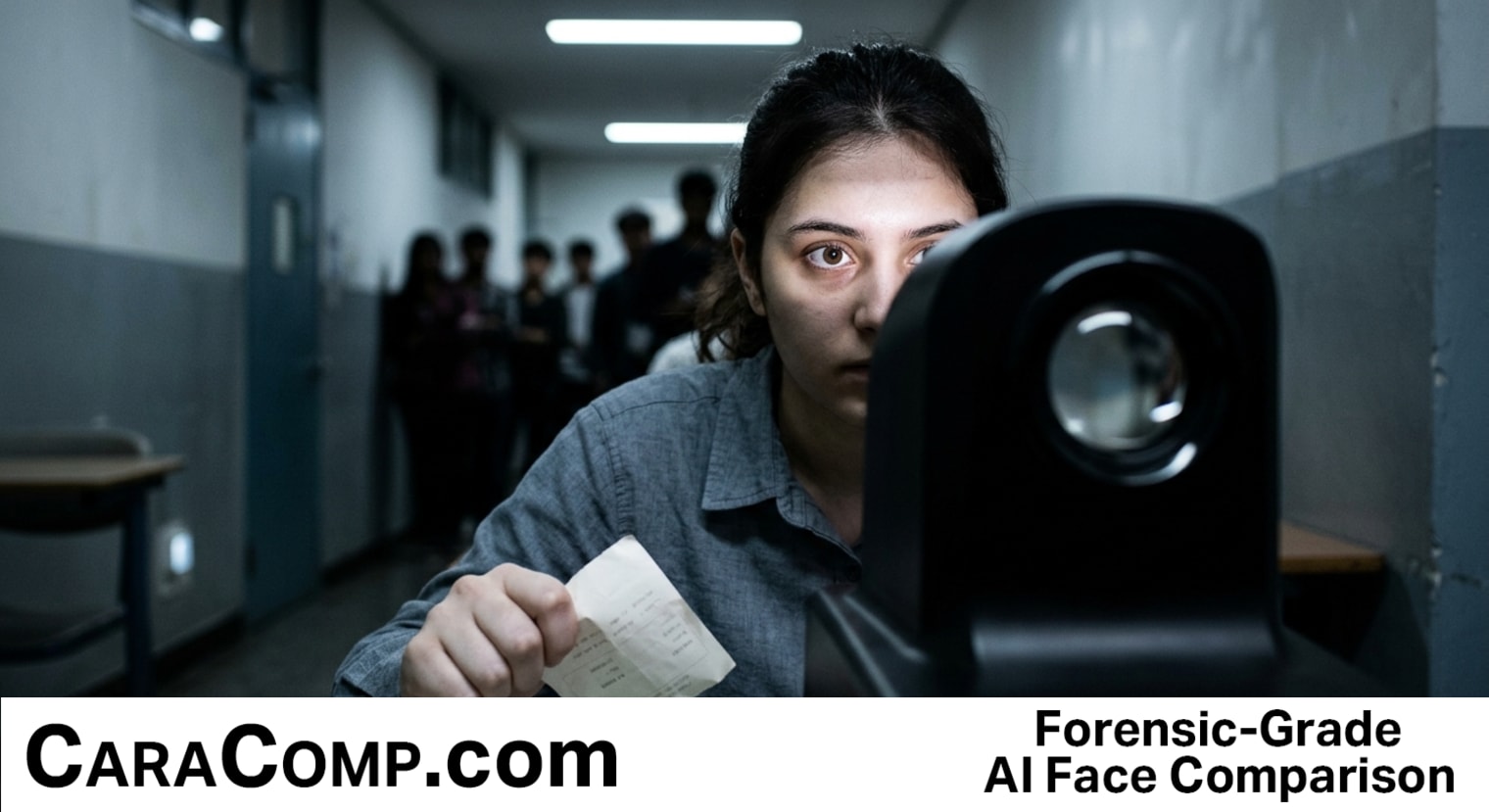
Six hundred thousand teaching candidates in India just became the largest test group for a biometric experiment where the "fail" state is a career-ending silence. As the MahaTET exam deployed mass facial screening to combat fraud, it highlighted a terrifying reality for the investigative community: we are increasingly reliant on "confidence scores" that no one bothers to explain.
For the professional investigator, this isn't just a story about exam security in Maharashtra. It’s a warning about the "black box" of facial technology. When an algorithm returns a 97% match, it isn't a fact; it’s a mathematical shrug. In a high-stakes environment—whether it’s a government exam or an insurance fraud investigation—that 3% margin of error is where reputations go to die. We see the same pattern everywhere: enterprise-grade tools are locked behind $2,000 annual paywalls, while solo investigators are left with "consumer-grade" search tools that prioritize speed over forensic reliability.
At CaraComp, we view this through the lens of Euclidean distance analysis. The industry is currently split between scary, mass-surveillance "recognition" and unreliable "search" apps. Real investigative work requires facial comparison—the cold, hard math of comparing two specific sets of biometric data to produce a court-ready report. If a system can reject 35% of legitimate candidates because of lighting or a haircut, that system isn't a tool; it’s a liability.
- The Accuracy Illusion: Lab benchmarks are meaningless in the field. When you move from a clean registration photo to a grainy CCTV still or a "live" exam-room scan, accuracy can plummet by 40%. Investigators must use tools that account for real-world variables, not just ideal conditions.
- The Necessity of Human-in-the-Loop: Mass screenings fail because they remove the investigator from the process. Professional-grade comparison should empower the PI with data, not replace their judgment with an automated "Yes/No" flag.
- The Professional Credibility Gap: Using "free" or consumer-level face search tools is a recipe for disaster. If your evidence can't withstand a challenge on its methodology—like the specific Euclidean distance between landmarks—it won't hold up in a deposition.
The lesson from the MahaTET deployment is clear: technology is only as good as its transparency. Solo investigators don't need "Big Brother" surveillance; they need affordable, enterprise-caliber analysis that turns a "maybe" into a professional certainty.
Read the full article on CaraComp: Your Face Is the Ticket. What Happens When the Computer Says No?


Comments
Post a Comment