Your Face Is Now Your Passport — And It Just Stranded Families at the Border for 3 Hours
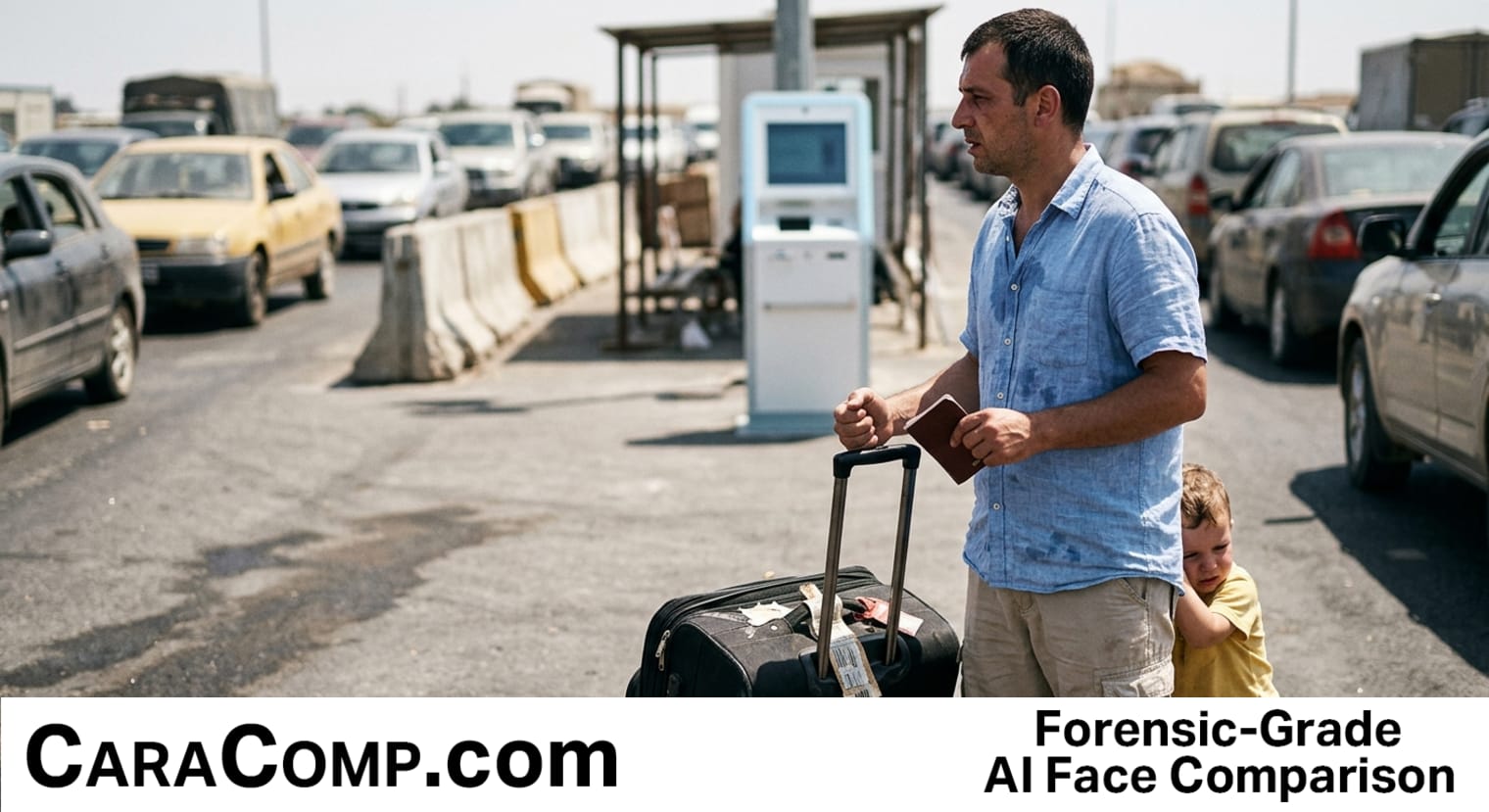
If you thought a lost passport was a logistical nightmare, try having a face that the system simply cannot process fast enough. This summer, the EU’s new biometric Entry/Exit System (EES) turned Greek border crossings into three-hour parking lots. When your face becomes your passport, a simple server lag doesn't just mean a slow login—it means missing your flight and stranding your family in the heat because a government algorithm is "stabilizing."
From an industry insider’s perspective, the Greek border meltdown highlights a massive, yawning chasm between high-level biometric theory and ground-level investigative reality. The EU is attempting to deploy enterprise-grade facial and fingerprint scanning at a scale that clearly outpaces its current infrastructure. While the system has reportedly flagged 24,000 unauthorized entries, it has also punished millions of legitimate travelers with a 70% increase in processing times. This is what happens when technology is built for bureaucrats instead of the people actually using it on the front lines.
For private investigators and OSINT professionals, this is a cautionary tale about the difference between mass scanning and professional facial comparison. The EES is a massive dragnet, whereas a sharp investigator relies on precise, side-by-side comparison using Euclidean distance analysis to close cases. We don’t need to scan a whole border; we need to know—with mathematical certainty—if the subject in a surveillance photo matches the person on a social media profile. The chaos in Greece proves that when biometric tools are bloated, over-complicated, and overpriced, the system breaks under the slightest pressure.
Investigators shouldn't have to wait for government-level "stabilization phases" or pay five-figure enterprise fees to access reliable tech. We need tools that provide the same caliber of analysis used by federal agencies, but with the speed and affordability that a solo PI firm requires to remain profitable and efficient.
Key Implications for Investigators:
- Reliability is the New Reputation: As the public becomes more aware of biometric "meltdowns," investigators must use tools that provide professional, court-ready reporting. You cannot stake your license on unreliable consumer-grade search tools that lack technical depth.
- Comparison vs. Surveillance: Professionals must draw a hard line between invasive mass-scanning systems and targeted facial comparison. One is a bureaucratic bottleneck; the other is a standard, essential investigative methodology used to verify evidence.
- The Tech Gap is Closing: You no longer need a government-sized budget to access Euclidean distance analysis. The same tech causing "meltdowns" at the border is now available to solo investigators for a fraction of the cost, minus the three-hour wait times.
Read the full article on CaraComp: Your Face Is Now Your Passport — And It Just Stranded Families at the Border for 3 Hours


Comments
Post a Comment