Your Face Is Now 128 Numbers — and One Selfie Can't Prove It's You
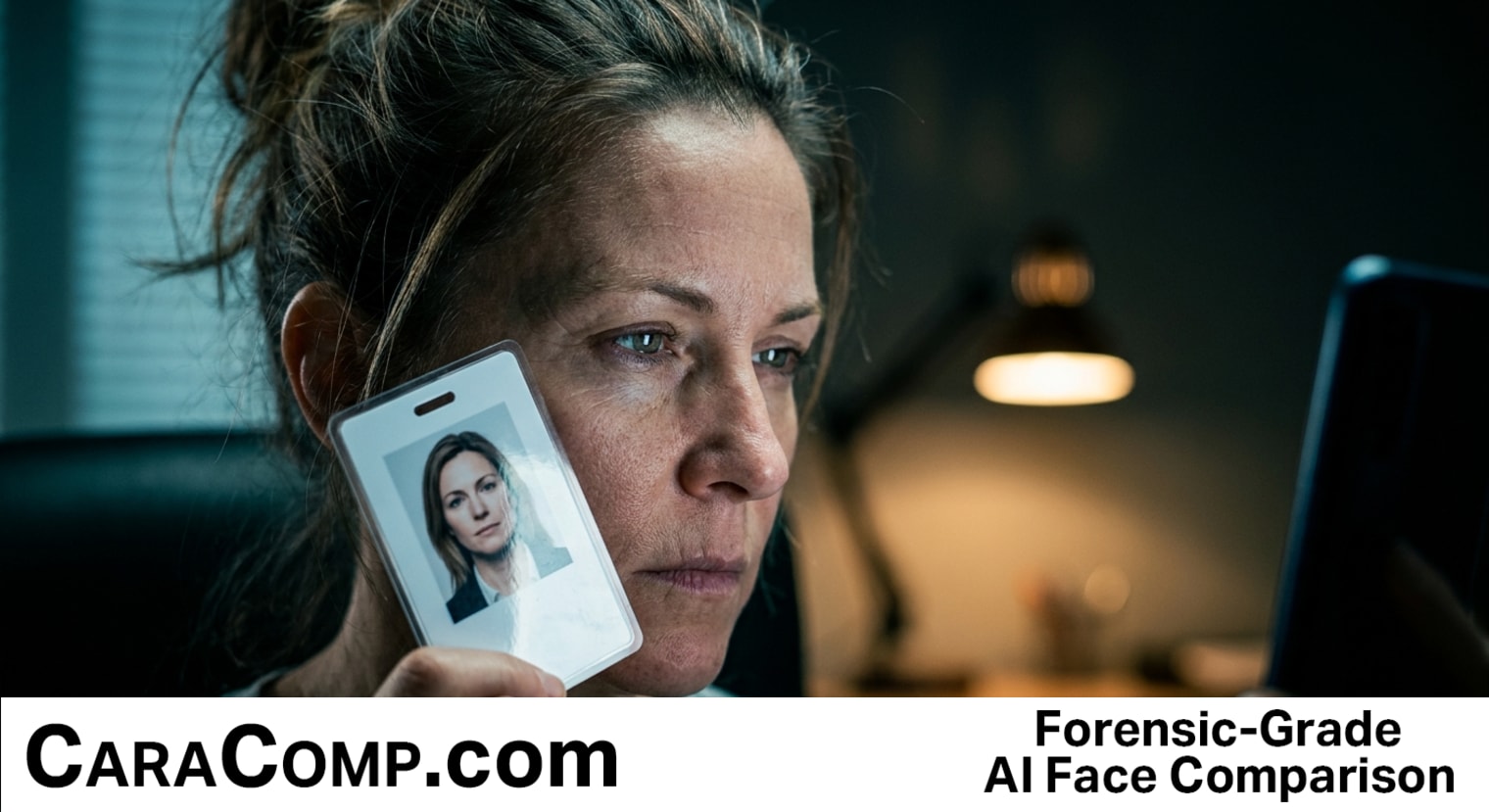
Your suspect’s face is no longer a face; it is a string of 128 digits. If you are still squinting at grainy CCTV footage and side-by-side printouts to "feel" a match, you aren't just wasting time—you are ignoring the fundamental math of modern investigation. The industry is moving away from visual intuition toward Euclidean distance analysis, a method that converts facial landmarks into coordinates to calculate the literal mathematical distance between two identities. For the solo private investigator or the OSINT researcher, this shift is the difference between a "maybe" and a court-ready case.
The reality is that a human eye cannot consistently account for a 15-degree head tilt or a shift in lighting that alters facial shadows. Algorithms, however, see right through these environmental variables by focusing on the 128 numerical measurements that remain constant. While enterprise-level tools have kept this technology behind a $2,000-a-year paywall, the barrier to entry is finally collapsing. We are entering a phase where a solo PI can leverage the same analytical horsepower as a federal agency without needing a government-sized budget or a degree in data science.
For investigators, this isn't about "surveillance" or scanning crowds; it is about precision facial comparison. When you upload photos from a case, you aren't looking for a "vibe" match—you are looking for a low Euclidean distance score that holds up under scrutiny. If you are still relying on consumer-grade search tools that prioritize quantity over reliability, you are staking your professional reputation on a flip of a coin. Professional investigation technology is finally becoming accessible, and the investigators who refuse to adopt these mathematical standards will soon find themselves obsolete.
- Math trumps intuition: Euclidean distance analysis provides a standardized, objective metric for facial comparison that manual review simply cannot replicate, especially in low-quality surveillance images.
- Affordability is the new edge: Enterprise-grade facial comparison is no longer exclusive to big firms; solo investigators can now access court-ready reporting and batch processing at 1/23rd of the traditional cost.
- Reliability over reach: Using tools specifically built for case analysis—rather than broad consumer search engines—ensures higher true-positive rates and professional results that clients trust.
The future of the field isn't in "looking closer"—it’s in measuring better. If you’re still spending three hours on a manual comparison that an algorithm can solve in thirty seconds, you aren't just working hard; you're falling behind.
Read the full article on CaraComp: Your Face Is Now 128 Numbers — and One Selfie Can't Prove It's You


Comments
Post a Comment