Your Face Is the New Car Key. You Can't Change It When It's Stolen.
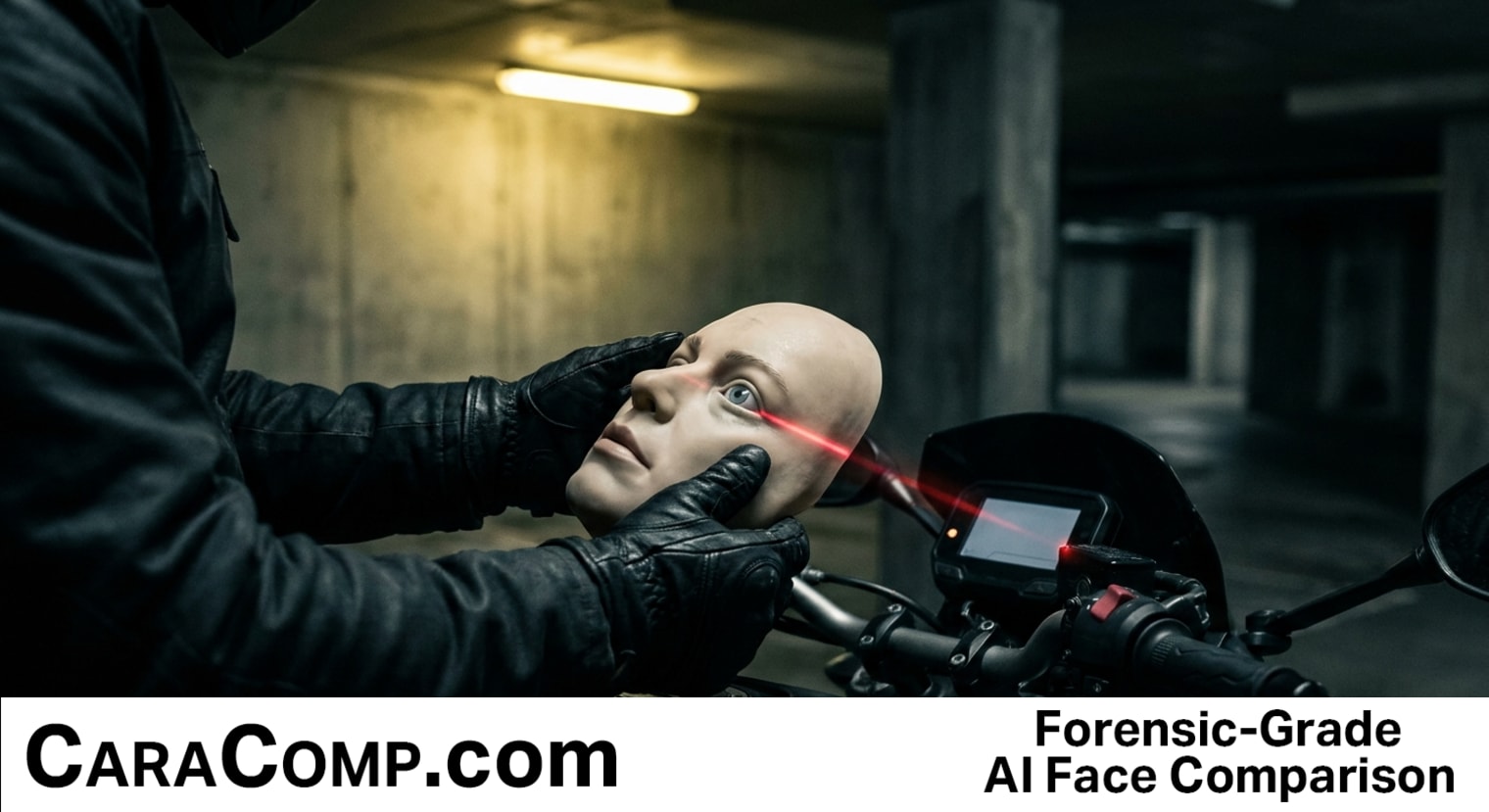
BMW just turned your motorcycle into a $30,000 biometric vault, but if your "key" gets leaked in a server breach, you can’t exactly call a locksmith for a new face. While the iFace system is a marvel of 3D stripe projection and infrared iris sensing, it signals a massive shift in how we handle identity. Your face isn't just a part of your body anymore; it’s a high-value credential that never expires and can never be reset.
For the private investigator or OSINT professional, this isn't just a flashy headline about luxury motorcycles. It’s definitive proof that facial comparison technology is moving from the fringe into the foundation of everyday security. As faces become the "keys" to vehicles, apartments, and office buildings, the demand for professional-grade verification is about to explode. If a "stolen face" becomes the new stolen car key, the burden of proof in insurance fraud, theft, and identity investigations becomes significantly more complex.
At CaraComp, we’ve watched this evolution closely. For too long, the investigative industry has been forced to choose between spending three hours on manual photo-matching or paying $2,000 a year for enterprise tools. But as manufacturers bring Euclidean distance analysis to the handlebars of a bike, solo investigators can no longer afford to be left behind. You need the same caliber of analysis that these major brands use to verify identity, but without the "government-contract" price tag.
The implications for the investigative community are immediate and irreversible:
- Verification is the new investigation standard: As biometrics become the primary access point for physical assets, investigators must move beyond visual "best guesses." Adopting scientific Euclidean distance analysis is now a requirement to prove or disprove identity in a court-admissible format.
- The "Password Problem" becomes a physical liability: Unlike a stolen fob, a compromised biometric template is permanent. Investigators will increasingly be called upon to analyze "presentation attacks" where synthetic imagery or masks are used to spoof these high-stakes systems.
- Professional tools are no longer a luxury: Relying on manual comparison in a world of 3D facial mapping is like bringing a magnifying glass to a digital forensics lab. To stay competitive, solo PIs need batch processing and court-ready reports that mirror enterprise standards.
We’re entering a phase where the line between digital identity and physical access has vanished. If you aren’t using professional-grade facial comparison tools yet, you’re not just trailing the technology—you’re trailing the evidence. It’s time to stop guessing and start measuring.
Read the full article on CaraComp: Your Face Is the New Car Key. You Can't Change It When It's Stolen.


Comments
Post a Comment