Your Daughter's Panicked Voice on the Phone Could Be Fake. Here's the 10-Second Habit That Saves You.
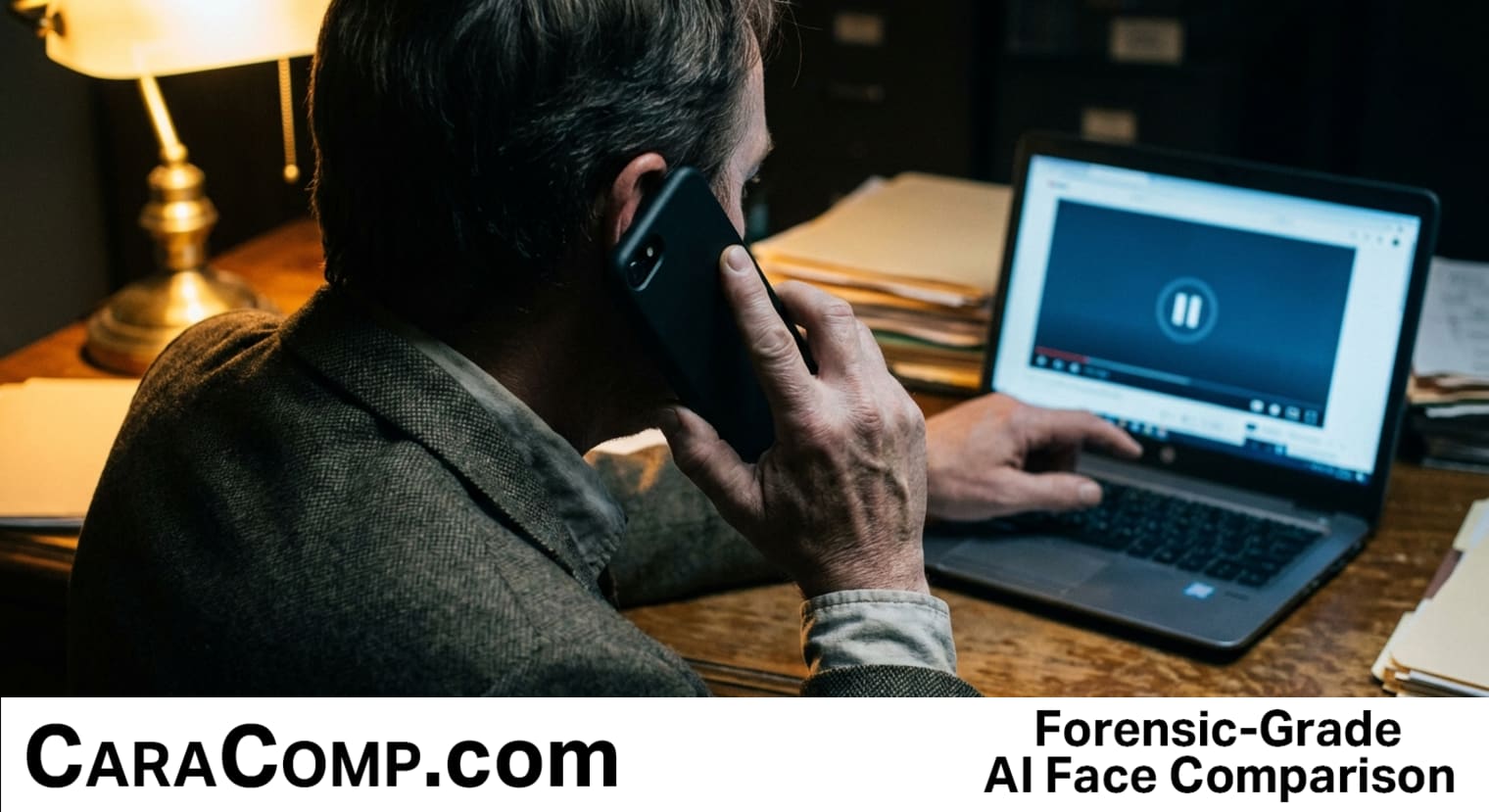
Your gut instinct is officially a liability. If you think your years of field experience have "trained" your eyes to spot a fake face or a fraudulent video, the latest data has a cold reality check for you: only 0.1% of people can actually distinguish between AI-generated content and reality. For the professional investigator, this isn’t just a tech trend; it’s a direct threat to the integrity of your evidence and your reputation in court.
The investigative world is hitting a wall where "eyeballing it" no longer meets the standard of professional due diligence. We’ve moved past the days of glitchy AI hands and mismatched ears. Today, AI models are trained on millions of hours of human movement, creating a level of visual fidelity that bypasses human biological detection. If a mother can’t recognize that her own daughter’s voice is a clone, a solo private investigator certainly cannot rely on manual side-by-side photo analysis to confirm a subject’s identity for an insurance fraud case or a missing person's report.
From the perspective of facial comparison technology, the solution isn't "looking harder"—it’s moving the goalposts from visual intuition to mathematical certainty. Investigators who continue to rely on manual methods are essentially gambling with their clients' trust. The news makes it clear that verification must move to a secondary, data-driven channel. For a professional, that means shifting from "I think this is the guy" to "The Euclidean distance analysis confirms a match based on biometric markers that the human eye cannot quantify."
- Manual visual analysis is now a professional liability: Relying on your eyes to verify a subject’s identity is no longer defensible when 99.9% of the population fails detection tests.
- The "Verification Habit" must be tech-driven: Just as consumers are told to use a second communication channel, investigators must use enterprise-grade analysis to provide court-ready proof that side-steps the "deepfake" defense.
- Reputation hinges on precision, not speed: As AI-generated evidence becomes more common, the investigators who survive will be the ones who provide standardized, professional reports that prove their findings through objective case analysis.
The era of trusting your "detective's intuition" for visual identification is over. The future of investigation isn't about being a better observer; it's about being a better analyst with the right tools to back up your claims. If you aren't using mathematical comparison to verify your subjects, you aren't just behind the curve—you're leaving your cases wide open to being dismantled by the first tech-savvy attorney who looks at your file.
Read the full article on CaraComp: Your Daughter's Panicked Voice on the Phone Could Be Fake. Here's the 10-Second Habit That Saves You.


Comments
Post a Comment