Your Boss's Voice Just Called. It Wasn't Him.
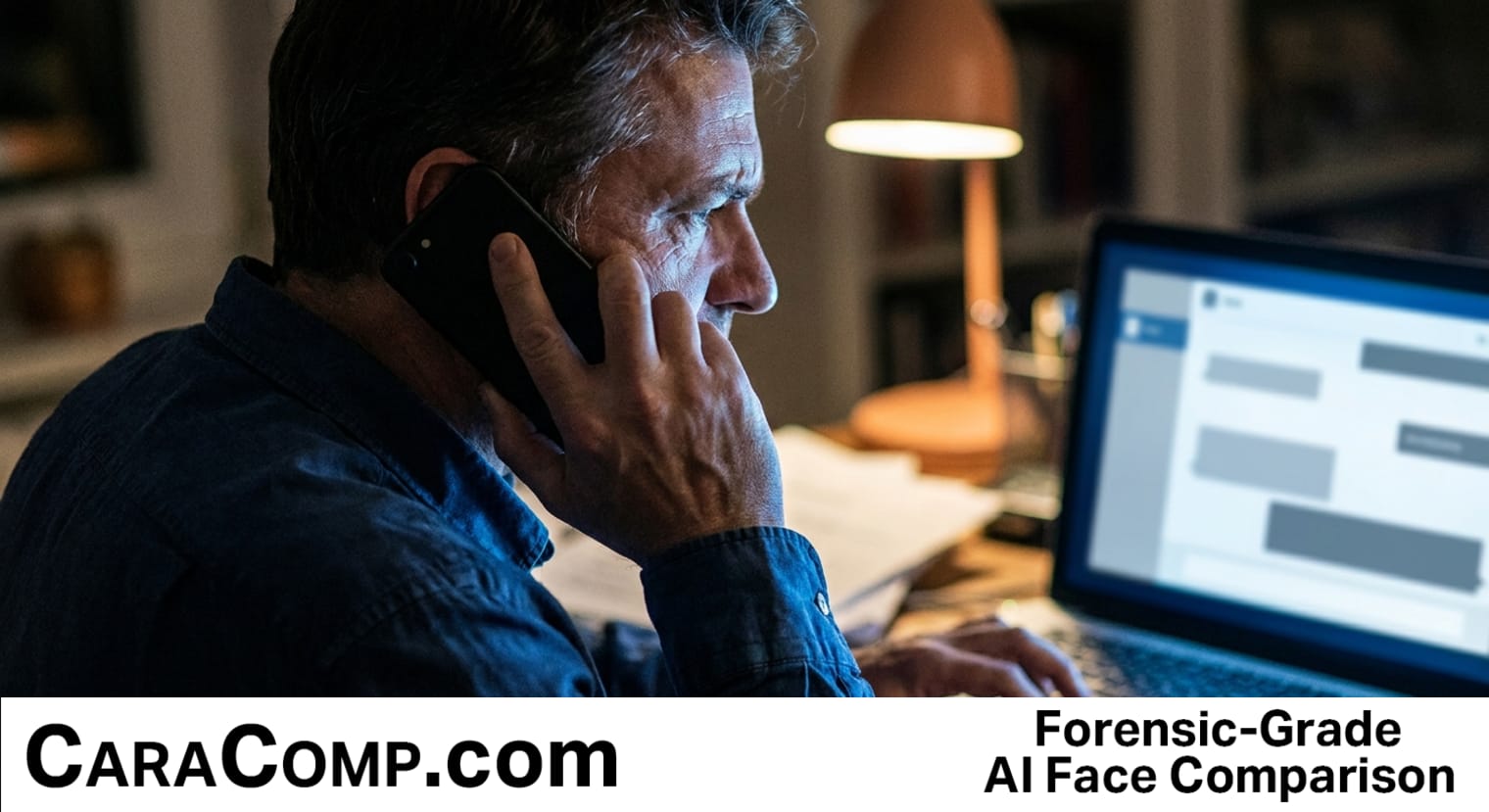
The "just call me to confirm" era of investigative work is officially dead. When three seconds of audio from a public webinar is all an attacker needs to clone a client’s or a supervisor's voice, your ears are no longer reliable tools for identity verification. If you are still relying on your gut instinct to verify who you are talking to, you are leaving your firm wide open to a total breach of trust.
Security researchers are currently documenting a sophisticated attack pattern: Microsoft Teams messages combined with real-time AI voice cloning. An investigator receives an urgent request from a "colleague" or a "legal partner," followed by a phone call from a voice they have known for years. The pitch, the tone, and the cadence are identical to the real person. But the individual on the other end is simply a script running on a server. For the solo private investigator or OSINT professional, this isn't just a corporate security headache—it is a direct threat to the integrity of your evidence and your reputation.
If a voice can be faked this easily, visual identity is the next logical target. We are already seeing a surge in synthetic profiles used in insurance fraud and complex domestic cases. Relying on "manual comparison" or "eyeballing" a photo is a professional liability in this new landscape. This shift is exactly why objective, Euclidean distance analysis is becoming the standard for the modern investigator. You cannot trust what you see or hear at face value anymore; you need mathematical certainty to back up your case files.
- Synthetic identity is the new baseline: Investigators must now operate under the assumption that voices and images could be spoofed until verified by forensic-grade investigation technology.
- Manual verification is a career risk: Relying on human memory or "manual comparison" creates a single point of failure that sophisticated attackers are already exploiting to bypass traditional security.
- Professional reporting is the only defense: To stay ahead, solo investigators need to move away from unreliable consumer tools and adopt enterprise-grade facial comparison that produces court-ready, data-driven results.
The investigator who wins today isn't the one with the most experience "spotting a fake." It is the one who leverages affordable, high-caliber technology to provide side-by-side analysis that holds up under scrutiny. In a world of cloned voices and deepfake images, data is the only thing that doesn't lie.
Read the full article on CaraComp: Your Boss's Voice Just Called. It Wasn't Him.


Comments
Post a Comment