Your Bank Texted You. Don't Click — Even If It's Real.
The greatest threat to your bank account isn't a shadowy hacker bypass—it’s the "Identity Verification" notification you’ve been trained to trust. As community banks and credit unions finally scramble to adopt biometric verification, they are inadvertently handing scammers a master key to social engineering. When "prove it’s you" becomes a routine digital chore, the human firewall doesn't just crack; it disappears.
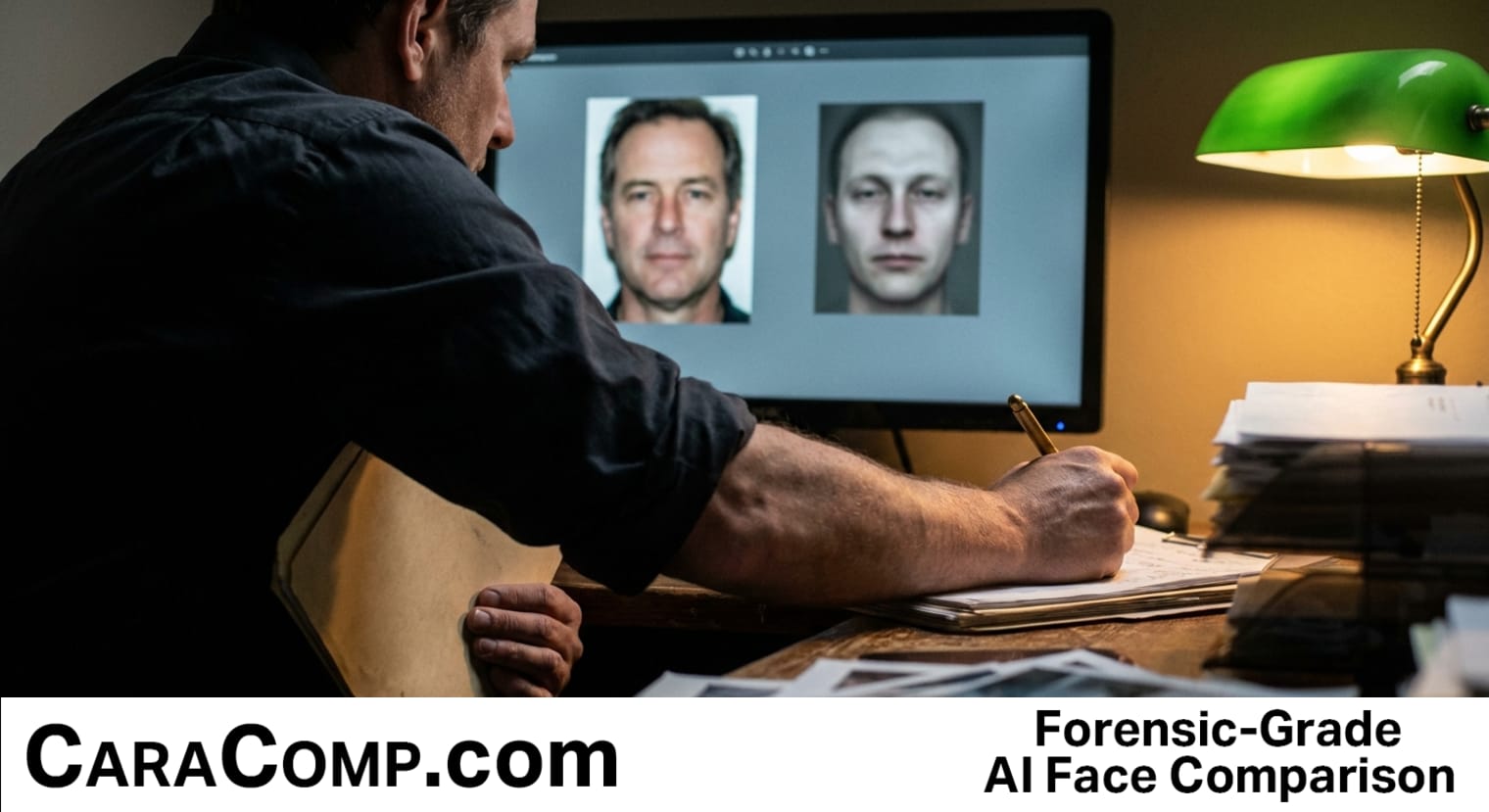
This shift represents a massive pivot in the investigative landscape. At CaraComp, we recognize this as the "biometric baseline." Identity is rapidly moving away from what you know—like passwords—to who you are, specifically your facial geometry. While institutions use this for onboarding, professional investigators are seeing the fallout: a surge in sophisticated identity fraud that requires enterprise-grade analysis to untangle. If you are still relying on manual "eyeball" comparisons to verify a subject's identity, you are already behind the curve.
The real scandal here isn't the technology itself, but the accessibility gap. For years, only the massive national banks and federal agencies could afford the Euclidean distance analysis required to verify a face against a government ID with professional certainty. This left solo private investigators and OSINT researchers in the dark, forced to rely on unreliable consumer tools that offer zero professional credibility. As scams get more convincing, the tools to debunk them must become more accessible to the boots-on-the-ground investigators.
- The normalization of identity prompts is a double-edged sword — The more we habituate users to uploading selfies for verification, the easier it becomes for "smishing" campaigns to harvest biometric data that looks identical to the real thing.
- Enterprise-grade facial comparison is no longer a luxury for investigators — As identity fraud goes high-tech, relying on manual visual checks is professional negligence; you need the same mathematical side-by-side analysis used by the institutions.
- Investigation is shifting from surveillance to authentication — The future of the industry isn’t about scanning crowds; it’s about high-stakes, one-to-one comparison to confirm a subject's true identity for a court-ready report.
Investigators who continue to ignore this shift are leaving their clients—and their reputations—vulnerable. It’s time to stop treating facial comparison as a "big agency" tool and start treating it as the standard investigative methodology it has become.
Read the full article on CaraComp: Your Bank Texted You. Don't Click — Even If It's Real.


Comments
Post a Comment