Your Bank Says You're Not You. Now What?
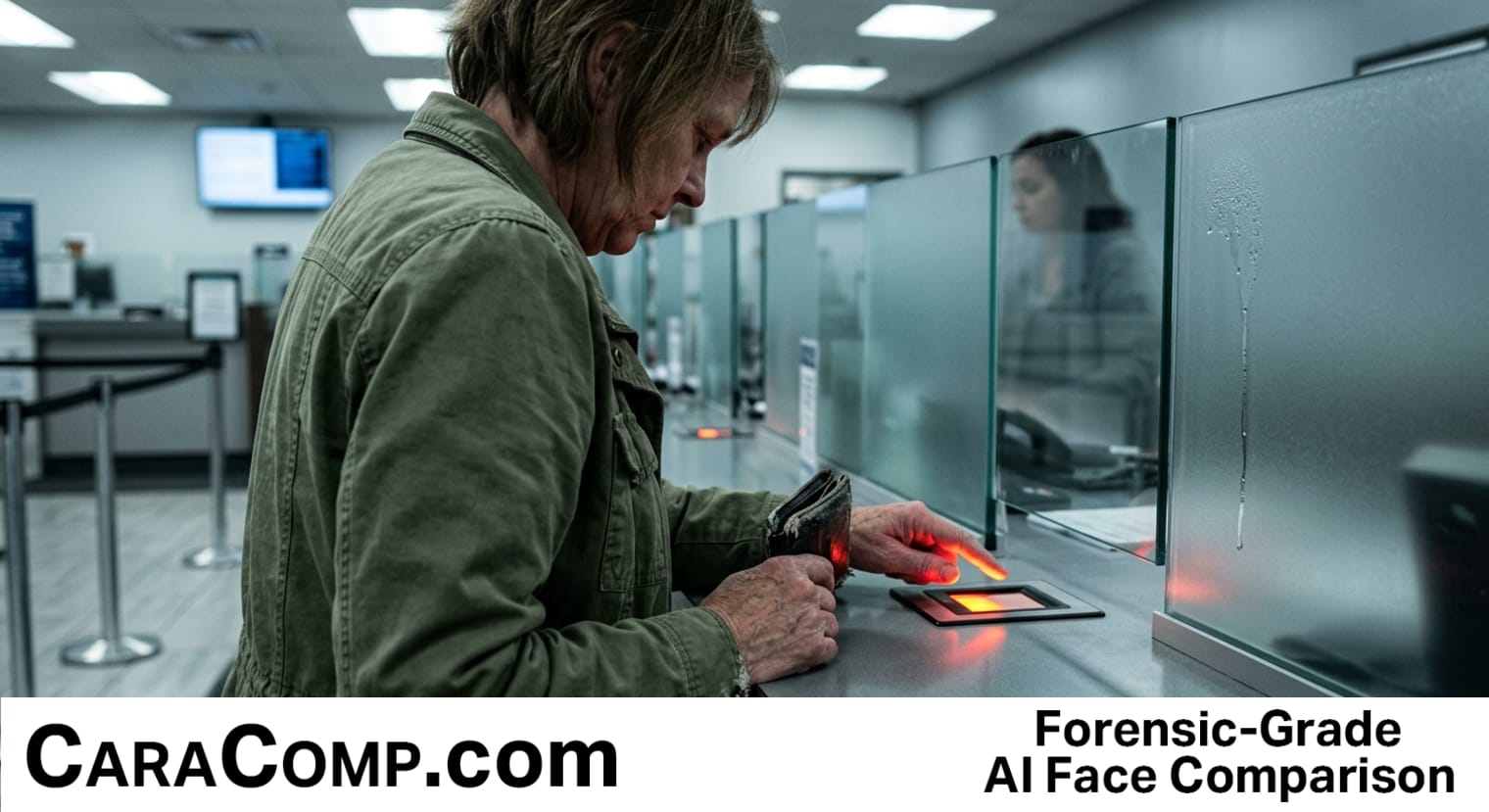
Imagine walking into your local bank for a routine ID update and being told by a teller that, according to the system, you don’t exist. This isn't a scene from a dystopian thriller; it is the looming reality for thousands as South Africa scales its Smart ID rollout through over 750 bank branches. While the convenience of skipping government queues is a massive win, it exposes a critical flaw in the biometric ecosystem: the devastating impact of a "false rejection."
When national identity is woven into the machinery of private banking, a biometric glitch stops being a minor inconvenience and starts being a financial emergency. The technology driving these enrollments relies on capturing unique physical traits, yet scanners often struggle with worn fingerprints or inconsistent lighting. For the "digitally dispossessed," there is no clear path to appeal when an algorithm decides their face or fingerprints don't match the record. This highlights a gap that professional investigators have understood for years: automated systems are only as good as the mathematical precision behind them.
For private investigators and OSINT professionals, this rollout is a case study in why we cannot rely on "good enough" consumer tools. If a government-backed bank system can trigger a false rejection, imagine the liability of using a low-reliability search tool for a high-stakes fraud case. At CaraComp, we bridge this gap by bringing enterprise-grade Euclidean distance analysis to the solo investigator. We move beyond the "black box" of automated scans, providing side-by-side facial comparison that yields court-ready results. This South African expansion proves that as biometrics become the gatekeeper of daily life, the tools we use to analyze identity must be professional, transparent, and precise.
- The surge in biometric gatekeeping: As national IDs move into the private sector, the ability to perform high-fidelity facial comparison becomes a mandatory skill for modern investigators.
- The liability of "False Rejections": Systems that lack human-in-the-loop verification create a new class of identity errors that require expert investigative analysis to resolve.
- The democratization of enterprise tech: Solo PIs must adopt the same Euclidean distance analysis used by major agencies to remain competitive as biometric standards tighten globally.
The transition to digital identity is inevitable, but it shouldn't be a gamble. Whether you are verifying a subject in an insurance fraud case or assisting a client with identity recovery, the methodology matters more than the convenience.
Read the full article on CaraComp: Your Bank Says You're Not You. Now What?


Comments
Post a Comment