Walked Past a Police Camera? Your Face May Live in a Database Forever
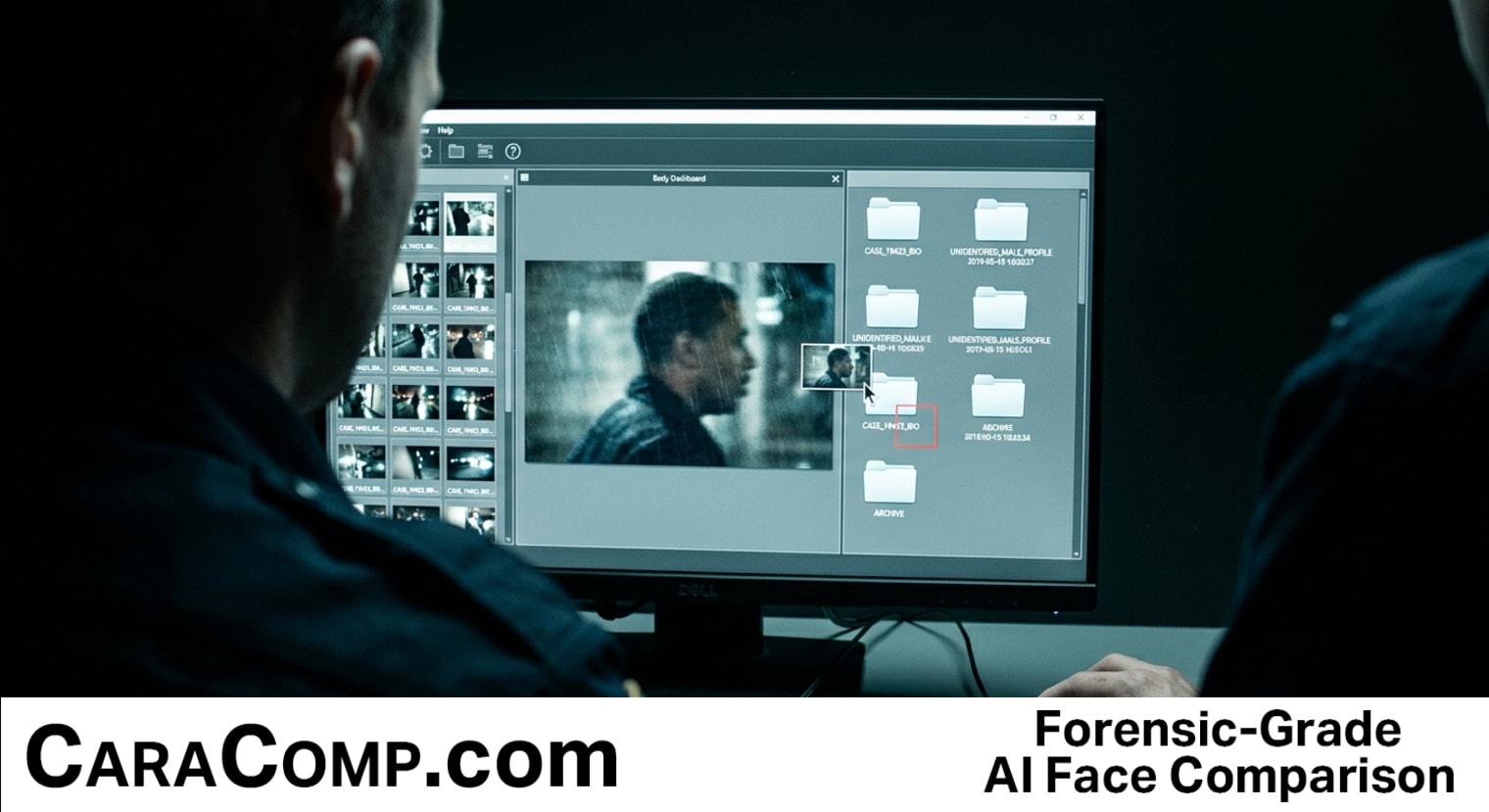
Your face is no longer just a face; it is a string of numerical coordinates. When a police body camera catches you in the background of a routine traffic stop, it isn’t just recording a moment in time. It is potentially generating a permanent, searchable biometric template that lives in a database long after the original incident is resolved. The real threat isn't the lens itself—it’s the "afterward" that happens in the cloud.
The current legislative firestorm in Ireland over body camera footage highlights a massive legal loophole that many investigators are ignoring: the distinction between recording footage for evidence and the secondary use of that data for identity matching. For those of us in the OSINT and private investigation world, this is a wake-up call. The era of "accidental" surveillance is ending, and the era of precise, professional facial comparison is taking its place.
At CaraComp, we understand that Euclidean distance analysis is the gold standard for closing cases, but the industry is at a crossroads. There is a massive operational difference between scanning every person on a sidewalk and performing surgical side-by-side analysis of specific subjects in a fraud or missing persons case. One is a privacy nightmare that invites heavy-handed regulation; the other is standard investigative methodology that wins in court. Small firms and solo PIs need to realize that the "black box" approach used by massive agencies is under fire, and the future belongs to those who can produce reliable, case-specific results without the liability of mass-data harvesting.
- The "Forever" Biometric File: Unlike a stolen password, your facial geometry cannot be reset. When footage shifts from a "video file" to a "searchable identity record," it creates a permanent risk profile that most legal frameworks aren't equipped to handle.
- The Reliability Crisis: As laws tighten around how footage is reused, investigators who rely on unverified consumer tools will find their evidence tossed out. Precise facial comparison requires math-based reporting that can stand up to a cross-examination, not a "trust me" algorithm.
- Methodology Over Surveillance: The legislative shift in Europe proves that the "capture everything" model is failing. Professional investigators must pivot to tools that focus on analyzing the photos they already have in their case files rather than relying on massive, ethically murky databases.
The bottom line is simple: if you are still manually squinting at photos or relying on unreliable consumer-grade search engines, you aren't just wasting time—you are falling behind a legal and technological curve that is moving faster than ever. Smart investigators aren't looking for more data; they are looking for better ways to compare the data they already have.
Read the full article on CaraComp: Walked Past a Police Camera? Your Face May Live in a Database Forever


Comments
Post a Comment